Key takeaways
- Slat pitch, not slat count: Measure the gap between supports. Foam and hybrid mattresses want 3 inches or less; anything wider invites soft spots and can void a mattress warranty. Extra slats mean nothing if they’re bunched at the ends.
- Center support geometry: Look for a full-length center rail with its own legs, ideally two or more. A frame that carries load only at the perimeter will telegraph every movement straight into the joints.
- Fastener quality: Hex bolts threading into welded nuts hold up. Self-tapping screws biting into thin tube steel strip out on the second disassembly. Check whether replacement hardware is even available.
- Usable clearance: Decide what’s going under there before you buy. Measure your bins, then add an inch. A 14-inch frame usually nets 11 to 12 inches of true clearance once you account for the rail depth.
- Noise control at the contact points: Every metal-on-metal interface is a future creak. Rubber sleeves, felt washers, or fabric-wrapped slats are worth more than an extra 500 pounds of rated capacity.
What's inside
If you’ve ever spent a Saturday morning on your knees chasing a squeak through a bed frame, you already know the real problem with platform beds: the spec sheet never tells you how the thing behaves after six months of use. Weight ratings get printed in bold, but nobody mentions that the center rail bolts into a single tab of stamped steel, or that the slats are spaced wide enough for a memory foam mattress to sag between them like a hammock. Buyers end up shopping on inches and finish color when the things that actually matter are joinery, slat pitch, and whether the hardware will still hold torque after the second move.
This guide comes from a maker’s bench rather than a showroom floor. I’ve broken down what separates a frame you can tighten once and forget from one that needs a wrench in the nightstand drawer, then applied that lens to six of the most widely bought platform beds heading into 2026. You’ll find a short checklist for evaluating any frame, honest notes on the picks below, and answers to the questions that come up mid-assembly at 9pm with parts spread across the floor.
As an Amazon Associate we earn from qualifying purchases.



How to Choose a Bed Platform (2026)
- Slat pitch, not slat count: Measure the gap between supports. Foam and hybrid mattresses want 3 inches or less; anything wider invites soft spots and can void a mattress warranty. Extra slats mean nothing if they’re bunched at the ends.
- Center support geometry: Look for a full-length center rail with its own legs, ideally two or more. A frame that carries load only at the perimeter will telegraph every movement straight into the joints.
- Fastener quality: Hex bolts threading into welded nuts hold up. Self-tapping screws biting into thin tube steel strip out on the second disassembly. Check whether replacement hardware is even available.
- Usable clearance: Decide what’s going under there before you buy. Measure your bins, then add an inch. A 14-inch frame usually nets 11 to 12 inches of true clearance once you account for the rail depth.
- Noise control at the contact points: Every metal-on-metal interface is a future creak. Rubber sleeves, felt washers, or fabric-wrapped slats are worth more than an extra 500 pounds of rated capacity.
The Best Bed Platform (2026)s Reviewed
VIPSHOW 20 Inch Queen Bed Frame
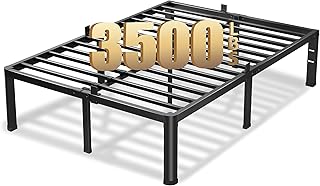
The 20-inch deck is the standout here, turning the space beneath your bed into genuine storage rather than a dust shelf, and the 3,500-pound rating comes with the leg count to back it up. Rounded corners and rubber covers on the contact points show someone actually thought about shins and hardwood floors.
Mellow Naturalista Classic 12 Inch
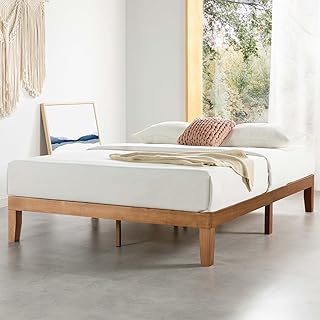
Solid pine construction gives this one a different failure mode than steel: it flexes and settles instead of squeaking, and it takes a coat of stain or paint beautifully if you want to match existing furniture. The slats sit close enough for foam mattresses, and reinforcing the center with a scrap 2×4 is a fifteen-minute upgrade if you want extra margin.
SHA CERLIN 14 Inch with Wooden Headboard
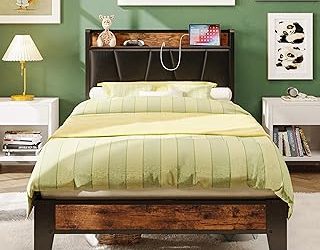
You get a real headboard and footboard in walnut-finish wood on a steel chassis, which is the practical middle ground between a bare frame and a full bedroom set. The non-slip mattress retainers earn their keep on smooth-bottomed foam mattresses that otherwise creep toward the foot of the bed.
NEW JETO Metal Bed Frame, 14 Inch
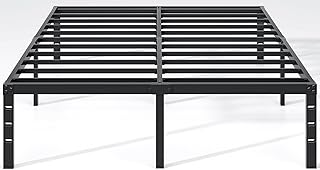
A clean, no-nonsense steel platform that assembles fast and stays quiet, with enough clearance for standard under-bed bins. It’s the frame I’d point a first-time buyer toward when the goal is getting a mattress off the floor properly without overthinking it.
Hafenpo 14 Inch Queen Bed Frame
Solid load-bearing performance and straightforward assembly make this a dependable pick for guest rooms and rentals where the frame will be built, moved, and rebuilt. Snug up every bolt in a crossing pattern before final tightening and it settles in without complaint.
Frequently Asked Questions
Do I still need a box spring?
No. Every frame here uses slats or a steel deck as the foundation, so a box spring only adds height and cost. Adding one on top of a platform can also push the mattress uncomfortably high.
How do I stop a metal frame from squeaking?
Nearly all noise comes from metal rubbing metal at the joints. Disassemble the offending connection, add a felt or nylon washer between the mating surfaces, then retorque in stages rather than cranking one bolt fully at a time.
Are these frames safe for heavier sleepers?
Look at leg count and center-rail support rather than the headline weight number. Frames with a full center rail and multiple center legs distribute load properly; that matters more than a 3,500-pound sticker.
Can I use a thin mattress on a platform bed?
Yes, provided slat gaps stay around 3 inches or less. If your frame runs wider, laying a sheet of 1/2-inch plywood or a bunkie board across the slats solves it cheaply.
Final Thoughts
For maximum storage and the most confident build quality, the VIPSHOW 20 Inch is the frame I’d put in my own room. The Mellow Naturalista Classic is the pick if you’d rather work with wood and want something you can finish yourself, while the SHA CERLIN 14 Inch delivers the best balance of headboard styling, quiet operation, and usable clearance for the money.