Key takeaways
- Do the guardrail math first: Measure from the top of your slats to the top of the guardrail, then subtract 5 inches. Safety guidance calls for at least 5 inches of rail above the sleeping surface, which is why 5″ and 6″ profiles dominate this category and why an 8″ mattress usually fails the test.
- Measure the frame interior, not the size on the box: Shop-built and imported bunk frames drift. Tape the inside width and length before ordering — some frames are cut for 38×75, others for a narrow 28-inch bunk, and a mattress that binds at the corners will hump in the middle.
- Check your slat spacing: Foam mattresses need slats no more than 3 inches apart, ideally 2.75. Wider gaps and you’ll feel every board through a 5-inch build. A sheet of 1/4″ plywood or a few extra battens is a ten-minute fix that adds years of life.
- Insist on CertiPUR-US and fiberglass-free construction: CertiPUR-US covers emissions and content in the foam itself. Separately, look for a stated fiberglass-free cover — plenty of budget mattresses use woven fiberglass as the flame barrier, which becomes a mess the moment a zipper gets opened.
- Match firmness to a light body: Kids and teens don’t compress foam the way adults do, so medium-firm reads as comfortable rather than hard. Gel-infused or green-tea-infused memory foam helps with the other bunk problem: heat rises, and the top bunk always sleeps warmer.
What's inside
If you’ve ever built a bunk bed in your own garage — or bolted together a flat-pack kit at 11pm — you already know the mattress is where the plan usually falls apart. The frame goes up fine, the ladder lines up, and then the mattress you ordered swallows the guardrail whole. Standard twin mattresses are built for standard beds sitting on the floor, not for a top bunk where every inch of height above the rail is the difference between safe and sketchy.
This guide is written from the workbench side of the problem. We cover the actual measurements that matter, how slat spacing changes which foam will hold up, and which certifications are worth checking before a kid sleeps on it. Then we get into six low-profile mattresses that are genuinely built for bunks, daybeds, trundles, and narrow RV frames — including a couple of odd sizes that solve problems the big brands ignore.
As an Amazon Associate we earn from qualifying purchases.


How to Choose a Bunk Bed Mattress (2026)
- Do the guardrail math first: Measure from the top of your slats to the top of the guardrail, then subtract 5 inches. Safety guidance calls for at least 5 inches of rail above the sleeping surface, which is why 5″ and 6″ profiles dominate this category and why an 8″ mattress usually fails the test.
- Measure the frame interior, not the size on the box: Shop-built and imported bunk frames drift. Tape the inside width and length before ordering — some frames are cut for 38×75, others for a narrow 28-inch bunk, and a mattress that binds at the corners will hump in the middle.
- Check your slat spacing: Foam mattresses need slats no more than 3 inches apart, ideally 2.75. Wider gaps and you’ll feel every board through a 5-inch build. A sheet of 1/4″ plywood or a few extra battens is a ten-minute fix that adds years of life.
- Insist on CertiPUR-US and fiberglass-free construction: CertiPUR-US covers emissions and content in the foam itself. Separately, look for a stated fiberglass-free cover — plenty of budget mattresses use woven fiberglass as the flame barrier, which becomes a mess the moment a zipper gets opened.
- Match firmness to a light body: Kids and teens don’t compress foam the way adults do, so medium-firm reads as comfortable rather than hard. Gel-infused or green-tea-infused memory foam helps with the other bunk problem: heat rises, and the top bunk always sleeps warmer.
The Best Bunk Bed Mattresses (2026) Reviewed
Twin 5 Inch Cooling Gel Memory Foam, Fiberglass-Free
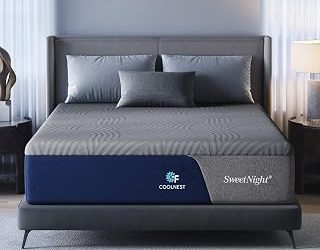
This is the safest default pick for a top bunk: a 5-inch profile that leaves guardrail clearance on almost any frame, with gel memory foam and an explicitly fiberglass-free build certified for kids’ use. Medium-firm support means it won’t bottom out on well-spaced slats, and it works equally well on daybeds and trundles.
MLILY 5 Inch Twin Mattress in a Box
Made in the USA and cut to a true 75″x38″, the MLILY uses green tea gel-infused memory foam that noticeably cuts the stuffy feel of a closed-in top bunk. CertiPUR-US certified with a balanced medium-firm feel — a solid choice if you want a known spec sheet rather than a mystery import.
Dopinmin 6 Inch Twin Gel Memory Foam
The extra inch buys real comfort for older kids and adult guests, so measure your rail height before committing. Pressure relief is a step up from the 5-inch options here, and the CertiPUR-US gel foam handles side sleepers better than most budget builds at this thickness.
Narrow Bunk 6 Inch RV Mattress, 28×75
The problem-solver of the group. If you’re working with an RV bunk, a shop-built frame, or a vintage bed cut narrower than modern twin, this 28×75 Aquasoft foam mattress fits where nothing off the shelf will. Breathable diamond-knit cover, medium-firm, made in Mississippi.
Linenspa 5 Inch Gel Memory Foam Twin
The proven budget workhorse, and the one to buy when you’re outfitting two bunks at once. It’s a straightforward 5-inch gel memory foam slab with a reliable feel — not luxurious, but consistent, low-profile, and hard to beat on cost per bunk.
Frequently Asked Questions
How thick should a bunk bed mattress be?
Six inches is the practical ceiling for most top bunks, and 5 inches is safer if your guardrails are shallow. Measure rail height above the slats and keep at least 5 inches of rail exposed once the mattress is in place.
Do I need a box spring or bunkie board?
No box spring — it defeats the whole point of a low profile. Foam mattresses just need firm, evenly spaced slats. If your gaps exceed 3 inches, add battens or a thin plywood deck instead of buying a bunkie board.
How long does a compressed mattress take to expand?
Most expand to near full height within a few hours and finish over 24 to 72 hours. Unbox in a ventilated room and let the new-foam smell dissipate for a day before making the bed.
Will a standard twin fit an RV or shop-built bunk?
Often not. RV bunks and older homemade frames frequently run narrower than 38 inches, which is exactly the gap a 28×75 narrow mattress fills. Always tape the interior opening before ordering.
Final Thoughts
For most builds, the fiberglass-free 5 Inch Cooling Gel Twin is the easiest call — it clears guardrails on almost any frame and holds up on properly spaced slats. Step up to the Dopinmin 6 Inch if your rails allow the extra height and an older kid or guest will be sleeping on it, and go with the Narrow Bunk 28×75 when your frame simply isn’t standard twin.