Key takeaways
- Pint rating in real conditions: Advertised capacity is usually measured at 86°F. Your crawl space runs closer to 55–65°F, where output drops sharply, so oversize deliberately. A “125 pint” unit is a realistic choice for a mid-size sealed crawl, not overkill.
- Drainage that doesn’t need babysitting: Bucket emptying is a non-starter under a house. Look for a built-in condensate pump if you’re pushing water up and out to a sump or exterior, or gravity drain via hose if you have a floor drain below the unit’s outlet.
- Auto defrost and low-temp operation: Coils frost over in cool spaces and the compressor stalls out. Auto defrost cycles the unit to clear ice, and memory restart brings it back after a power blip so you’re not crawling in to reset it.
- Footprint and hanging options: Measure your hatch and headroom before you buy. Low-profile horizontal units slide through tight openings and can often be suspended from joists with straps to keep them off a damp vapor barrier.
- Warranty and parts access: These machines run near-continuously. A five- or six-year warranty signals commercial-grade internals, and washable filters plus accessible fan housings mean you can maintain it yourself instead of replacing it.
What's inside
If you’ve ever pulled the hatch, wriggled under the joists with a headlamp, and felt that damp, mushroom-cellar air hit your face, you already know the problem. Crawl spaces sit below grade, breathe moisture up through soil and block walls, and stay just cool enough that humidity hangs around at 70, 80, even 90 percent. That’s the range where joists start feeding mold, insulation sags, fasteners bloom rust, and hardwood floors above you cup at the seams. No amount of scented plug-ins upstairs fixes a wet crawl space, and a box-store bedroom dehumidifier will drown or freeze within a season down there.
This guide is written from the perspective of someone who has actually taped vapor barrier seams on their knees and run condensate line through a rim joist. Below you’ll find purpose-built crawl space and restoration-grade dehumidifiers, plus the specs that genuinely matter when the machine has to run unattended in a 55°F space for years. I’ll cover sizing, drainage strategy, defrost behavior, and physical footprint, then walk through the strongest current options so you can match a unit to your square footage and access situation.
As an Amazon Associate we earn from qualifying purchases.



How to Choose a Crawl Space Dehumidifier (2026)
- Pint rating in real conditions: Advertised capacity is usually measured at 86°F. Your crawl space runs closer to 55–65°F, where output drops sharply, so oversize deliberately. A “125 pint” unit is a realistic choice for a mid-size sealed crawl, not overkill.
- Drainage that doesn’t need babysitting: Bucket emptying is a non-starter under a house. Look for a built-in condensate pump if you’re pushing water up and out to a sump or exterior, or gravity drain via hose if you have a floor drain below the unit’s outlet.
- Auto defrost and low-temp operation: Coils frost over in cool spaces and the compressor stalls out. Auto defrost cycles the unit to clear ice, and memory restart brings it back after a power blip so you’re not crawling in to reset it.
- Footprint and hanging options: Measure your hatch and headroom before you buy. Low-profile horizontal units slide through tight openings and can often be suspended from joists with straps to keep them off a damp vapor barrier.
- Warranty and parts access: These machines run near-continuously. A five- or six-year warranty signals commercial-grade internals, and washable filters plus accessible fan housings mean you can maintain it yourself instead of replacing it.
The Best Crawl Space Dehumidifiers of 2026, Reviewed
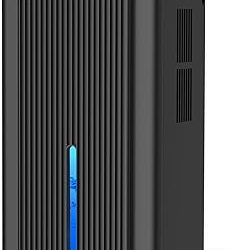
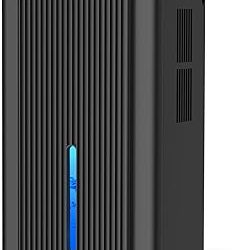
Waykar 125 Pint Crawl Space Dehumidifier with Pump
The most versatile pick for most homes: strong extraction, an integrated pump so you can route condensate uphill and outdoors, and a compact body that clears typical access hatches. The five-year coverage is reassuring for a unit you’ll essentially forget about once it’s strapped in place.
ALORAIR Sentinel HD55
Built like restoration equipment, with auto defrost tuned for genuinely cold crawl spaces and a rugged epoxy-coated housing that shrugs off the environment. Its 1,200 sq. ft. rating is conservative in the honest sense, and the six-year warranty backs that up.
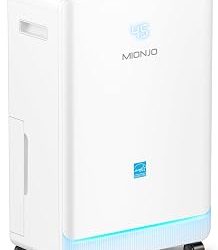
100 Pint Dehumidifier with Pump, 5,000 Sq. Ft.
The efficiency play. ENERGY STAR certification matters when a machine runs thousands of hours a year, and the pump reaches up to 16.4 feet vertically, which covers most crawl-to-exterior runs. Smart humidity control lets you set a target and walk away.
CADPXS 80 Pints Crawl Space Dehumidifier
The right size for smaller or already-encapsulated crawls where a monster unit would just short-cycle. Compact, pump-equipped, with timer and memory restart, and it’s the easiest of this group to maneuver through a cramped opening solo.
155 Pint Commercial Dehumidifier with Pump and Drain
Maximum muscle for large footprints, whole-house applications, or active water damage where you need to pull moisture down fast. Overkill for a tidy 800 sq. ft. crawl, exactly right for sprawling or chronically wet spaces.
Frequently Asked Questions
What humidity level should I target?
Aim for 50–55 percent relative humidity. Below 50 you’re spending energy for no benefit; above 60 mold gets comfortable. Leave a cheap wireless hygrometer down there so you can verify from inside the house.
Do I need a vapor barrier first?
Yes. Running a dehumidifier over bare soil is like heating a room with the windows open. Lay 10–20 mil poly, overlap seams by a foot, tape them, and run it up the walls before you plug anything in.
Will it freeze up in winter?
A unit with auto defrost won’t. Standard household dehumidifiers typically stop working below roughly 65°F, which is why crawl-specific and restoration models are worth the premium.
Where should the water go?
Best options are a sump pit, an existing floor drain, or outside daylight. Use the built-in pump for anything requiring lift, secure the line so it can’t kink, and check the discharge point each spring.
Final Thoughts
For most homeowners, the Waykar 125 Pint hits the sweet spot of capacity, pump convenience, and hatch-friendly size. If your crawl space runs cold and you want equipment-grade durability, the ALORAIR Sentinel HD55 is the one to strap to the joists. Tight or already-sealed crawls are well served by the CADPXS 80 Pints, which keeps cycling sensible and installation genuinely one-person friendly.