Key takeaways
- Match CADR to your actual room: Measure your square footage rather than guessing. AHAM VERIFIDE ratings are third-party tested, so a unit claiming 1,695 sq ft in one hour has receipts. Skip anything with vague “coverage” claims and no verification badge.
- Budget for filters, not just the unit: A cheap purifier with $60 annual filters costs more over three years than a pricier one with $30 refills. Check replacement part numbers and availability before you commit.
- Look for a washable pre-filter: This is the single best maintenance feature. Rinse it monthly in the sink and your expensive HEPA layer lasts noticeably longer, especially in homes with shedding pets.
- Test the sleep mode volume: Manufacturers list decibel figures at the lowest speed, which nobody actually runs during allergy season. If a purifier lives in your bedroom, prioritize models with a genuinely quiet mid-range.
- Treat plants as decor with benefits: A single pothos won’t scrub VOCs from a living room, but it adds humidity, softens hard furniture lines, and low-light species like ZZ plants survive corners where nothing else will.
What's inside
Search “plants air purifier” and you’ll get two wildly different answers: leafy green things in pots, and machines with filters. Both showed up in your results because both get marketed as air cleaners, but only one of them actually moves meaningful volumes of air through a filter. I’ve built plant shelves, rigged up grow lights, and taken apart more than a few purifiers to see what’s behind the grille, and the honest verdict is that plants earn their spot for humidity, texture, and the simple pleasure of tending something alive. Filtration is a machine’s job.
So this guide covers both, on purpose. You’ll find the mechanical purifiers worth your outlet space, sized honestly by room, plus two houseplants that hold up in real homes without a misting schedule you’ll abandon by February. I’ve flagged what each unit actually costs to keep running, since filter replacements sneak up on people faster than the sticker price suggests.
As an Amazon Associate we earn from qualifying purchases.



How to Choose a Plants Air Purifier (2026)
- Match CADR to your actual room: Measure your square footage rather than guessing. AHAM VERIFIDE ratings are third-party tested, so a unit claiming 1,695 sq ft in one hour has receipts. Skip anything with vague “coverage” claims and no verification badge.
- Budget for filters, not just the unit: A cheap purifier with $60 annual filters costs more over three years than a pricier one with $30 refills. Check replacement part numbers and availability before you commit.
- Look for a washable pre-filter: This is the single best maintenance feature. Rinse it monthly in the sink and your expensive HEPA layer lasts noticeably longer, especially in homes with shedding pets.
- Test the sleep mode volume: Manufacturers list decibel figures at the lowest speed, which nobody actually runs during allergy season. If a purifier lives in your bedroom, prioritize models with a genuinely quiet mid-range.
- Treat plants as decor with benefits: A single pothos won’t scrub VOCs from a living room, but it adds humidity, softens hard furniture lines, and low-light species like ZZ plants survive corners where nothing else will.
The Best Plants Air Purifier (2026)s Reviewed
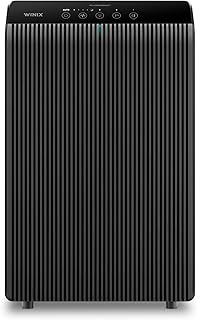
WINIX 5510
This is the workhorse pick, updated from the beloved 5500-2 with app control and a genuinely useful auto mode that responds to particulate spikes rather than running blindly. Coverage up to 1,881 sq ft in an hour makes it the right choice for open-plan living areas, and the carbon deodorization filter handles cooking smells better than most units in its class.
DREO HEPA Air Purifier (DR-HAP008)
The onboard PM2.5 monitor turns this into a diagnostic tool as much as a purifier, letting you actually watch numbers drop after you vacuum or sear something in a pan. Four speeds plus a turbo setting give you real control, and the scent diffuser is a nice touch if you’d rather not run a separate candle.
KNKA APH4000
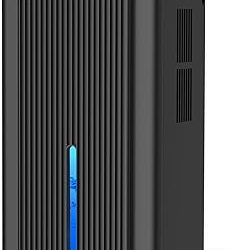
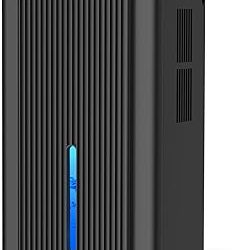
The washable pre-filter is the standout here, meaningfully cutting long-term running costs if you keep up with it. AHAM verification at 1,695 sq ft plus a dedicated pet mode makes this a strong value play for anyone with a shedding dog and a large bedroom.
Hunter HP450UV
A round tower design that draws air from 360 degrees, which helps when you can’t push it flush against a wall. Sized for bedrooms and smaller rooms, it’s the pick when you need effective filtration without a bulky rectangular box dominating a nightstand.
Costa Farms ZZ Plant
Nearly indestructible, tolerant of low light, and forgiving if you forget it for three weeks, this is the plant I recommend to people who’ve killed everything else. The glossy foliage reads as intentional design against wood or upholstery, and it asks almost nothing in return.
Frequently Asked Questions
Do houseplants actually purify indoor air?
Not at any meaningful rate in a normal room. The NASA research people cite was conducted in sealed chambers, and replicating that effect in a living room would take dozens of plants per square metre. Enjoy them for humidity and looks.
How often should I replace HEPA filters?
Every six to twelve months depending on runtime and household conditions. Pets, smoking, and running the unit continuously all shorten that window considerably.
Can I wash a HEPA filter?
No. Water damages the pleated fibre structure and destroys filtration efficiency. Only wash pre-filters that are explicitly labelled washable.
Is a Rattlesnake Calathea hard to keep alive?
Moderately. It wants consistent moisture and higher humidity than most homes provide in winter, so it pairs well with a bathroom or a pebble tray. The patterned foliage is worth the extra attention.
Final Thoughts
For most homes, the WINIX 5510 is the smartest single purchase thanks to its verified large-room coverage and responsive auto mode. Add the DREO DR-HAP008 if you want live air quality data to guide your habits, and set a Costa Farms ZZ Plant in the corner for the greenery that filtration alone can’t give you.