Key takeaways
- Slat spacing and material: Gaps wider than about 3 inches let foam mattresses sag between supports. Steel slats or hardwood slats with a center rail handle adult weight far better than thin bent plywood, and a center leg is non-negotiable on anything wider than a twin.
- Frame construction: Solid wood joinery and welded steel outlast cam-lock particleboard every time. Check whether the manufacturer lists species (pine, walnut, rubberwood) or just says “wood” — vague wording usually means engineered panels.
- Back and arm height: Daybeds that double as seating need a backrest tall enough to lean against comfortably, roughly 14 to 20 inches above the mattress. Low-profile frames look sleek but push you toward buying bolster pillows to make them usable.
- Storage strategy: Decide between under-bed clearance and built-in drawers before you shop. Open clearance of 10 inches or more fits rolling bins and vacuum heads; integrated drawers look tidier but add assembly time and reduce airflow under the mattress.
- Electrical extras: LED strips and USB ports are genuinely handy in guest rooms, but confirm the amperage and whether the unit needs its own wall outlet. Test the wiring during assembly, while you still have easy access to the connections.
What's inside
Shopping for a daybed puts you in an odd spot: you’re buying one piece of furniture and asking it to do the work of three. It needs to look like a sofa during daylight hours, sleep an adult overnight without wrecking their back, and ideally swallow some of the clutter that a small room generates. Most listings gloss over the details that actually matter once the thing is bolted together in your space — whether the slats will hold up under a grown-up, whether the “wood” is solid or a veneer over particleboard, and whether that USB port is wired to anything useful.
I’ve assembled enough flat-pack furniture to know that the difference between a great daybed and a frustrating one usually comes down to hardware quality, slat spacing, and how honestly the manufacturer describes its materials. This guide breaks down six daybeds worth considering in 2026, spanning solid hardwood platforms, upholstered frames, steel builds with integrated storage, and a trundle option for households that host kids. Below you’ll find the picks themselves, followed by the specs I check before buying and answers to the questions that come up most.
As an Amazon Associate we earn from qualifying purchases.



How to Choose a/an Daybed (2026)
- Slat spacing and material: Gaps wider than about 3 inches let foam mattresses sag between supports. Steel slats or hardwood slats with a center rail handle adult weight far better than thin bent plywood, and a center leg is non-negotiable on anything wider than a twin.
- Frame construction: Solid wood joinery and welded steel outlast cam-lock particleboard every time. Check whether the manufacturer lists species (pine, walnut, rubberwood) or just says “wood” — vague wording usually means engineered panels.
- Back and arm height: Daybeds that double as seating need a backrest tall enough to lean against comfortably, roughly 14 to 20 inches above the mattress. Low-profile frames look sleek but push you toward buying bolster pillows to make them usable.
- Storage strategy: Decide between under-bed clearance and built-in drawers before you shop. Open clearance of 10 inches or more fits rolling bins and vacuum heads; integrated drawers look tidier but add assembly time and reduce airflow under the mattress.
- Electrical extras: LED strips and USB ports are genuinely handy in guest rooms, but confirm the amperage and whether the unit needs its own wall outlet. Test the wiring during assembly, while you still have easy access to the connections.
The Best Daybed (2026)s Reviewed
Twin Corner L-Shaped Daybed with Storage Headboard
This is the maximalist option — an L-shaped frame in vintage brown that bundles a bookcase, bedside rack, drawers, LED lighting, and a charging station into one footprint. Budget a solid afternoon for assembly and a second set of hands, but for a teen room or studio where every square foot has to justify itself, the built-in storage genuinely replaces two or three separate pieces.
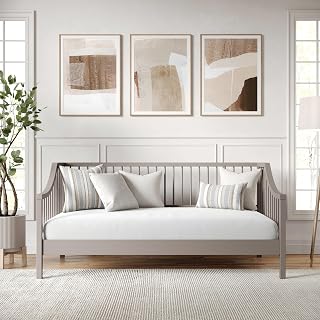
Martha Stewart Neely Solid Wood Platform Daybed
The Neely is the pick if you want honest materials and clean lines: solid wood construction, turned spindles, and a slatted foundation that skips the box spring entirely. The gray finish reads farmhouse without tipping into kitsch, and the spindle back gives you something substantial to lean against when it’s serving as a sofa.
YUHUASHI Upholstered Twin Daybed
Upholstery softens the hard edges that make some daybeds feel like guest-room furniture, and the wood slat support here is properly spaced for foam or hybrid mattresses. The yellow colorway is a commitment, so treat it as a design choice rather than a neutral — it works beautifully in a reading nook or bright sunroom.
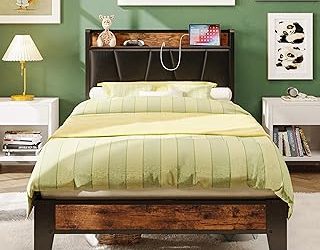
SHA CERLIN Metal Daybed with Storage Headboard
The double-layer headboard is the smart detail: it gives you shelf space for a lamp, water glass, and books without needing a nightstand, and the LED lighting plus USB ports make it a strong guest-room choice. Steel slats mean no sagging and no creaking, and the under-bed clearance is generous enough for storage bins.
Full Upholstered Daybed with Twin Trundle
For households that host siblings, cousins, or sleepovers, the trundle turns one footprint into two sleeping surfaces. Button tufting and piped, wave-shaped arms keep it from looking utilitarian, and the solid wood frame handles the repeated pull-out cycle better than the all-composite trundles I’ve seen fail at the drawer glides.
Frequently Asked Questions
Do I need a box spring with a daybed?
No. Every frame here uses a slat foundation designed to support the mattress directly. Adding a box spring raises the sleeping surface awkwardly high and defeats the sofa-height proportions that make a daybed work as seating.
What mattress thickness works best?
Aim for 6 to 8 inches. Anything thicker sits above the arms and back, which looks off and makes the daybed uncomfortable to lean against. A firmer foam or hybrid mattress in that range holds its shape under daily sitting far better than a plush one.
Can adults sleep on a twin daybed regularly?
Yes, provided the frame has a center support leg and rigid slats. Steel-slat and solid hardwood models handle nightly adult use without issue; thin plywood slats on a bare-bones frame are the ones that start creaking after a few months.
How difficult is assembly?
Simple platform frames like the Nantucket or Neely take 30 to 60 minutes solo. Storage-heavy builds with drawers, bookcases, and wiring run two to three hours and go much smoother with a helper and a cordless driver set to low torque so you don’t strip the pre-drilled holes.
Final Thoughts
If you want the most reliable long-term buy, the Martha Stewart Neely and the AFI Nantucket in walnut both deliver real solid-wood construction that will still be sturdy a decade from now. For a small room that needs to work harder, the SHA CERLIN metal frame gives you storage, lighting, and charging in a build that won’t flex or creak — a genuinely practical pick for guest rooms and studios alike.