Key takeaways
- Memory foam holds its shape under sustained pressure, so it keeps supporting your lumbar curve all night. It’s the right call for structural back pain. Gel infusions, as in the SHOUREN, offset foam’s tendency to trap heat.
- Overfilled fiber pillow-tops like the ELEMUSE Extra Thick Pad or BEDLORE Viscose Bamboo cushion contact points and add loft without much structural change. Better for surface soreness, hot sleepers, and anyone who hates the hugged-in feel of foam.
- Bamboo-rayon covers on either type move moisture better than polyester. The Niagara Sleep Solution Ultra Soft & Cooling topper leans on this for people who run warm.
What's inside
Back pain that shows up at 3 a.m. and lingers until your second coffee is usually a support problem, not a mattress-age problem. A mattress that has gone soft in the hip zone lets your pelvis drop below your ribcage, and your lumbar spine spends eight hours holding a shape it was never meant to hold. A topper is the cheapest way to test whether that’s your issue before you spend four figures on a new bed. If two inches of denser foam fixes your mornings, you’ve diagnosed the problem and solved it in one purchase.
This guide treats topper shopping like any other build: measure first, understand the materials, then pick the part that fits. You’ll learn how to tell whether you need firmer support or better pressure relief (they pull in opposite directions), how thickness and density actually behave under load, why deep-pocket sizing matters more than people expect, and how to install one so it doesn’t migrate off the bed by Wednesday. Below are the picks we keep coming back to across different sleeping styles and budgets.
As an Amazon Associate we earn from qualifying purchases.


First, Diagnose: Sagging Support or Pressure Points?
Do the flashlight test. Strip the bed, lie on your back, and slide a hand into the gap under your lower spine. If your palm slips through easily, your hips are sinking and you need firmer, denser material underneath you — high-density memory foam or a thick supportive foam core. If instead you wake with a sore shoulder, hip, or tailbone and the gap test comes back tight, your bed is too rigid and you need a plush layer to spread the load. Buying a soft pillow-top when you actually have a sagging mattress makes the ache worse, which is why so many people conclude toppers “don’t work.”
Thickness and Density Do Different Jobs
Thickness controls how far you sink before the mattress underneath takes over. Density controls how hard the foam pushes back. A 2-inch layer of dense foam changes the feel without hiding a bad mattress; a 3-inch layer like the ViscoSoft 3 Inch Memory Foam Topper is the sweet spot for most side and back sleepers, giving enough depth to contour the lumbar curve while still transmitting the base support. Go to 4 or 5 inches — the WhatsBedding 5 Inch or SHOUREN 5 Inch Gel Memory Foam territory — when your mattress is genuinely too firm or you’re heavier and compress thin layers flat. Just know that above 4 inches you’re effectively rebuilding the top of the bed, and standard sheets will fight you.
Foam vs. Fiber Fill: Two Different Fixes
- Memory foam holds its shape under sustained pressure, so it keeps supporting your lumbar curve all night. It’s the right call for structural back pain. Gel infusions, as in the SHOUREN, offset foam’s tendency to trap heat.
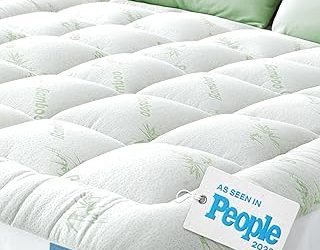
- Overfilled fiber pillow-tops like the ELEMUSE Extra Thick Pad or BEDLORE Viscose Bamboo cushion contact points and add loft without much structural change. Better for surface soreness, hot sleepers, and anyone who hates the hugged-in feel of foam.
- Bamboo-rayon covers on either type move moisture better than polyester. The Niagara Sleep Solution Ultra Soft & Cooling topper leans on this for people who run warm.
Measure Your Mattress Depth Before You Order
Grab a tape and measure your mattress from the box spring or platform to the top surface, then add your topper thickness. That total has to fit the skirt. A pad rated for 6″ to 18″ mattresses, like the BEDLORE, handles most setups; the Niagara’s 20″ deep pocket covers pillow-top beds. Foam toppers without skirts, like the ViscoSoft or SHOUREN, need anchor straps and a deep-pocket fitted sheet — 16″ minimum for a 3-inch topper, 18″ or more for a 5-inch one. Undersized sheets pop off corners nightly and drag the topper with them.
Give It Two Weeks Before You Judge
Your spine adapted to your old mattress, muscles and all. A new support surface can feel worse for the first three to five nights while that adaptation unwinds. Foam also needs 48 hours to fully expand and soften to room temperature. Sleep on it for two weeks, then reassess morning stiffness on a 1-to-10 scale. If it’s trending down, you’re on the right track. If it’s flat or rising, you likely picked the wrong direction on the firm-versus-plush axis.
Tips
- Unbox foam toppers in a warm room and let them off-gas at least 48 hours before sleeping on them — cold foam feels artificially firm and expands slowly.
- Rotate the topper 180 degrees every three months so the hip compression zone gets a rest, the same way you’d rotate a mattress.
- If the topper slides, add a thin non-slip rug pad between it and the mattress instead of over-tightening straps, which distorts the foam edge.
- Photograph your side profile lying on your back before and after. A visibly straighter lumbar line is more reliable feedback than how the surface feels to your hand.
Frequently Asked Questions
Will a topper fix a mattress that’s already sagging?
It can mask a mild dip, but a dense foam topper only bridges a depression of roughly half an inch or less. Anything deeper and the topper conforms to the sag along with you. Check by laying a straight edge across the mattress and measuring the gap.
Firm or soft for lower back pain?
Medium-firm is the most reliable starting point. It supports the pelvis while allowing enough give at the shoulders and hips for a neutral spine. Extremes in either direction tend to create new pressure problems.
Do 5-inch toppers work on adjustable bases?
Usually yes, since foam flexes with the base, but thick layers reduce how sharply the head section can articulate and straps can bunch at the hinge. Check the manufacturer’s guidance if your base has aggressive zero-gravity presets.
How often should a topper be replaced?
Quality memory foam lasts three to five years; fiber-fill pillow-tops compress noticeably in two to three. Replace when body impressions stay visible after you get up.
Conclusion
Pick your topper based on the direction your body needs to move — firmer and denser if your hips are dropping, plusher and loftier if your pressure points are complaining — then verify depth and sheet clearance before ordering. Get those two decisions right and a topper is one of the highest-return upgrades in the house, at a fraction of what a new mattress costs.