Key takeaways
- Real lumber over engineered panels: Solid pine, walnut, or rubberwood uses minimal adhesive, while particleboard and MDF are held together almost entirely by resin binders. Check whether the listing says “solid wood” or just “wood,” and look for visible grain that runs continuously across a board rather than a repeating printed pattern.
- Powder-coated steel as a wildcard: Metal frames sidestep wood adhesives completely. Powder coating is applied dry and heat-cured, so once it leaves the factory there is very little left to release into your bedroom air.
- Look at what the finish is: Water-based lacquers and hardwax oils cure faster and cleaner than solvent-heavy varnishes. If a frame arrives smelling strong, unbox it in a garage or on a porch for a few days before it enters the bedroom.
- Check certifications, not marketing words: GREENGUARD Gold and CARB Phase 2 are measurable standards. “Eco-friendly” and “natural” on a listing mean nothing at all without a testing body behind them.
- Count the upholstery layers: Fabric-wrapped headboards typically hide foam padding and an engineered wood core. If you want upholstered styling, prioritize models with slim padding profiles and confirm the interior structure is wood slat, not fiberboard.
What's inside
Anyone who has ever unboxed a flat-pack bed and been hit with that sharp, sinus-stinging smell knows the problem firsthand. That odor is usually formaldehyde-based adhesive off-gassing from particleboard or MDF, and it can linger for weeks in a room where you spend a third of your life breathing deeply. Add polyurethane foam padding, solvent-heavy stains, and flame-retardant chemical treatments, and a budget bed frame can quietly become one of the more chemically active objects in your house. The frustrating part is that almost nothing on the product page tells you which materials were actually used.
I build and repair furniture in my own shop, so I look at bed frames the way I’d look at a project on my workbench: what species of wood, what fasteners, what finish, and how much of it is real lumber versus glued-together dust. This guide applies that lens to frames you can actually buy today. Below you’ll find solid pine and walnut platforms, powder-coated steel builds, and upholstered options worth considering, along with the specific things to inspect before you commit and the questions I get asked most often.
As an Amazon Associate we earn from qualifying purchases.



How to Choose a Non Toxic Bed Frame (2026)
- Real lumber over engineered panels: Solid pine, walnut, or rubberwood uses minimal adhesive, while particleboard and MDF are held together almost entirely by resin binders. Check whether the listing says “solid wood” or just “wood,” and look for visible grain that runs continuously across a board rather than a repeating printed pattern.
- Powder-coated steel as a wildcard: Metal frames sidestep wood adhesives completely. Powder coating is applied dry and heat-cured, so once it leaves the factory there is very little left to release into your bedroom air.
- Look at what the finish is: Water-based lacquers and hardwax oils cure faster and cleaner than solvent-heavy varnishes. If a frame arrives smelling strong, unbox it in a garage or on a porch for a few days before it enters the bedroom.
- Check certifications, not marketing words: GREENGUARD Gold and CARB Phase 2 are measurable standards. “Eco-friendly” and “natural” on a listing mean nothing at all without a testing body behind them.
- Count the upholstery layers: Fabric-wrapped headboards typically hide foam padding and an engineered wood core. If you want upholstered styling, prioritize models with slim padding profiles and confirm the interior structure is wood slat, not fiberboard.
The Best Non Toxic Bed Frame (2026)s Reviewed
Mellow Naturalista Classic 12″ Solid Wood Platform Bed
This is the closest thing on the list to something I’d build myself: solid pine rails, wooden slats, and no upholstery or engineered panels anywhere in the structure. Assembly is genuinely simple, and the 12-inch clearance leaves usable storage underneath without needing a box spring.
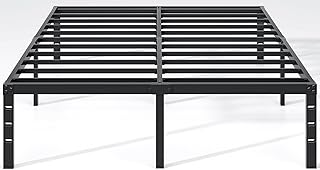
JETO Metal Bed Frame, Queen 14″
Steel and powder coating means essentially zero wood adhesive in the equation, which makes this the easiest pick for anyone highly sensitive to off-gassing. The 14-inch height and heavy-duty crossbars give you serious under-bed storage plus a mattress foundation that stays put.
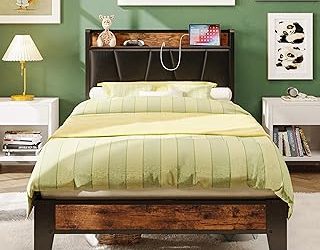
AMERLIFE Solid Wood Bed Frame with 48″ Headboard, Walnut
A solid wood platform with a tall mid-century headboard and silent slats, and the walnut finish reads far more expensive than it costs. The slat system is designed to eliminate the squeak that plagues cheaper frames, which matters more than most buyers expect.
Allewie Full Upholstered Platform Bed, Beige
If you want the softer look, this one keeps the padding profile modest and relies on a wooden slat foundation underneath. Air it out for several days before final placement, and you get quiet, no-box-spring support with a clean neutral finish.
Allewie Queen Velvet Bed Frame with Boho Wingback Headboard
The geometric wingback is the standout design here, and the wood slat support underneath handles a queen mattress without flex or noise. It’s the most decorative option on this list, so treat it as a style-first choice with reasonable material compromises.
Frequently Asked Questions
What actually makes a bed frame toxic?
The main culprits are formaldehyde-based adhesives in particleboard and MDF, solvent-based stains and sealers, polyurethane foam in upholstered pieces, and chemical flame retardants. Solid wood and coated metal frames avoid most of these by design.
How long should I let a new frame off-gas?
Three to seven days in a well-ventilated space handles most of it, though heavily finished pieces can take a few weeks to fully settle. Unbox it in a garage, keep a window cracked, and let air move around every surface.
Is metal really safer than wood?
Powder-coated steel has almost nothing to release once it’s cured, so it’s an excellent low-emission option. Solid wood with a water-based finish is comparably clean, but engineered wood frames are where the real problems tend to show up.
Can I make an existing frame less toxic?
Somewhat. Sealing exposed particleboard edges with a low-VOC water-based primer slows emissions considerably, and replacing foam-padded panels with a solid wood headboard is a straightforward weekend project if you’re comfortable with a drill and a saw.
Final Thoughts
For the cleanest material story at a fair price, the Mellow Naturalista Classic solid pine platform is the one I’d put in my own guest room, with the JETO metal frame as the best choice for anyone who wants to skip wood adhesives entirely. If you want warmth and presence in the room without sacrificing solid construction, the AMERLIFE walnut frame with its 48-inch headboard is the pick worth stretching for.