Key takeaways
- Measure the platform, not the old mattress: Factory foam compresses and shrinks over years, so tape-measure the plywood deck or the frame lip instead. Note obstructions too — wheel wells, cabinet overhangs, and slide-out walls often steal an inch you didn’t budget for.
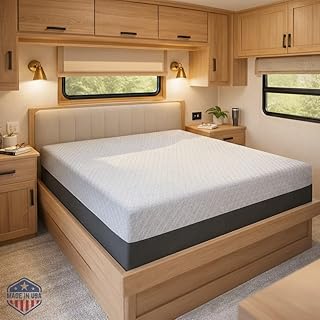
- Match thickness to clearance: Anything above 10 inches can block overhead cabinets, foul a slide-out, or make a bunk feel like a coffin. Measure from the deck to the underside of the nearest obstacle and subtract two inches for sitting-up room.
- Weight matters more than in a house: Every pound counts against your cargo capacity, and you’ll be wrestling this thing through a 28-inch doorway. All-foam builds run lighter; hybrids with pocketed coils add support but also mass.
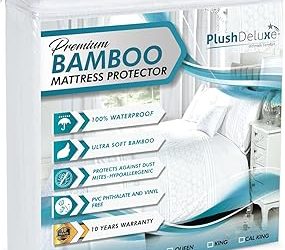
- Look for airflow and moisture defense: Solid decks trap condensation underneath, which is how campers grow mildew. Open-cell or breathable foam helps, and for bunks or truck sleepers a waterproof cover earns its keep.
- Verify certifications: CertiPUR-US and OEKO-TEX confirm the foam has been tested for emissions and harmful substances — worth real weight in a space you can’t air out easily. Explicit fiberglass-free labeling is a bonus for peace of mind.
What's inside
Pull the factory mattress out of almost any travel trailer and you’ll find the same thing: a three-inch slab of low-density foam wrapped in crinkly vinyl, stapled to a plywood platform that flexes when you sit on the edge. It’s a placeholder, not a bed. RV builders spend their budget on holding tanks and slide mechanisms, and the sleeping surface is where they claw back margin. Anyone who has spent a week in a camper knows the result — hip pain by day three, and a mattress that traps every degree of body heat because there’s no airflow between the foam and the bunk deck.
Replacing it is one of the highest-value upgrades you can make, and it’s genuinely a screwdriver-free job. The catch is sizing: RV mattresses use their own dimensions (Short Queen, Short Full, bunk widths) that don’t match residential sizes, and the platform underneath is usually a solid deck rather than a slatted foundation. This guide walks through what actually matters when you’re measuring, choosing a build, and getting a compressed mattress through a camper door — plus six replacements worth your money in 2026.
As an Amazon Associate we earn from qualifying purchases.




How to Choose a Replacement Mattress For Rv (2026)
- Measure the platform, not the old mattress: Factory foam compresses and shrinks over years, so tape-measure the plywood deck or the frame lip instead. Note obstructions too — wheel wells, cabinet overhangs, and slide-out walls often steal an inch you didn’t budget for.
- Match thickness to clearance: Anything above 10 inches can block overhead cabinets, foul a slide-out, or make a bunk feel like a coffin. Measure from the deck to the underside of the nearest obstacle and subtract two inches for sitting-up room.
- Weight matters more than in a house: Every pound counts against your cargo capacity, and you’ll be wrestling this thing through a 28-inch doorway. All-foam builds run lighter; hybrids with pocketed coils add support but also mass.
- Look for airflow and moisture defense: Solid decks trap condensation underneath, which is how campers grow mildew. Open-cell or breathable foam helps, and for bunks or truck sleepers a waterproof cover earns its keep.
- Verify certifications: CertiPUR-US and OEKO-TEX confirm the foam has been tested for emissions and harmful substances — worth real weight in a space you can’t air out easily. Explicit fiberglass-free labeling is a bonus for peace of mind.
The Best Replacement Mattress For Rv (2026)s Reviewed
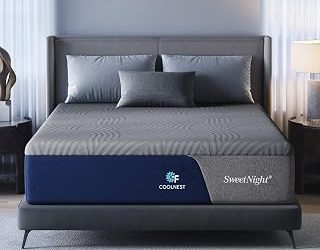
WanderRest 12″ Cool Hybrid, Short Full 48×74
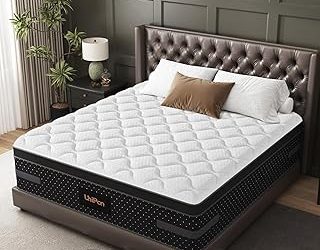
This is the closest thing to a home mattress you’ll fit in a Short Full footprint — pocketed coils under gel memory foam give real edge support, which is exactly what a flexing plywood deck can’t provide on its own. At 12 inches, check your cabinet clearance before committing, but if the space allows, the plush-medium feel is a genuine upgrade over anything factory.
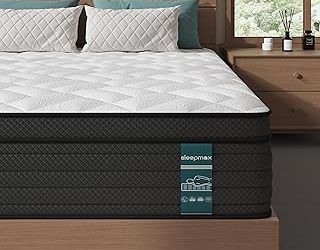
Zinus 8 Inch Short Queen Ultima
The value benchmark. Eight inches keeps it light and easy to maneuver, the medium-firm feel suits most side and back sleepers, and the CertiPUR-US plus OEKO-TEX certifications with explicit fiberglass-free construction cover the concerns most RV buyers raise. Expect a day or two of expansion before it reaches full loft.
Short Full 6-Inch Memory Foam for RV Camper
Built for tight clearances — bunk beds, low-profile pop-ups, and dinette conversions where 8 inches simply won’t fit. The open-cell foam breathes better than the sealed factory slab it replaces, and at 48″ x 75″ it drops straight into standard Short Full framing.
Greaton 8-Inch High Density Foam with Vinyl Cover
The practical pick for bunks, truck sleepers, and anywhere spills or condensation are likely. High-density foam holds its shape under repeated compression better than cheaper stock, and the waterproof nylon-vinyl cover means one wipe-down instead of a laundromat trip. The 36-inch width fits most bunk cutouts.
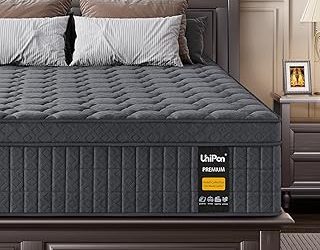
Celestial Sleep 10 Inch RV Short Queen
A well-balanced all-foam option for the main bedroom, with cooling memory foam and a medium feel that works for mixed-sleeper couples. Made in the USA with the full certification stack — CertiPUR-US, OEKO-TEX, and fiberglass-free — and 10 inches usually clears cabinets that 12 won’t.
Frequently Asked Questions
Is a Short Queen actually shorter than a regular queen?
Yes — typically 60″ x 75″ versus 60″ x 80″. That five-inch difference is why residential sheets bunch up and why ordering a standard queen almost never works.
Do I need a special foundation?
No. Most RV platforms are solid plywood, which works fine for foam and hybrid mattresses. Adding a moisture-barrier mat or perforated underlay helps ventilation if you camp in humid conditions.
How long does a boxed mattress take to expand?
Plan on 24 to 72 hours, and unbox it inside the RV — a fully expanded mattress may not clear the doorway. Crack a window or run the fan while it off-gasses.
Will a thicker mattress affect my slide-out?
It can. Bed platforms inside slides often have limited vertical clearance for retraction. Measure with the slide closed before buying anything over 10 inches.
Final Thoughts
For most travel trailers, the Zinus 8 Inch Short Queen Ultima hits the best balance of price, weight, and certified materials, while the WanderRest 12″ Cool Hybrid is the upgrade to make if you have the clearance and want coil support under you. For bunks and truck sleepers where durability and spill resistance matter more than plushness, the Greaton 8-Inch with its waterproof cover is the sensible call.