Key takeaways
- Thread size: Nearly every residential dehumidifier uses a 3/4″ FHT (female hose thread) port, the same standard as an outdoor spigot. Confirm yours before ordering, and skip adapters if you can — every extra joint is another place to weep.
- Fitting material: Brass connectors outlast molded plastic by a wide margin, and they tolerate being hand-tightened repeatedly without stripping. Rust-resistant brass matters most in humid spaces where a steel collar would bloom orange within a season.
- Kink resistance: A gravity drain moves water slowly, so a single pinch behind the unit backs the whole line up. Look for reinforced or thickened walls rather than thin vinyl tubing that flattens the moment you tuck it against a wall.
- Length with slack to spare: Measure from the port to the floor drain, then add two feet for routing around obstacles. Multi-length options (5, 8, 12 feet and up) let you buy once instead of splicing later.
- Continuous downhill slope: No pump means no lift. The hose has to fall the entire run, so plan a path with no dips or loops before you commit to a length.
What's inside
Emptying a dehumidifier bucket twice a day gets old fast, and most people learn that the hard way after their unit shuts off mid-cycle and the basement air goes soupy again. The fix is a continuous gravity drain, but the hose that ships in the box (if one ships at all) is usually a floppy vinyl afterthought with a plastic collar that cracks the third time you thread it on. Add a garden-hose washer that goes stiff after one winter and you’ve got a slow drip behind the unit, which is exactly the moisture problem you were trying to solve.
I’ve run continuous drains in a crawlspace, a finished basement, and a garage workshop, and the pattern is consistent: the hose material and the fitting metal decide whether the setup is a five-minute job or a recurring chore. Below are six drain hoses worth threading onto a 3/4″ FHT port, plus the specs I check before buying and the fittings and routing details that actually prevent leaks.
As an Amazon Associate we earn from qualifying purchases.




How to Choose a Dehumidifier Drain Hose (2026)
- Thread size: Nearly every residential dehumidifier uses a 3/4″ FHT (female hose thread) port, the same standard as an outdoor spigot. Confirm yours before ordering, and skip adapters if you can — every extra joint is another place to weep.
- Fitting material: Brass connectors outlast molded plastic by a wide margin, and they tolerate being hand-tightened repeatedly without stripping. Rust-resistant brass matters most in humid spaces where a steel collar would bloom orange within a season.
- Kink resistance: A gravity drain moves water slowly, so a single pinch behind the unit backs the whole line up. Look for reinforced or thickened walls rather than thin vinyl tubing that flattens the moment you tuck it against a wall.
- Length with slack to spare: Measure from the port to the floor drain, then add two feet for routing around obstacles. Multi-length options (5, 8, 12 feet and up) let you buy once instead of splicing later.
- Continuous downhill slope: No pump means no lift. The hose has to fall the entire run, so plan a path with no dips or loops before you commit to a length.
The Best Dehumidifier Drain Hoses Reviewed (2026)
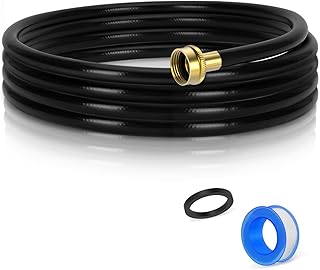
12FT Dehumidifier Drain Hose with 3/4″ FHT Brass Connector
Twelve feet covers most basement runs to a floor drain or utility sink without splicing, and the brass fittings thread on cleanly by hand. The long version is also the one I’d pick for a crawlspace where the drain point is nowhere near the unit.
No-Kink Dehumidifier Hose, 3/4″ FHT, 5 Feet
The no-kink construction is the standout here — it holds its round profile when you press it flat against a wall or coil the extra behind the unit. Black hose also hides algae staining better than clear tubing, which matters in a finished space.
Dehumidifier Drain Hose with Brass Fittings (7 Length Options)
Same brass-fitted design as the 12-foot model but sized to your run, which is the smarter buy when the drain is only a few feet away. Ordering the right length beats coiling ten feet of slack that traps standing water.
5FT Leakproof Dehumidifier Drain Hose, Thickened Wall
The thicker wall is the reason to choose this one: it resists crushing where the hose bends behind a unit shoved against a wall. Rustproof connectors and a short run make this the low-fuss pick for a nearby drain.
Dehumidifier Drainage Hose, Premium Brass Connectors (5FT)
Solid brass connectors on both ends and a snug washer seat give this one a confident, spigot-grade feel when you tighten it down. A good choice if you’ve already replaced one plastic-collared hose and don’t want to do it again.
Frequently Asked Questions
Will any garden hose work as a dehumidifier drain?
Technically yes, since the threads match, but a standard garden hose is heavy and stiff enough to torque the plastic drain port. A purpose-made drain hose is lighter and more flexible, which puts less stress on the unit.
Why is my dehumidifier still filling the bucket?
Most units require you to remove a rubber plug from the continuous-drain port, and some need the bucket seated a specific way to engage the drain path. Check for a kink or an upward loop in the hose too.
Do I need a condensate pump?
Only if the drain point sits higher than the unit’s port. Gravity drains are simpler and quieter, so raise the dehumidifier on a stand or shelf if you can gain the slope that way.
How do I stop the connection from dripping?
Make sure the rubber washer is seated flat inside the female fitting, then hand-tighten firmly — wrenches crack plastic ports. Replace hardened or missing washers, since that’s the source of nearly every slow leak.
Final Thoughts
For long basement runs, the 12FT brass-fitted drain hose gives you room to route around obstacles without splices. If your drain is close by, the No-Kink 5-Foot Hose is the easiest to tuck behind a unit, while the Premium Brass Connectors 5FT model is the one I’d hand to someone who has already lost a hose to a cracked plastic collar.