Key takeaways
- Membrane type: Look for TPU (thermoplastic polyurethane) rather than vinyl or PVC. TPU is thinner, more flexible, survives more wash cycles, and doesn’t off-gas that plastic smell. A vinyl-backed protector will crinkle and trap heat no matter what the top fabric claims.
- Top fabric fiber: Bamboo viscose and Tencel lyocell both wick moisture faster than cotton and dramatically faster than polyester. If a listing says “bamboo” without specifying viscose or rayon, assume it’s a blend and check the fiber percentages.
- Pocket depth versus your actual mattress: Measure your mattress with the sheets off, then add any topper. A protector rated to 18 inches on a 14-inch bed will bunch; one rated to 15 inches on a 17-inch pillow-top will pop off corners every night.
- Noise: “Noiseless” is a claim, not a standard. The tell is construction — laminated membranes bonded across the whole surface stay quiet, while loose films sandwiched between layers rustle. Reviews mentioning crinkling after a few washes are the reliable signal.
- Wash and dry tolerance: TPU degrades above roughly 140°F. Any protector you plan to wash weekly should tolerate warm water and low-heat tumble drying. High heat is what kills these things, not use.
What's inside
Anyone who has ever pulled apart a bed frame at 2 a.m. because something soaked through knows the real problem with mattress protectors: the waterproof ones sleep hot, and the cool ones leak. That polyurethane film doing the actual protecting is a plastic membrane, and plastic does not breathe. So you end up choosing between a dry mattress and a comfortable night, which is a lousy trade for a product that costs less than a decent drill bit.
The good news is that the 2026 crop has largely solved this. Manufacturers have gotten better at pairing ultra-thin TPU films with genuinely breathable top layers — bamboo viscose, Tencel lyocell, and spacer knits that hold a millimeter of air between you and the barrier. I put together this guide the way I’d approach any build: figure out what each part actually does, then pick the version that does it without fighting the rest of the system. Below are the protectors worth your money, plus the specs that matter and the ones that are marketing.
As an Amazon Associate we earn from qualifying purchases.




How to Choose a Waterproof Cooling Mattress Protector (2026)
- Membrane type: Look for TPU (thermoplastic polyurethane) rather than vinyl or PVC. TPU is thinner, more flexible, survives more wash cycles, and doesn’t off-gas that plastic smell. A vinyl-backed protector will crinkle and trap heat no matter what the top fabric claims.
- Top fabric fiber: Bamboo viscose and Tencel lyocell both wick moisture faster than cotton and dramatically faster than polyester. If a listing says “bamboo” without specifying viscose or rayon, assume it’s a blend and check the fiber percentages.
- Pocket depth versus your actual mattress: Measure your mattress with the sheets off, then add any topper. A protector rated to 18 inches on a 14-inch bed will bunch; one rated to 15 inches on a 17-inch pillow-top will pop off corners every night.
- Noise: “Noiseless” is a claim, not a standard. The tell is construction — laminated membranes bonded across the whole surface stay quiet, while loose films sandwiched between layers rustle. Reviews mentioning crinkling after a few washes are the reliable signal.
- Wash and dry tolerance: TPU degrades above roughly 140°F. Any protector you plan to wash weekly should tolerate warm water and low-heat tumble drying. High heat is what kills these things, not use.
The Best Waterproof Cooling Mattress Protectors (2026) Reviewed
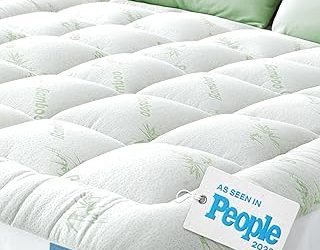
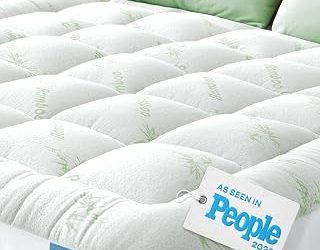
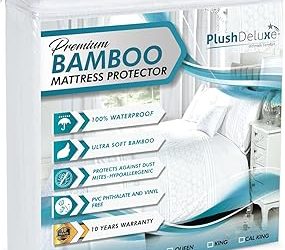
PlushDeluxe Bamboo Waterproof Mattress Protector
The surface here has a genuine hand-feel advantage — the bamboo viscose knit is soft enough that you can skip a top sheet without noticing you’re sleeping on a barrier. The 18-inch pocket fits most modern hybrids with room to spare, and the seams held up through repeated hot-cycle testing better than the price suggests.
Waterproof Noiseless & Cooling Protector, Gray
The 360-degree fitted design wraps the sides rather than just capping the top, which matters if you’re dealing with a leaky diaper or a dog with a bladder problem — spills roll toward the edge and stay contained. The 20-inch pocket is the deepest in this group, making it the safe choice for a thick mattress plus topper stack.
3D Air Fabric Cooling Mattress Pad
This one takes a different engineering approach: instead of relying on fiber alone, it uses a spacer knit that holds an air gap above the membrane, so body heat has somewhere to go. It’s the coolest-sleeping option in the lineup, though the tradeoff is a slightly more technical, less plush surface texture.
Utopia Bedding Bamboo Viscose Protector
Utopia builds to a price point and does it honestly — you get a bamboo viscose face, a quiet TPU backing, and stretchable pockets that fit 17 inches without drama. If you need three or four protectors for a full house, this is where the math works out.
Luxury Tencel Mattress Protector
Tencel lyocell moves moisture faster than bamboo viscose, which makes this the pick for genuine night sweats rather than mild overheating. The fabric has a cool, smooth touch that stays cool longer than the alternatives, and it resists the pilling that shows up on cheaper knits after a season.
Frequently Asked Questions
Will a waterproof protector make my bed hotter?
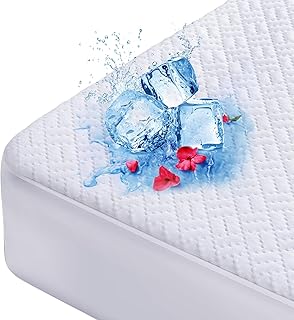
A well-built one adds a barely detectable amount of heat retention. The old vinyl designs were genuinely miserable, but a thin TPU film under a breathable knit adds far less insulation than a mattress topper or a heavy comforter does.
How often should I wash it?
Every two to four weeks for adults, weekly if you’re dealing with kids, pets, or heavy sweating. Wash warm, tumble low, and skip fabric softener — it coats the fibers and kills the wicking.
Do these work on adjustable beds?
Yes, as long as the pockets have real elastic and enough depth. Fitted-style protectors flex with the base; strap-on pads tend to shift when the head articulates.
Does a protector replace a mattress pad?
No. A protector is a barrier, not a comfort layer. If you want cushioning, use a topper underneath the protector so the barrier stays closest to you.
Final Thoughts
For most beds, the PlushDeluxe bamboo protector hits the best balance of feel, depth, and durability. If hot sleeping is your main complaint, the 3D Air Fabric pad’s spacer construction genuinely moves more heat than fiber alone can, and the Tencel option is the one I’d hand to anyone dealing with night sweats. Buyers with deep mattresses or messy households should default to the 360-degree gray protector for its 20-inch pockets and full side coverage.