Key takeaways
- Measure interior height, not exterior: A listing may advertise deep drawers while the usable cavity is under six inches. Anything at 5.9″ or above holds folded sweaters; below that you’re stacking tees. Compare interior dimensions across models, since drawer faces and reveals hide a lot.
- Inspect the drawer bottom: Thin hardboard sags under weight and eventually pops from its dado. Look for thicker panels, center supports on wide drawers, or plan to swap in 1/4″ plywood cut to size, which is a fifteen-minute fix per drawer with a circular saw and a straightedge.
- Understand the glide type: Euro-slide (epoxy-coated side rails) is the common budget standard and works well if you don’t overload it. Handle-free push-to-open systems need square assembly to track properly, so check for diagonal racking before you install fronts.
- Match width to your wall and your load: A 63″ nine-drawer chest distributes weight across more boxes and doubles as a media console, but it needs a flat run of wall and level flooring. Narrower 47″ units concentrate load, so drawer construction matters more.
- Plan the anti-tip anchor first: Every one of these ships with a strap. Locate a stud, use a real lag screw rather than the included drywall plug where possible, and anchor before you load a single drawer. Non-negotiable in any home with kids or pets.
What's inside
Sweater season is when most dressers get found out. A drawer that swallows t-shirts just fine will bow, sag, or stop sliding once you load it with denim and knitwear, and the culprit is almost never the drawer face you’re looking at. It’s the 1/8″ hardboard bottom floating in a shallow groove, the side-mount glide rated for 15 pounds, or the fact that the “deep” drawer is only five inches tall on the inside. If you’ve ever pulled a drawer all the way out and watched it nose-dive onto your foot, you already know the difference between marketed depth and structural depth.
I build furniture on weekends and repair a lot of flat-pack, so this guide looks at deep-drawer dressers the way I’d look at them on the shop floor: interior drawer height, what the bottom panel is made of, glide hardware, and how the carcass handles a real load spread across nine drawers. Below are six models worth considering in 2026, followed by the specs I check before anything gets assembled, plus the small upgrades that turn a decent chest into a genuinely durable one.
As an Amazon Associate we earn from qualifying purchases.




How to Choose a/an Dresser With Deep Drawers (2026)
- Measure interior height, not exterior: A listing may advertise deep drawers while the usable cavity is under six inches. Anything at 5.9″ or above holds folded sweaters; below that you’re stacking tees. Compare interior dimensions across models, since drawer faces and reveals hide a lot.
- Inspect the drawer bottom: Thin hardboard sags under weight and eventually pops from its dado. Look for thicker panels, center supports on wide drawers, or plan to swap in 1/4″ plywood cut to size, which is a fifteen-minute fix per drawer with a circular saw and a straightedge.
- Understand the glide type: Euro-slide (epoxy-coated side rails) is the common budget standard and works well if you don’t overload it. Handle-free push-to-open systems need square assembly to track properly, so check for diagonal racking before you install fronts.
- Match width to your wall and your load: A 63″ nine-drawer chest distributes weight across more boxes and doubles as a media console, but it needs a flat run of wall and level flooring. Narrower 47″ units concentrate load, so drawer construction matters more.
- Plan the anti-tip anchor first: Every one of these ships with a strap. Locate a stud, use a real lag screw rather than the included drywall plug where possible, and anchor before you load a single drawer. Non-negotiable in any home with kids or pets.
The Best Dresser With Deep Drawers (2026)s Reviewed
White 9-Drawer Dresser with Golden Handles, 63″
The nine-box layout across 63″ spreads the load intelligently, so no single drawer is carrying your entire wardrobe, and the brass-tone pulls are a genuine upgrade over stamped hardware. Assembly rewards patience: square the carcass and check diagonals before driving the back panel, or the drawers will bind on one side.
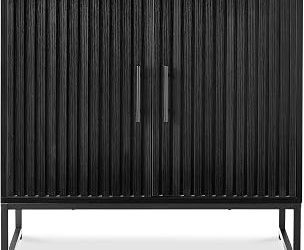
Handle-Free 9-Drawer Euro Slide Dresser, 63″ x 15.7″
The handle-free push-latch design gives you a clean, seamless front that works in tight hallways where protruding pulls get caught on clothing. That 15.7″ depth is shallower than a traditional chest, which makes it a smart pick for narrow rooms, though it also means folded stacks sit two-deep rather than three.
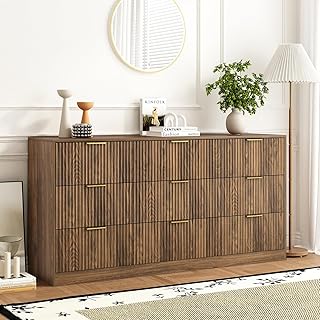
Fluted 9-Drawer Walnut Dresser, 63″
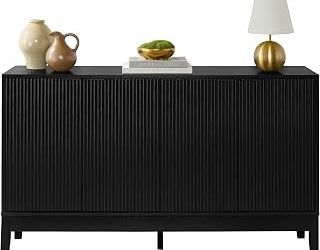
The fluted front is the standout here, adding real shadow-line texture that photographs far better than flat MDF, and the walnut finish hides scuffs better than white does. At 63″ wide it moonlights as a TV stand comfortably, and the reeded detail conveniently disguises minor edge repairs if you ever nick it.
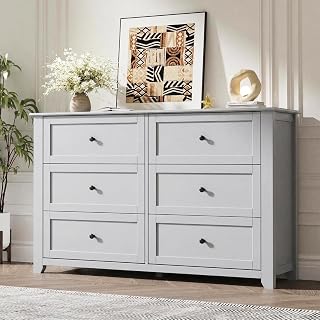
GarveeHome 6-Drawer Grey Dresser
Fewer, larger boxes mean deeper individual cavities, so this is the one I’d point toward for bulky bedding and heavy knitwear. The metal knobs are a solid starting point and take standard single-hole spacing, making them easy to swap for leather pulls or cup handles later.
5-Drawer Tall White Farmhouse Dresser
A vertical footprint is the right answer for small bedrooms and closets where floor space is scarce, and five deep drawers hold a surprising volume. Tall and narrow also means a higher center of gravity, so treat the wall anchor as part of the assembly, not an optional accessory.
Frequently Asked Questions
How much weight can these drawers actually hold?
Most Euro-slide systems in this price range are rated around 15 to 30 pounds per drawer. Folded clothing rarely exceeds that, but books, tools, or dense linens will. Reinforce the bottom panel if you’re storing anything heavier than fabric.
Can I upgrade the drawer glides myself?
Sometimes. Swapping to full-extension ball-bearing slides requires clearance on both sides of the drawer box and a cabinet interior square enough to mount rails parallel. Measure the side gap first; under 1/2″ per side and you’re better off leaving the stock hardware.
Do these work as TV stands?
The 63″ models do, comfortably supporting a 65″ screen on a level top. Confirm the top panel thickness and keep the TV base centered over a vertical divider rather than an unsupported span.
What tools should I have ready before assembly?
A cordless drill with a clutch set low, a rubber mallet, a framing square, and a stud finder. Skip the included wrench for anything but the final snug and never let a driver run at full torque into particleboard.
Final Thoughts
For most bedrooms, the Fluted 9-Drawer Walnut Dresser is the best-balanced choice: deep boxes, a wide load-spreading footprint, and a textured front that reads far more expensive than it is. If you need maximum single-drawer volume, the GarveeHome 6-Drawer Grey delivers it, and the 5-Drawer Tall Farmhouse model is the practical answer when floor space, not storage, is your real constraint. Whichever you pick, anchor it to a stud and consider a plywood bottom upgrade — an hour of work that adds years of service.