Key takeaways
- Slat spacing and material: Steel slats spaced under three inches apart give foam and hybrid mattresses even support without sagging. Wooden slats work well but should sit in routed grooves or on ledger rails, not just rest loose on a lip.
- Under-bed clearance: Measure your storage bins before you buy. A 14-inch frame usually nets about 12 inches of usable height once the frame rails eat into it; an 18-inch frame gets you closer to 16.
- Joint hardware quality: Look for machine-threaded bolts into welded nuts rather than self-tapping screws into thin tube steel. Threads stripping out of hollow legs is the number one reason budget frames start wobbling after a year.
- Noise control: Squeaks come from metal rubbing metal at the slat contact points. Frames with rubber or felt pads at each slat end, or slats that lock into a bracket, stay quiet far longer than bare-metal-on-bare-metal designs.
- Weight rating with margin: A 3,000 lb static rating sounds absurd for a single sleeper, but static ratings don’t account for dynamic load. Aim for at least three times your combined mattress and body weight.
What's inside
Twin XL is the size that trips people up. It’s five inches longer than a standard twin, which sounds trivial until you’ve assembled a frame at 11 p.m. and realized your mattress overhangs the foot rail. Add the fact that most twin XL buyers are outfitting dorms, guest rooms, or tight bedrooms where every inch under the bed counts, and the margin for error gets thin. I’ve put together and taken apart enough of these to know that the difference between a frame you forget about and one that squeaks every time you roll over comes down to three things: slat spacing, joint hardware, and whether the manufacturer bothered to weld the center support or just bolted it on.
This guide covers six twin XL frames that hold up under real use, from budget steel platforms to a solid pine build and a storage headboard with USB charging. I’ve flagged what each one actually delivers on the workbench — how the hardware is machined, where the noise comes from if it comes at all, and how much clearance you genuinely get underneath once the legs are loaded. No box spring is needed for any of these, which is the point of a platform frame in the first place.
As an Amazon Associate we earn from qualifying purchases.


How to Choose a Twin XL Bed Frame (2026)
- Slat spacing and material: Steel slats spaced under three inches apart give foam and hybrid mattresses even support without sagging. Wooden slats work well but should sit in routed grooves or on ledger rails, not just rest loose on a lip.
- Under-bed clearance: Measure your storage bins before you buy. A 14-inch frame usually nets about 12 inches of usable height once the frame rails eat into it; an 18-inch frame gets you closer to 16.
- Joint hardware quality: Look for machine-threaded bolts into welded nuts rather than self-tapping screws into thin tube steel. Threads stripping out of hollow legs is the number one reason budget frames start wobbling after a year.
- Noise control: Squeaks come from metal rubbing metal at the slat contact points. Frames with rubber or felt pads at each slat end, or slats that lock into a bracket, stay quiet far longer than bare-metal-on-bare-metal designs.
- Weight rating with margin: A 3,000 lb static rating sounds absurd for a single sleeper, but static ratings don’t account for dynamic load. Aim for at least three times your combined mattress and body weight.
The Best Twin XL Bed Frame (2026)s Reviewed
EMODA 18 Inch Twin XL Heavy Duty Frame
The tallest option here and the one I’d pick if under-bed storage is the actual goal — 18 inches gives you room for rolling drawers, not just flat bins. Assembly is a genuine one-person job with the included Allen wrench, and the center support runs the full length rather than stopping short like on cheaper tall frames.
Mellow Naturalista Classic 12 Inch Solid Wood Platform
Solid pine with wooden slats, and the only frame in this group that will take stain or paint if you want to match existing furniture. At 12 inches it’s the lowest profile of the bunch, which suits a low-ceiling attic room or a bunk-adjacent setup better than a tall steel frame.
MAF 14 Inch Twin XL with Round Corner Legs
The rounded corner legs are a small design decision that pays off in a narrow room — no more shin bruises walking past the footboard. Steel slat support rated to 3,000 lbs and a mattress baffle at the head end keep everything from creeping, which matters more on a narrow twin XL than on a queen.
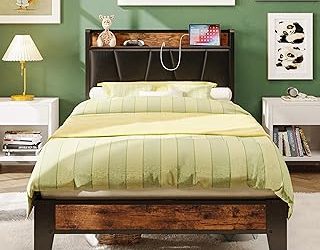
LIKIMIO Twin XL with Storage Headboard and Charging Station
The integrated headboard shelving and USB charging make this the practical choice for a dorm or a small bedroom where a nightstand won’t fit. The walnut-and-beige finish is laminate over engineered wood, so treat the headboard as a nightstand replacement rather than something to lean hard against.
LUMUNANCE 14 Inch Metal Bed Frame
A clean, no-frills steel platform that gets the fundamentals right: tight slat spacing, quiet joints, and honest under-bed clearance. This is the frame I recommend when someone just needs a solid foundation without paying for features they won’t use.
Frequently Asked Questions
Do I need a box spring with a twin XL platform frame?
No. Every frame in this roundup uses slats spaced closely enough to support a mattress directly. Adding a box spring only raises the sleep surface and can void some mattress warranties.
Will a standard twin mattress fit a twin XL frame?
It will sit on the slats, but you’ll have a five-inch gap at the foot. That gap becomes a place sheets bunch and feet slip through, so match the mattress to the frame.
Why does my metal frame squeak, and can I fix it?
Almost always metal-on-metal contact at slat ends or loose bolts that have worked their way out. Retighten every fastener, then slip a strip of adhesive felt or a rubber washer between the slat and the rail.
How long does assembly usually take?
Plan on 20 to 40 minutes solo for the steel frames and closer to an hour for the solid wood or headboard models. Lay all hardware out first and hand-thread every bolt before torquing anything down.
Final Thoughts
For maximum storage and long-term rigidity, the EMODA 18 Inch is the frame I’d build a small bedroom around. The MAF 14 Inch hits the best balance of clearance, support, and thoughtful details like the rounded legs, and the Mellow Naturalista is the one to choose if you want real wood you can finish yourself. Any of the three will outlast the mattress you put on it.