Key takeaways
- Interlocking vs. loose stacking: Systems with positive latches between modules stay together when you roll them over a threshold or load them into a vehicle. Boxes that merely sit on top of each other will separate at the worst moment, so treat the locking mechanism as a core feature rather than a bonus.
- Wheels and terrain: Small hard casters are fine on smooth concrete but stall on gravel, grass, and expansion joints. If your work moves outdoors, look for oversized all-terrain wheels and a telescoping handle that puts your hand at hip height instead of forcing a stoop.
- Weight rating you’ll actually reach: Hand tools add up faster than people expect — a drawer of sockets and a couple of grinders can hit 50 pounds without looking full. Check the per-drawer and total load specs, and give yourself margin above what you own today.
- Floor space vs. wall space: Rolling towers eat square footage that your car probably wants. Pairing one mobile unit with a wall-mounted track system for rakes, extension cords, and folding chairs is usually the better use of a garage than adding a second cabinet.
- Small-parts strategy: Fasteners are the biggest source of clutter and the least suited to drawers. Visible, labeled bin walls save more time per project than almost any other upgrade, because you can see the right screw instead of digging for it.
What's inside
Every project starts the same way: you know you own the right tool, but you have no idea which pile it landed in. Loose drivers migrate to the bottom of a bucket, drill bits scatter across the bench, and half your Saturday disappears into the hunt. The frustrating part is that most people already own enough storage — it’s just mismatched bins and boxes that don’t work together, so nothing has a permanent home.
A proper storage system fixes that by giving every tool a fixed address and letting you carry, roll, or hang the whole thing as one unit. This guide breaks down the stacking towers, wall-mounted rails, and small-parts organizers that actually earn their footprint in 2026, whether you’re working out of a two-car garage, a basement corner, or the back of a truck.
As an Amazon Associate we earn from qualifying purchases.


How to Choose a Tool Storage System (2026)
- Interlocking vs. loose stacking: Systems with positive latches between modules stay together when you roll them over a threshold or load them into a vehicle. Boxes that merely sit on top of each other will separate at the worst moment, so treat the locking mechanism as a core feature rather than a bonus.
- Wheels and terrain: Small hard casters are fine on smooth concrete but stall on gravel, grass, and expansion joints. If your work moves outdoors, look for oversized all-terrain wheels and a telescoping handle that puts your hand at hip height instead of forcing a stoop.
- Weight rating you’ll actually reach: Hand tools add up faster than people expect — a drawer of sockets and a couple of grinders can hit 50 pounds without looking full. Check the per-drawer and total load specs, and give yourself margin above what you own today.
- Floor space vs. wall space: Rolling towers eat square footage that your car probably wants. Pairing one mobile unit with a wall-mounted track system for rakes, extension cords, and folding chairs is usually the better use of a garage than adding a second cabinet.
- Small-parts strategy: Fasteners are the biggest source of clutter and the least suited to drawers. Visible, labeled bin walls save more time per project than almost any other upgrade, because you can see the right screw instead of digging for it.
The Best Tool Storage Systems (2026) Reviewed
CRAFTSMAN VERSASTACK XL Rolling Tower (CMST60420)
This four-piece tower is the closest thing to a complete garage-in-a-box, combining deep rolling storage with stackable modules that clip on securely enough to survive a bumpy driveway. It’s the pick if you want one system to grow into rather than a box you’ll outgrow in a year.
Keter Stack N Rolling Tool Box, 3-Piece
Keter’s weatherproof resin build and genuinely large all-terrain wheels make this the standout for anyone hauling tools to job sites, garden beds, or a half-finished deck. The telescoping handle tracks straight instead of wandering, which matters more than spec sheets suggest once you’re loaded down.
FLEX STACK PACK 3-Drawer Tool Box (FS1105)
Three full-extension drawers in a stackable footprint means your commonly used hand tools stay visible and reachable instead of buried under whatever went in last. It’s a smart base unit for anyone who prefers drawers to lift-off lids.
BLACK+DECKER Stackable Storage System, 3-Piece Set
A small box, deep toolbox, and rolling tote covers the realistic range of DIY tasks at a friendly entry price, making it the best starting point for a first serious kit. The tote handles bulk items that never fit neatly in drawers, like caulk guns and cordless chargers.
Wallmaster Garage Wall Mount Rack, 48-Inch
With a 450-pound rated track and six adjustable hooks, this reclaims the vertical space most garages waste, and the folding chair hangers handle the awkward items that lean against walls. Mount it into studs and it quietly absorbs the clutter no toolbox was ever going to hold.
Frequently Asked Questions
Are stacking systems from different brands compatible?
Generally no. Each manufacturer uses proprietary latch geometry, so pick one ecosystem and stay in it rather than trying to mix modules and hoping the footprints line up.
Do I need a rolling unit if my tools stay in the garage?
Wheels still help, since being able to roll your kit to the far side of a project beats making twelve trips to a fixed cabinet. If floor space is genuinely tight, wall-mounted storage plus one portable box is the leaner setup.
What’s the best way to organize screws and small hardware?
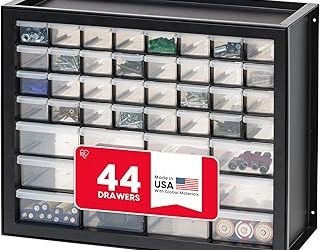
Visible bins beat drawers every time. A wall-mounted rack like the 90-piece plastic bin organizer lets you sort by size and type at a glance, and refilling takes seconds instead of a re-sort.
Can plastic tool storage handle heavy tools?
Modern structural resin holds up well to circular saws, grinders, and full socket sets. Load ratings matter more than material — respect the stated limits and distribute weight low in the stack for stability.
Final Thoughts
For most home workshops, the CRAFTSMAN VERSASTACK XL Rolling Tower is the strongest all-around investment, with the Keter Stack N Rolling Tool Box taking the win if your work regularly leaves the garage. Add the Wallmaster wall-mount rack to clear the floor, and you’ll have a setup that stays organized without constant maintenance.