Key takeaways
- Density before thickness: A 4 lb/ft³ or higher memory foam at 3 inches outperforms a soft 2 lb/ft³ foam at 4 inches every single time. Manufacturers advertise inches because inches are easy to print; density is what resists compression set. If a listing hides the density figure, treat that as an answer.
- Match loft to your frame clearance: Anything over 3 inches changes your mattress height, and deep-pocket sheets top out around 18 inches total. Measure your existing mattress, add the topper, and check your fitted sheet before you order rather than after.
- Look for dual-layer builds: The best designs for heavier sleepers stack a firm support core under a softer comfort layer. The bottom layer stops you from sinking through; the top layer does the contouring. Single-density slabs have to compromise on both jobs.
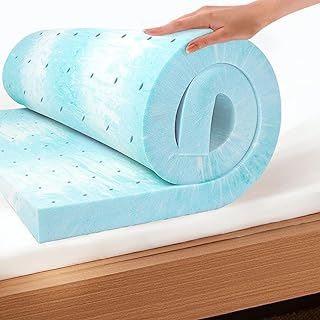
- Verify airflow, not just gel: Gel infusion helps at the surface, but ventilated channels or a wave-textured profile do the real work of moving heat away from a larger body mass. Convoluted or perforated foam also flexes more evenly across a wide contact patch.
- Check your foundation first: Slats spaced more than 3 inches apart will telegraph through any topper. Adding a sheet of plywood or a bunkie board underneath costs very little and doubles the useful life of whatever you put on top.
What's inside
If you have ever stripped a bed down to the frame to figure out why it feels like a hammock, you already know the problem with most mattress toppers. Foam that feels luxurious under 150 pounds behaves completely differently under 280. It compresses fully within a few weeks, your hips settle to the deck below, and the pressure relief you paid for is gone. Body weight is a load calculation, and most toppers on the market are engineered for the light end of the range.
This guide approaches the problem the way you would size a shelf bracket or a joist: start with the load, then pick the material that carries it. Below are six toppers that hold their loft for larger bodies, along with the specs that actually matter, honest notes on where each one fits, and answers to the questions that come up once you have your hands on the foam.
As an Amazon Associate we earn from qualifying purchases.


How to Choose a Mattress Topper For Heavy People (2026)
- Density before thickness: A 4 lb/ft³ or higher memory foam at 3 inches outperforms a soft 2 lb/ft³ foam at 4 inches every single time. Manufacturers advertise inches because inches are easy to print; density is what resists compression set. If a listing hides the density figure, treat that as an answer.
- Match loft to your frame clearance: Anything over 3 inches changes your mattress height, and deep-pocket sheets top out around 18 inches total. Measure your existing mattress, add the topper, and check your fitted sheet before you order rather than after.
- Look for dual-layer builds: The best designs for heavier sleepers stack a firm support core under a softer comfort layer. The bottom layer stops you from sinking through; the top layer does the contouring. Single-density slabs have to compromise on both jobs.
- Verify airflow, not just gel: Gel infusion helps at the surface, but ventilated channels or a wave-textured profile do the real work of moving heat away from a larger body mass. Convoluted or perforated foam also flexes more evenly across a wide contact patch.
- Check your foundation first: Slats spaced more than 3 inches apart will telegraph through any topper. Adding a sheet of plywood or a bunkie board underneath costs very little and doubles the useful life of whatever you put on top.
The Best Mattress Topper For Heavy People (2026)s Reviewed
5 Inch Mega Support Dual Layer Memory Foam Topper (Queen)
This is the heavy-duty option: a 2.5-inch pillow top stacked over 2.5 inches of gel-infused memory foam, which gives you genuine sink-in comfort without bottoming out. Best suited to firm or slightly worn mattresses where you need to rebuild the comfort layer from scratch, and you will want deep-pocket sheets.
BedStory 3 Inch Extra Firm Topper (King)
The extra-firm formulation is the standout here, resisting the compression that ruins softer toppers under sustained load. It is the pick for stomach and back sleepers who want spinal support rather than cradling, and the CertiPUR-US foam arrives with minimal off-gassing.
Linenspa 2 Inch Gel Memory Foam Topper (Queen)
A sensible, low-cost way to soften a mattress that is still structurally sound, with gel infusion that keeps surface heat manageable. At 2 inches it will not rescue a sagging bed, so treat it as a comfort tweak rather than a structural fix.
Lucid 4 Inch Ventilated Gel Topper (Full)
The ventilated design does real work here, letting air move through 4 inches of plush gel foam instead of trapping it against your back. Excellent for side sleepers who need shoulder and hip clearance, though the plush feel means you should pair it with a firm mattress underneath.
JSELF 3 Inch Dual-Layer Gel Topper (Queen)
The wave-textured surface distributes load across more contact points, which noticeably reduces lower-back pressure over a full night. Non-slip backing and a Bekaert fabric cover make installation straightforward, and the Oeko-Tex certification is a nice bonus for anyone sensitive to finishes.
Frequently Asked Questions
How thick should a topper be if I weigh over 250 pounds?
Three inches is the practical minimum, and 4 to 5 inches gives you more margin. Just remember that density matters more than depth: a firm 3-inch pad will outlast a soft 5-inch one under the same load.
Can a topper fix a mattress that already sags?
Not permanently. Foam conforms to the surface below it, so a dip will reappear through the topper within weeks. Address the sag first with plywood or a bunkie board, or replace the mattress.
How long will one of these last with heavier use?
Expect two to four years from a high-density topper under 250-plus pounds, versus five or more for a lighter sleeper. Rotating it head-to-foot every few months spreads the wear and buys you extra time.
Do I need straps or a cover to keep it in place?
Usually yes. Larger bodies generate more lateral shear when shifting position, so look for non-slip backing, elastic corner straps, or add a tight-fitting deep-pocket sheet over the whole stack.
Final Thoughts
If you need maximum support and have the sheet clearance for it, the 5 Inch Mega Support dual-layer topper is the most capable option here. For firm, no-nonsense spinal support that resists compression, the BedStory 3 Inch Extra Firm is the smarter buy, while the JSELF 3 Inch dual-layer strikes the best balance between pressure relief and durability for most heavier sleepers.