Key takeaways
- Downrod length: Aim for blades 8 to 9 feet off the floor. For a 12-foot peak that’s roughly a 24-inch rod; a 16-foot peak wants 48 inches or more. Fans bundled with multiple downrods let you fine-tune on install day rather than reordering.
- Slope rating: Check the maximum degree the canopy accepts. Most standard mounts stop near 15 degrees, while fans built for vaults handle 30 to 45. Measure your pitch with a digital level before ordering, not after.
- Blade span versus room volume: High ceilings need bigger sweeps to push air down. A 52-inch fan suits rooms up to roughly 400 square feet with moderate height; anything larger or taller calls for 72 inches and up.
- DC motor and speed range: DC motors draw less power, run quieter, and typically offer six speeds instead of three. That low-end control matters in a vaulted bedroom where you want gentle circulation, not a wind tunnel.
- Damp rating and reversibility: Covered porches and sunrooms need damp-rated housings. Reverse mode pulls warm air off the ceiling in winter, which is where vaulted rooms lose the most comfort.
What's inside
Vaulted ceilings look incredible and move air terribly. I learned that the hard way installing a standard 42-inch fan on a stubby downrod in a room with a 14-foot peak — the blades spun happily up near the rafters while the seating area below stayed stagnant. The problem is geometry: air needs to travel from the blade plane down to where people actually sit, and that column of air loses momentum fast. Add a sloped mounting surface and you introduce a second issue, because most standard canopies bind against anything steeper than about 15 degrees.
This guide breaks down what actually matters when you’re fanning a high or angled ceiling: downrod length, slope tolerance, blade sweep, and real CFM instead of marketing numbers. I’ve pulled together six fans that handle vaulted installs well, from 96-inch industrial sweeps for great rooms and shop spaces down to 52-inch models sized for bedrooms with a modest pitch. Each one ships with either an adjustable canopy or multiple downrods, which saves you a second trip up the ladder.
As an Amazon Associate we earn from qualifying purchases.



How to Choose a Fan For Vaulted Ceiling (2026)
- Downrod length: Aim for blades 8 to 9 feet off the floor. For a 12-foot peak that’s roughly a 24-inch rod; a 16-foot peak wants 48 inches or more. Fans bundled with multiple downrods let you fine-tune on install day rather than reordering.
- Slope rating: Check the maximum degree the canopy accepts. Most standard mounts stop near 15 degrees, while fans built for vaults handle 30 to 45. Measure your pitch with a digital level before ordering, not after.
- Blade span versus room volume: High ceilings need bigger sweeps to push air down. A 52-inch fan suits rooms up to roughly 400 square feet with moderate height; anything larger or taller calls for 72 inches and up.
- DC motor and speed range: DC motors draw less power, run quieter, and typically offer six speeds instead of three. That low-end control matters in a vaulted bedroom where you want gentle circulation, not a wind tunnel.
- Damp rating and reversibility: Covered porches and sunrooms need damp-rated housings. Reverse mode pulls warm air off the ceiling in winter, which is where vaulted rooms lose the most comfort.
The Best Fan For Vaulted Ceiling (2026)s Reviewed
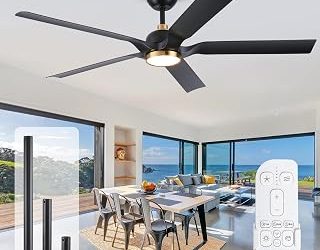
ZMISHIBO 72″ Ceiling Fan with Lights
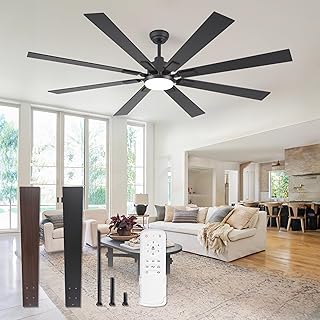
The dual-finish blades and 24W tri-color LED make this a natural fit for great rooms where the fan is a visual anchor, and the high-CFM DC motor genuinely reaches floor level from a long downrod. Damp rated, so it works equally well over a covered patio with an exposed-beam ceiling.
Fanbulous 72 Inch with App Control
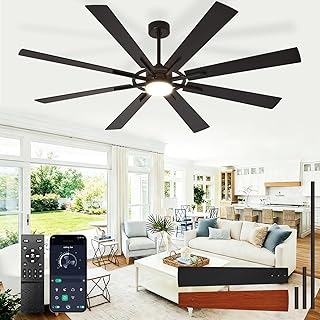
App control is more useful than it sounds on a vaulted install, since the fan ends up far enough overhead that pull chains are irrelevant and remotes get lost. The reversible dual-sided blades let you flip the look without buying a second fan, and the memory function restores your last setting after a power blip.
ZMISHIBO 96 Inch Industrial Fan
Eight aluminum blades and a 96-inch sweep make this the pick for cathedral great rooms, barns, and garages with serious vertical volume. It ships with three downrods and no light kit, which is fine when you already have recessed cans and just need air movement.
52 Inch Fan with Sloped Ceiling Mount
Rated for pitches up to 15 degrees, this is the practical choice for bedrooms with a gentle vault rather than a dramatic cathedral peak. The quiet DC motor and dimmable 3CCT LED cover both night-light duty and full task brightness.
Modern 72 Inch 8 Blade Outdoor Fan
Eight blades and six speeds give you fine control across a big footprint, and the matte black finish disappears against dark stained beams. Indoor and outdoor rated, with app plus remote control for spaces where a wall switch was never roughed in.
Frequently Asked Questions
How long should my downrod be?
Subtract 9 feet from your ceiling height at the mounting point, then subtract the fan body height (usually 10 to 12 inches). Round to the nearest available rod length and err slightly long — you can always shorten the drop visually with a longer rod, but you can’t add reach.
Do I need a special mount for a sloped ceiling?
Often yes. Standard canopies handle mild pitches, but steeper vaults require a sloped ceiling adapter or a fan with a wide-range ball mount. Confirm the maximum degree in the specs and verify the electrical box is fan-rated for the added leverage.
Will a bigger fan cool a vaulted room better?
Larger blade spans move more air at lower speeds, which means better floor-level airflow with less noise. For rooms with peaks above 12 feet, a 72-inch fan almost always outperforms two smaller ones.
Is reverse mode worth using in winter?
In vaulted rooms, absolutely. Heat stratifies badly under a high ceiling, and running the fan in reverse on low pushes that trapped warm air back down the walls. Many people see noticeably steadier thermostat behavior.
Final Thoughts
For most vaulted living rooms, the ZMISHIBO 72″ hits the best balance of airflow, lighting, and finish flexibility. Step up to the ZMISHIBO 96 Inch industrial if you’re dealing with a true cathedral or shop space, and go with the Fanbulous 72 Inch when app control and reversible blade styling matter more than raw sweep.