Key takeaways
- Match material to moisture: Powder-coated steel handles garages and shops well but will show surface rust at scratches near concrete floors. Laminate over engineered wood belongs in conditioned rooms only. Molded plastic is the honest pick for basements, laundry rooms, and anywhere a washer might leak.
- Read the per-shelf rating, not the total: A cabinet advertised at 500 lb capacity might allow only 60 lb per shelf. Weigh your heaviest planned load, then divide honestly. Bins of hardware and full paint cans add up faster than most people expect.
- Check the shelf adjustment system: Punched slots in a continuous standard beat four loose pins per shelf every time. More positions means you can rebuild the interior around a specific tool or appliance instead of wasting six inches of dead air above every row.
- Plan for anchoring before you assemble: Any cabinet over about 60 inches tall needs to be tied to a stud or masonry wall, especially with heavy items up high. Look for factory-punched holes in the back panel. If there are none, you’ll be drilling, so know that going in.
- Think through the door swing and clearance: Measure how far each door needs to open before it hits a car, a workbench, or a doorway trim. Recessed handles and slim frames matter in tight garages more than any spec on the box.
What's inside
Anyone who has spent a Saturday wrestling a pile of paint cans, extension cords, and half-used caulk tubes into some kind of order knows the real problem isn’t clutter. It’s that most storage furniture is built for photographs, not for load. Particleboard sags under a case of canned goods. Doors drift out of square after two seasons of humidity. Shelf pins wander. You end up rebuilding the thing you bought to solve the problem, which is a lousy trade for a weekend.
This guide looks at cabinet storage the way a maker would: gauge of the steel, how the shelf standards are punched, whether the frame is rigid before the shelves go in, and how much abuse the hardware will absorb. We cover tall steel lockers for garages and shops, a laminate pantry unit for finished rooms, and a molded plastic option for damp basements. Everything here is judged on whether it holds up after the fifth reconfiguration, not the first.
As an Amazon Associate we earn from qualifying purchases.


How to Choose a/an Cabinet Storage (2026)
- Match material to moisture: Powder-coated steel handles garages and shops well but will show surface rust at scratches near concrete floors. Laminate over engineered wood belongs in conditioned rooms only. Molded plastic is the honest pick for basements, laundry rooms, and anywhere a washer might leak.
- Read the per-shelf rating, not the total: A cabinet advertised at 500 lb capacity might allow only 60 lb per shelf. Weigh your heaviest planned load, then divide honestly. Bins of hardware and full paint cans add up faster than most people expect.
- Check the shelf adjustment system: Punched slots in a continuous standard beat four loose pins per shelf every time. More positions means you can rebuild the interior around a specific tool or appliance instead of wasting six inches of dead air above every row.
- Plan for anchoring before you assemble: Any cabinet over about 60 inches tall needs to be tied to a stud or masonry wall, especially with heavy items up high. Look for factory-punched holes in the back panel. If there are none, you’ll be drilling, so know that going in.
- Think through the door swing and clearance: Measure how far each door needs to open before it hits a car, a workbench, or a doorway trim. Recessed handles and slim frames matter in tight garages more than any spec on the box.
The Best Cabinet Storage (2026)s Reviewed
71″ Metal Garage Storage Cabinet with 5 Adjustable Shelves
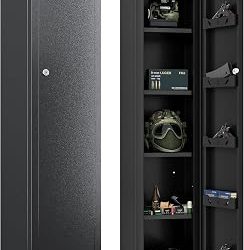
This is the workhorse of the group: full height, lockable, and with five shelves you can move on tight increments to build a genuinely custom interior. The welded frame stays square once anchored, and the black powder coat hides shop grime far better than the white finishes do.
Sauder Select Storage Cabinet
The right call when the cabinet lives in a hallway, laundry nook, or kitchen and needs to look like furniture rather than equipment. Assembly is straightforward if you take the time to square the case with a framing square before driving the back panel, which is what keeps the doors aligned long-term.
Sterilite 4 Shelf Cabinet
Molded plastic is genuinely the smart material for damp spaces, and this one won’t rust, swell, or delaminate if the basement takes on water. Keep the loads light and evenly spread across each shelf, since plastic flexes where steel simply holds.
47″ White Metal Storage Cabinet with 3 Shelves
A shorter steel cabinet that fits under low ceilings, beside a workbench, or in a pantry alcove where a 71-inch unit would overwhelm the space. The lock is a real advantage for keeping cleaning chemicals or shop consumables away from kids.
Guizeeopo 71″ Metal Storage Cabinet
Nearly identical footprint to the other tall steel option, with adjustable shelves and a clean black finish that works in a home office as easily as a garage. Worth comparing on shelf count and current price, since these two trade places depending on the day.
Frequently Asked Questions
Do I really need to anchor a tall cabinet to the wall?
Yes, particularly with anything over five feet tall or loaded above waist height. An empty steel cabinet is light and top-heavy, and a single open door plus a firm tug is enough to tip one. Two lag screws into studs takes ten minutes.
Will a steel cabinet rust in an unheated garage?
Powder-coated steel resists surface rust well, but bare metal exposed by a scratch or a drilled hole will corrode in humid conditions. Touch up chips with appliance paint and set the cabinet on shims or feet so the base isn’t wicking moisture off a concrete slab.
Can I add my own shelves or dividers?
Absolutely, and it’s one of the best upgrades you can make. A piece of half-inch plywood cut to the interior width, resting on the existing shelf, spreads heavy point loads and stops thin steel shelves from dishing under bins.
How do I stop cabinet doors from drifting out of alignment?
Most misalignment traces back to a case that wasn’t square during assembly or a floor that isn’t level. Check both with a level before blaming the hinges, then shim the base as needed. On laminate cabinets, snug the back panel fasteners once a year.
Final Thoughts
For a garage or shop where the cabinet has to earn its keep, the 71″ Metal Garage Storage Cabinet with five adjustable shelves is the one to beat, with the Guizeeopo 71″ cabinet as a close alternative worth checking on price. If the unit lives in a finished room, the Sauder Select pantry cabinet looks the part and holds up well when assembled carefully, while the Sterilite 4 Shelf Cabinet remains the sensible choice for anywhere moisture is part of the equation.