Key takeaways
- Measure your real drop: Pull a tape from the ceiling box to the floor, then subtract the fan’s total height from the spec sheet. Aim for seven feet of clearance under the lowest moving part. Flush mounts typically hang eight to twelve inches, and enclosed models sit even tighter.
- Check the junction box rating: A fan-rated box is stamped for it and anchored to a brace or joist. A standard light box holds a fixture, not a spinning motor. If you’re swapping out an old flush light, budget twenty minutes and a retrofit brace for the upgrade.
- DC motor over AC: DC motors run quieter, draw less current, offer more speed steps, and reverse direction without a mechanical toggle. In a bedroom where the fan sits three feet from your head, that noise floor difference is the whole ballgame.
- Match blade span to the room: Roughly 20 inches suits a nursery, hallway, or small bedroom. Step up to 42 inches for anything over 150 square feet, or the fan will just stir air near the ceiling without reaching you.
- Decide how you’ll control it: Remote-only models skip the extra wiring but the remote will vanish into a couch cushion eventually. App and smart-hub control gives you a backup, and some units still work off a single switch leg, which matters if your box only has one hot conductor.
What's inside
If you’ve ever stood on a stepladder in an eight-foot room holding a fan box and realized the blades would swing at forehead height, you know the problem. Standard downrod fans need roughly nine feet of clearance to move air properly and stay clear of tall guests. Anything below that and you’re either sacrificing headroom or accepting a fan that thumps against the joists every time it spins up. Older homes, basement conversions, finished attics, and most rental apartments all land squarely in this awkward zone.
Flush mount and hugger-style fans solve it by mounting the motor housing directly against the ceiling box, trading a few inches of drop for usable room. The newer bladeless and enclosed fandelier designs go further, wrapping the impeller inside a diffuser so nothing spins in open air at all. This guide covers six low-profile fans I’d actually put on my own ceilings, plus the wiring details, clearance math, and airflow tradeoffs worth knowing before you cut power at the breaker.
As an Amazon Associate we earn from qualifying purchases.




How to Choose a Fan For Low Ceiling (2026)
- Measure your real drop: Pull a tape from the ceiling box to the floor, then subtract the fan’s total height from the spec sheet. Aim for seven feet of clearance under the lowest moving part. Flush mounts typically hang eight to twelve inches, and enclosed models sit even tighter.
- Check the junction box rating: A fan-rated box is stamped for it and anchored to a brace or joist. A standard light box holds a fixture, not a spinning motor. If you’re swapping out an old flush light, budget twenty minutes and a retrofit brace for the upgrade.
- DC motor over AC: DC motors run quieter, draw less current, offer more speed steps, and reverse direction without a mechanical toggle. In a bedroom where the fan sits three feet from your head, that noise floor difference is the whole ballgame.
- Match blade span to the room: Roughly 20 inches suits a nursery, hallway, or small bedroom. Step up to 42 inches for anything over 150 square feet, or the fan will just stir air near the ceiling without reaching you.
- Decide how you’ll control it: Remote-only models skip the extra wiring but the remote will vanish into a couch cushion eventually. App and smart-hub control gives you a backup, and some units still work off a single switch leg, which matters if your box only has one hot conductor.
The Best Fan For Low Ceiling (2026)s Reviewed
CHAREADA 20″ Foldable Ceiling Fan with Light
The folding blades are the clever part here, letting you fit the fan through a tight stairwell or attic hatch and deploy it once mounted. Six speeds and a dimmable light panel cover a kid’s room or guest bedroom comfortably, and the install is a straightforward canopy-and-ball setup that one person can manage with a helper holding the wire nuts.
Bevenus Low Profile Flower-Shape Fan Light
Petal-shaped housing hides the airflow path, so this reads more like a ceiling fixture than a fan, which is exactly what you want above a dining nook. Dual remote and app control plus a timer make it easy to live with, though the sculpted diffuser means you’re paying for looks as much as CFM.
Depuley 19″ Bladeless Flush Mount Fandelier
Nothing spins in open air on this one, making it my default recommendation for rooms with lofted bunks or seven-and-a-half-foot ceilings. The enclosed impeller keeps noise low and the white housing disappears against most ceilings, but plan for a gentler breeze than an open-blade fan of the same diameter.
42″ White Flush Mount Fan for Nursery Rooms
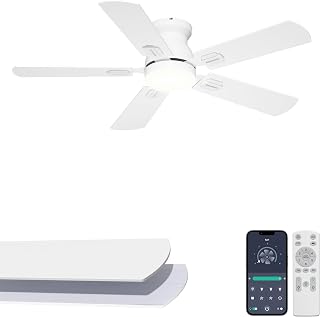
This is the pick when the room is genuinely too big for a 20-inch unit. The DC motor stays whisper-quiet on low, the 3CCT switching lets you drop to warm white for night feeds, and the flush canopy keeps every inch of headroom you’ve got.
ZMISHIBO 19.7″ Black Low Profile Fandelier
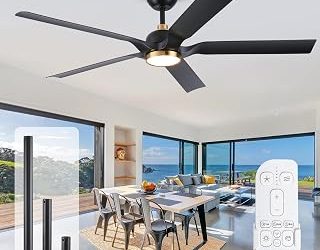
A matte black housing looks intentional against a white ceiling instead of apologetic, and the reversible airflow earns its keep in winter by pushing warm air back down. Six speeds and full 3000K to 6000K tuning give you a lot of range from a fixture that hangs under ten inches.
Frequently Asked Questions
How low can a ceiling be before a fan won’t work?
Most electrical codes want seven feet of clearance beneath the blades. With a flush mount fan hanging eight to ten inches, that puts eight-foot ceilings comfortably in range. Below about 7’8″, switch to a bladeless enclosed model.
Do flush mount fans move noticeably less air?
Yes, a little. Mounting tight to the ceiling restricts intake above the blades, so expect maybe 10 to 20 percent less airflow than the same fan on a downrod. Bumping up one speed step usually erases the difference.
Can I install one where a flush light fixture is now?
Only if the box is fan-rated. Kill the breaker, drop the fixture, and look for a stamped rating and solid bracing. If it’s a plain plastic pancake box, install a retrofit fan brace first. It’s a 20-minute job through the existing hole.
Is a remote enough, or do I need a wall switch?
A remote works fine as long as the receiver stays powered, which means leaving your wall switch on. I prefer models with app control as backup so a lost remote doesn’t mean a lost fan.
Final Thoughts
For the tightest ceilings, the Depuley bladeless fandelier is the safest install and the easiest to live with. If you have a larger room to cover, the 42″ flush mount nursery fan brings real airflow without stealing headroom, and the ZMISHIBO in black is the one I’d choose when the fixture needs to look deliberate rather than merely practical.