Key takeaways
- Adjustable steam output: Non-negotiable for vinyl. A low or “dust mop” setting lets you clean without saturating seams, and you save the high setting for tile or grout in the same house.
- Head weight and glide: Lighter heads on swivel joints let you clean by moving, not pressing. Heavy plates plus downward force is how people burnish vinyl and leave shiny tracks.
- Pad material and count: Microfiber loops lift grit; flat weaves polish. Two or more washable pads means you swap mid-job instead of pushing muddy water around your entry hall.
- Heat-up time and tank size: Thirty seconds to steam is genuinely useful for spot cleanups. A larger tank matters for open-plan spaces, but adds weight to whatever you’re pushing.
- Cord length: Twenty feet is the practical floor. Anything shorter and you’ll be hunting outlets or dragging an extension cord across a wet floor, which is its own problem.
What's inside
Vinyl flooring is a bit of a paradox for anyone who’s installed it themselves. You picked it because it laughs off spills and shrugs at scuffs, then discovered that the same wear layer protecting the surface is also the thing you can cook if you get careless with heat. Luxury vinyl plank sits on adhesive or a click-lock system, and both of those have limits. Park a steam head in one spot while you answer the door and you may come back to a lifted edge or a faint cloudy patch that never fully goes away.
So the goal isn’t the most powerful steam mop on the shelf. It’s the one that gives you fine control over how much vapor hits the plank, dries fast enough that seams never sit wet, and glides without you leaning into it. I’ve run these across LVP in kitchens, entryways, and a basement with radiant heat underneath, and the differences come down to steam adjustability, pad quality, and how the head handles pressure. Below are six models worth your money in 2026, plus the specs that actually matter when you’re shopping.
As an Amazon Associate we earn from qualifying purchases.




How to Choose a Steam Mop Vinyl Floors (2026)
- Adjustable steam output: Non-negotiable for vinyl. A low or “dust mop” setting lets you clean without saturating seams, and you save the high setting for tile or grout in the same house.
- Head weight and glide: Lighter heads on swivel joints let you clean by moving, not pressing. Heavy plates plus downward force is how people burnish vinyl and leave shiny tracks.
- Pad material and count: Microfiber loops lift grit; flat weaves polish. Two or more washable pads means you swap mid-job instead of pushing muddy water around your entry hall.
- Heat-up time and tank size: Thirty seconds to steam is genuinely useful for spot cleanups. A larger tank matters for open-plan spaces, but adds weight to whatever you’re pushing.
- Cord length: Twenty feet is the practical floor. Anything shorter and you’ll be hunting outlets or dragging an extension cord across a wet floor, which is its own problem.
The Best Steam Mop Vinyl Floors (2026)s Reviewed
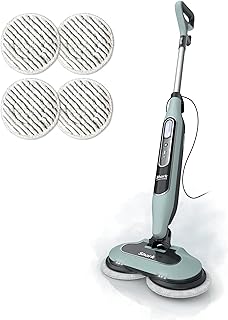
Shark Steam & Scrub S8001
The rotating pad system does the scrubbing motion for you, which is the difference between cleaning vinyl and grinding into it — you guide the head and it handles the agitation. LED headlights sound gimmicky until you see what they reveal along baseboards, and the four Dirt Grip pads mean you can do a whole floor without rinsing anything mid-job.
BISSELL PowerFresh 1940A
The variable steam trigger is the reason this one keeps showing up on lists: three levels, easy to feather down for LVP, easy to crank up when you cross into tile. Its 12-inch path covers ground quickly, and the flip-down scrubber handles a dried spill without you fetching a separate brush.
Amazon Basics Steam Mop
A sensible pick if you want the function without the feature list. Thirty-second heat-up, three washable pads, and a 20-foot cord cover the fundamentals, though the fixed steam output means you’ll want to keep it moving steadily across vinyl rather than pausing.
Adjustable Steam & Height Floor Steamer
The height adjustment is an underrated detail — set the handle to your frame and you stop hunching, which stops you from unconsciously pressing down. Multiple steam modes plus a 23-foot cord make this a strong fit for mixed flooring on a single level.
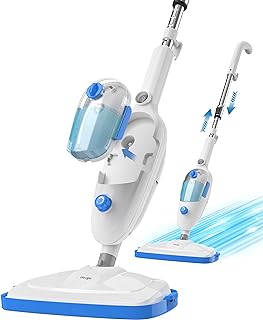
Multi-Purpose Steam Mop with Handheld
The detachable handheld turns this from a floor tool into a general-purpose steamer for grout lines, appliance seals, and the trim you can never quite reach. Chemical-free cleaning is a real plus in homes with crawling kids or pets who lick the floor after you’re done.
Frequently Asked Questions
Is steam actually safe on vinyl plank?
On sealed, well-installed LVP with tight seams, yes — on low steam with constant motion. Skip it entirely on peel-and-stick tile, older sheet vinyl with gaps, or any floor where you can see edges lifting.
How long can I leave the mop in one place?
You shouldn’t. Treat a stationary steam head as a countdown, not a soak. If a spot needs more work, lift the mop, let the floor cool, and come back to it.
Do I need cleaning solution?
No, and most manufacturers void warranties if you add it to the tank. Use distilled water to avoid mineral scale, and pre-treat stubborn spots with a vinyl-safe cleaner and cloth before you steam.
Will steam damage the finish over time?
Occasional low-steam cleaning is fine. Weekly high-heat passes on the same traffic lanes can eventually dull the wear layer, so alternate with a damp microfiber mop for routine upkeep.
Final Thoughts
If you want the safest all-rounder for vinyl, the BISSELL PowerFresh 1940A wins on steam control alone — that trigger is what keeps your seams dry. The Shark S8001 is the better choice if you’ve got real grime and want the pads doing the work instead of your shoulders, and the Amazon Basics model handles honest weekly maintenance for a fraction of the outlay.