Key takeaways
- Slat gap under 3 inches: Pull out a tape measure on the spec sheet, not the marketing copy. Hybrid coil units need continuous contact; gaps wider than about 3 inches let individual coils dip into empty space, and that’s where premature sag begins. If a frame you already own runs wide, a bunkie board or a sheet of half-inch plywood cut to size solves it for under twenty bucks.
- Center legs, plural: A queen frame carrying a hybrid should have at least two center support legs running down the spine, ideally three. Count them in the product photos. Frames that rely on side rails alone will bow in the middle over time, and no amount of tightening fixes geometry.
- Steel gauge and weld quality: On metal platforms, thicker tubing and welded joints beat bolted sheet metal every time. Bolted connections are where squeaks are born, since each fastener is a tiny pivot point that works loose with every roll-over.
- Under-bed clearance you’ll actually use: A 14-inch frame plus a 12-inch hybrid puts your sleep surface around 26 inches — comfortable for most adults and enough room below for bins. If you want a lower profile, remember the mattress height stacks on top.
- Hardware quality tells the story: Cheap zinc bolts strip on the first pass, and stamped brackets flex. Check reviews for mentions of stripped threads or missing parts, and keep a socket wrench handy — hand-tightening with the included L-key rarely gets you to full torque.
What's inside
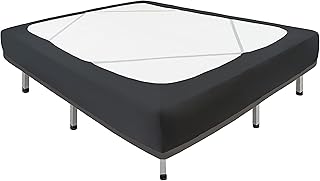
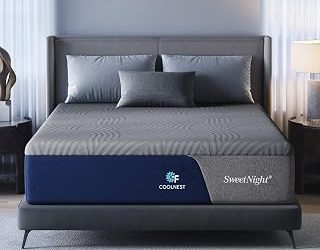
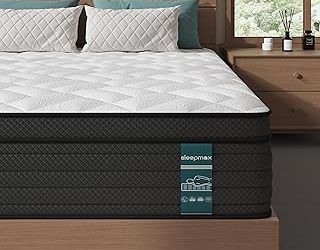
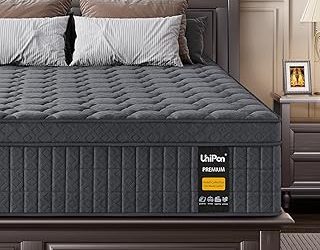
A hybrid mattress is a different animal than the all-foam slab it replaced. You’ve got a coil unit doing the load-bearing work, foam layers stacked on top, and a total weight that often lands north of 100 pounds before anyone climbs in. Set that on a frame with 6-inch slat gaps or a center rail that skips a leg, and the coils start deflecting unevenly. You’ll feel it as a soft spot under your hip within a year, and most warranty documents will quietly point out that inadequate support voids coverage.
I’ve assembled a lot of these frames — hex keys, missing washers, instructions translated twice — and the differences that matter aren’t the ones on the box. What matters is slat spacing, how many legs actually touch the floor, and whether the center support is welded steel or a decorative afterthought. Below are six frames that handle hybrid weight without complaint, plus the specs I check before anything goes in the cart.
As an Amazon Associate we earn from qualifying purchases.



How to Choose a Bed Frame For Hybrid Mattress (2026)
- Slat gap under 3 inches: Pull out a tape measure on the spec sheet, not the marketing copy. Hybrid coil units need continuous contact; gaps wider than about 3 inches let individual coils dip into empty space, and that’s where premature sag begins. If a frame you already own runs wide, a bunkie board or a sheet of half-inch plywood cut to size solves it for under twenty bucks.
- Center legs, plural: A queen frame carrying a hybrid should have at least two center support legs running down the spine, ideally three. Count them in the product photos. Frames that rely on side rails alone will bow in the middle over time, and no amount of tightening fixes geometry.
- Steel gauge and weld quality: On metal platforms, thicker tubing and welded joints beat bolted sheet metal every time. Bolted connections are where squeaks are born, since each fastener is a tiny pivot point that works loose with every roll-over.
- Under-bed clearance you’ll actually use: A 14-inch frame plus a 12-inch hybrid puts your sleep surface around 26 inches — comfortable for most adults and enough room below for bins. If you want a lower profile, remember the mattress height stacks on top.
- Hardware quality tells the story: Cheap zinc bolts strip on the first pass, and stamped brackets flex. Check reviews for mentions of stripped threads or missing parts, and keep a socket wrench handy — hand-tightening with the included L-key rarely gets you to full torque.
The Best Bed Frame For Hybrid Mattresses Reviewed
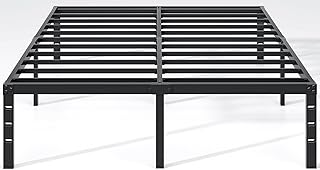
JETO 14-Inch Metal Bed Frame with Storage
Heavy-gauge steel, tight slat spacing, and enough vertical clearance to slide full-depth totes underneath — this is the frame I’d point a hybrid owner toward first. Assembly is straightforward interlocking construction, though I’d recommend a socket wrench for the final tightening pass since the included key doesn’t give you much leverage.
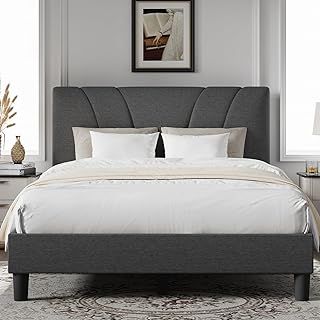
Allewie Upholstered Platform Bed
The fabric-wrapped headboard hides a genuinely solid wooden slat deck, and the upholstery does double duty as sound dampening at the joints. If squeaks are your main worry, padded construction like this is a smart bet — there’s simply less metal-on-metal contact to work loose.
Novilla Upholstered Queen with Adjustable Headboard
The three-position headboard is more useful than it sounds, letting you dial in height after your mattress is on rather than guessing beforehand. Weight capacity is generous, and the slat system handles hybrid coil pressure without needing a supplemental board.
ZINUS Vivek Deluxe Wood Platform
Real wood slats with proper spacing, a slatted headboard that skips the upholstery-cleaning headache, and Zinus’s usual well-labeled hardware bags. It assembles faster than most wood frames because the rails come pre-drilled with accurate pilot holes — a small thing that saves a lot of frustration.
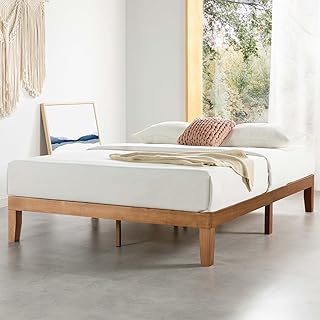
Mellow Naturalista Classic 12-Inch Solid Pine
Solid pine construction, no particleboard hiding in the rails, and the kind of frame you can actually repair or refinish years down the road. The 12-inch height keeps the overall stack reasonable if you’re running a thick hybrid, and it takes a coat of stain nicely if you want a custom finish.
Frequently Asked Questions
Do I need a box spring with a hybrid mattress?
No. Every frame here is a platform design with integrated slat support, which is exactly what hybrids are built for. Adding a box spring raises the bed unnecessarily and introduces a springy layer that undermines the coil unit’s stability.
How wide can slat gaps be before it’s a problem?
Most hybrid warranties specify 3 inches or less, though some require 2.75. Check your mattress documentation, then measure. If your gaps run wide, a bunkie board or plywood insert brings you into compliance without buying a new frame.
Will a metal frame squeak more than wood?
Not inherently — squeaks come from loose fasteners and metal-on-metal contact points, not the material itself. Welded metal frames are often quieter than bolted wood ones. Felt pads or rubber washers at contact points eliminate most noise if it develops.
Can I add my own storage or reinforcement?
Absolutely, and it’s one of the easiest upgrades going. Extra center legs, a plywood deck, or a simple cleat-and-slat addition all bolt on with basic tools. Just avoid drilling through structural welds or load-bearing rails.
Final Thoughts
For most people pairing a new hybrid with a new frame, the JETO 14-inch metal platform delivers the best combination of load capacity, correct slat spacing, and usable storage underneath. If you want something quieter and softer at the edges, the Allewie upholstered platform is the pick. And for anyone who values repairability and doesn’t mind a bit of finishing work, the Mellow Naturalista in solid pine is the frame you’ll still be using in fifteen years.