Key takeaways
- Match pints to the problem, not the room label: A damp bedroom might only need a 21-pint unit, while a basement with a sump pit and block walls will bury anything under 30 pints per day. Coverage claims like 2500 sq ft assume mild humidity, so size up if you’re fighting standing dampness.
- Compressor or Peltier: Compressor models pull real water and keep working in a cold basement. Thermoelectric (Peltier) units are near-silent and cheap to run, but they stall below roughly 65°F, which rules them out for unheated spaces.
- Continuous drainage is the feature you’ll actually use: A 95 oz tank sounds generous until you’re emptying it twice a day. If the unit accepts a garden-hose fitting and you have a floor drain or utility sink below it, you can set it and forget it for the season.
- Auto defrost and a humidistat: Auto defrost stops coil icing in cool rooms; intelligent humidity control cycles the compressor off once you hit target RH instead of running flat out. Aim for 45–50% RH to protect wood joints and glue lines without drying out solid tops.
- Noise, placement, and clearance: Check dB ratings if it’s going in a bedroom, and give any unit 6–12 inches of clearance on the intake and exhaust sides. Cramming one into a closet corner is the single most common reason people think their dehumidifier is underpowered.
What's inside
You notice it before you can name it. A workshop drawer that sticks in July. The faint mushroom smell in the basement stairwell. Hand-planed maple that measured dead flat in April and now rocks on the bench like a see-saw. Moisture in the air is the quiet saboteur of everything we build and everything we own, and it works slowly enough that most people blame the furniture instead of the room.
I’ve run dehumidifiers in a detached shop, a half-finished basement, and a bedroom where the previous owner had papered over water stains. What follows is a practical buyer’s guide written from that angle: how to size a unit for the square footage you actually have, why drain hose support matters more than tank capacity, and which models below are worth the money in 2026. No fluff, no spec-sheet worship.
As an Amazon Associate we earn from qualifying purchases.



How to Choose a/an Deal Dehumidifier (2026)
- Match pints to the problem, not the room label: A damp bedroom might only need a 21-pint unit, while a basement with a sump pit and block walls will bury anything under 30 pints per day. Coverage claims like 2500 sq ft assume mild humidity, so size up if you’re fighting standing dampness.
- Compressor or Peltier: Compressor models pull real water and keep working in a cold basement. Thermoelectric (Peltier) units are near-silent and cheap to run, but they stall below roughly 65°F, which rules them out for unheated spaces.
- Continuous drainage is the feature you’ll actually use: A 95 oz tank sounds generous until you’re emptying it twice a day. If the unit accepts a garden-hose fitting and you have a floor drain or utility sink below it, you can set it and forget it for the season.
- Auto defrost and a humidistat: Auto defrost stops coil icing in cool rooms; intelligent humidity control cycles the compressor off once you hit target RH instead of running flat out. Aim for 45–50% RH to protect wood joints and glue lines without drying out solid tops.
- Noise, placement, and clearance: Check dB ratings if it’s going in a bedroom, and give any unit 6–12 inches of clearance on the intake and exhaust sides. Cramming one into a closet corner is the single most common reason people think their dehumidifier is underpowered.
The Best Deal Dehumidifier (2026)s Reviewed
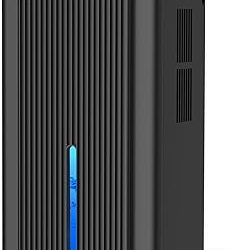
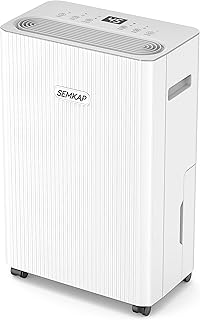
SEMKAP 32 Pint Dehumidifier, 2500 Sq. Ft.
This is the one I’d put in a working basement: a smart compressor, real 32-pint-per-day capacity, and a drain hose port so you never touch the reservoir. The low-noise mode and 24-hour timer make it civilized enough to leave running overnight below a bedroom.
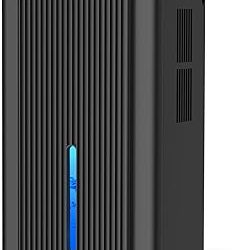
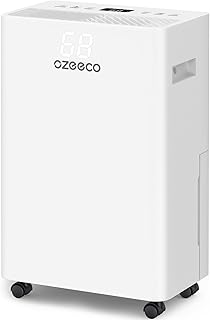
ozeeco 34 Pint Dehumidifier for Basement
The highest extraction rate here, paired with a deliberately small 0.45 gallon tank — a clear signal it’s designed to run on the hose, not the bucket. Child lock and ultra-quiet operation are genuinely useful, and the ionizer helps with that stale under-stairs smell.
4500 Sq. Ft. Compressor Dehumidifier with Drain Hose
Pick this one when you’re conditioning a large open basement or a two-bay garage where smaller units simply cycle forever. Energy-efficient compressor design plus intelligent humidity control means it throttles back once the room stabilizes instead of running your meter up.
21 Pint Dehumidifier, 1500 Sq. Ft. with Drain Hose
The sensible middle ground for a laundry room, RV, or partially finished basement bay. Three modes, a 24-hour timer, and auto defrost cover the essentials, and the smaller footprint fits where a 34-pint tower won’t.
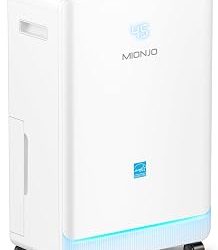
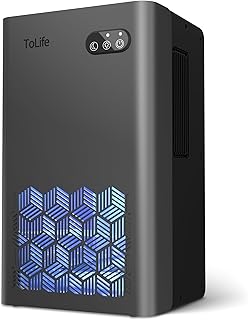
ToLife 1000 Sq. Ft. Dehumidifier, 95 oz Tank
Quiet, compact, and cheap to run — ideal for a bedroom, closet, or a small finished room that just needs the edge taken off. Sleep mode plus auto shutoff means it won’t wake you or overflow, and the 7-color LED doubles as a soft night light.
Frequently Asked Questions
What humidity level should I target for wood furniture?
Between 40% and 50% RH is the sweet spot. Below 35% you risk shrinkage cracks in solid panels; above 55% you invite mold, swollen drawer runners, and rusty hardware. A $10 hygrometer on the shelf pays for itself.
Will a small dehumidifier work in a cold basement?
Not reliably. Thermoelectric units lose most of their capacity under about 65°F, so for anything unheated go with a compressor model that lists auto defrost — like the SEMKAP or ozeeco.
Do I need the drain hose, or is the tank fine?
If you’re clearing genuine dampness, use the hose. A 32-pint unit fills a 0.45 gallon tank in a couple of hours during the first days of drying, and gravity drainage to a floor drain removes that chore entirely.
How much will it add to my power bill?
Compressor units typically draw 250–500W while the compressor runs, but a good humidistat means it’s off much of the day once the room stabilizes. Sealing rim joists and adding gutter extensions cuts runtime more than any efficiency rating.
Final Thoughts
For most basements, the SEMKAP 32 Pint is the smart default — strong extraction, hose drainage, and quiet enough to ignore. Step up to the 4500 Sq. Ft. compressor model if you’re drying a large open space, or the ozeeco 34 Pint if you want maximum pull with a child lock and ionizer. For a single bedroom or a small shop nook, the ToLife 1000 Sq. Ft. unit does the job for a fraction of the cost.