Key takeaways
- Lay an old sheet or drop cloth under the fan to catch whatever falls.
- Run the dry sleeve over each blade, pulling from the center hub outward toward the tip.
- Shake the sleeve out in a trash bag, or turn it inside out to reuse the clean side.
- Lightly dampen the sleeve with water or a drop of dish soap and go back over any remaining film.
- Finish with a dry pass so the blade is not left wet, which matters on MDF and veneered blades that can swell at the edges.
What's inside
Ceiling fan blades are dust magnets. The blade edges carry a static charge while spinning, so airborne lint, skin cells, cooking grease, and pollen build up along the leading edge until you get that gray fringe hanging off the tips. Left alone, the buildup does more than look bad: it throws the blades out of balance, which causes wobble, which stresses the downrod bracket and motor bearings. And every time you flip the switch, the first thirty seconds redistribute a portion of that dust straight into the room you breathe in.
The good news is that fan cleaning is a fifteen-minute job once you stop dragging a ladder around. This guide walks through the approach that actually works from the floor, what to look for in a blade duster, how to handle greasy kitchen fans and high vaulted ceilings, and the small habits that keep you from ever facing a serious buildup again.
As an Amazon Associate we earn from qualifying purchases.



Why a Sleeve Duster Beats a Rag and a Ladder
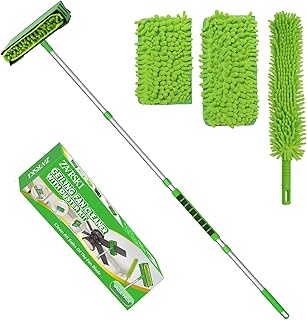
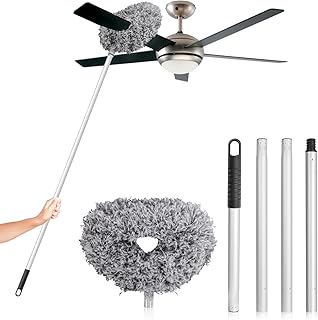
The problem with wiping a blade using a flat cloth is that you only touch one surface at a time, and you push a cloud of dust off the far edge as you go. A U-shaped microfiber sleeve solves both issues by wrapping over the blade so the top, bottom, and leading edge get scrubbed in a single pass while the fibers trap the debris instead of launching it. Tools like the DRQ Ceiling Fan Cleaner Duster and the FONUNO blade cleaner use this design with a pole that telescopes to reach standard eight- and nine-foot ceilings, which means no ladder, no reaching over your head with a spray bottle, and no balancing act on a dining chair.
Match the Pole to Your Ceiling, Not the Other Way Around
Reach is the single spec people get wrong. A pole that extends to roughly 48 inches, like the DRQ or the SetSail duster, gives you comfortable access on an eight-foot ceiling when you factor in your own arm length. If you have a two-story entry, a stairwell fan, or a great room with a vaulted ceiling, that will leave you short. The six-foot extension option handles most ten- to twelve-foot situations, and the LAANPOLE kit pushes into genuinely tall territory with a 5-to-20-foot pole and about 26 feet of total working reach. Buy for your tallest fan; short ceilings are easy to reach with a collapsed pole, but you cannot stretch a tool that has run out of sections.
The Dry-First, Damp-Second Method
Resist the urge to spray anything on a dusty blade. Liquid turns loose dust into a smear that bonds to the finish and takes three times the effort to remove. Work in this order instead:
- Lay an old sheet or drop cloth under the fan to catch whatever falls.
- Run the dry sleeve over each blade, pulling from the center hub outward toward the tip.
- Shake the sleeve out in a trash bag, or turn it inside out to reuse the clean side.
- Lightly dampen the sleeve with water or a drop of dish soap and go back over any remaining film.
- Finish with a dry pass so the blade is not left wet, which matters on MDF and veneered blades that can swell at the edges.
Kitchen Fans and Grease Film Need a Different Touch
A fan within airflow range of a stove collects aerosolized cooking oil that dust bonds to, producing a sticky brown coating that a dry duster just polishes. For these, warm water with a small amount of dish soap on a damp microfiber sleeve is the right chemistry, since dish detergent is engineered to break oil. Skip all-purpose sprays with ammonia or citrus solvents on painted or faux-wood blades, and never let liquid run toward the motor housing. On badly coated blades, plan on two passes with a rinsed sleeve between them.
Choose Washable Pads and Buy Spares
The economics of a reusable tool only work if the pad survives laundering. Look for sleeves rated as machine washable, and check whether replacements are sold separately. Several models, including the SetSail duster and the reusable microfiber cleaner with the 13-to-49.7-inch pole, ship with removable washable pads. Wash them on cold with no fabric softener, because softener coats microfiber and destroys the electrostatic grab that makes it work. Air dry rather than tumble dry, and keep a second pad on hand so a damp one never forces you to postpone the job.
Tips
- Steady the blade with your free hand near the hub while you pull the sleeve outward; unsupported blades flex and the sleeve skips.
- Do the light fixture and globes at the same visit, since dusty shades cut visible output noticeably.
- If the fan still wobbles after cleaning, check that every blade screw is snug at the hub before assuming you need a balance kit.
- Set a recurring reminder for the seasonal switch-over in spring and fall, and clean the blades then.
Frequently Asked Questions
How often should ceiling fans be cleaned?
Every four to six weeks for a light dry dusting, with a deeper damp clean twice a year. Homes with pets, smokers, or nearby cooking need the dry pass closer to every two or three weeks.
Do I have to turn the fan off first?
Yes, and pull the wall switch or breaker if the fan has been running so the blades come to a full stop. Blades still coasting will catch the sleeve and jerk the pole out of your hands.
Can I use compressed air or a vacuum instead?
Compressed air scatters dust across the whole room and is best avoided indoors. A vacuum with a brush attachment works well but usually requires a ladder, which defeats the purpose of a pole tool.
Will a duster scratch high-gloss or wood blades?
Quality microfiber is safe on lacquered wood, painted metal, and glossy finishes. Damage comes from grit trapped in a dirty pad, so shake or wash the sleeve between fans rather than dragging accumulated debris across a new blade.
Conclusion
Clean ceiling fans come down to matching the tool to your ceiling height, working dry before damp, and pulling from hub to tip with a sleeve that wraps all three surfaces at once. Pick a duster with enough pole for your tallest room and washable pads you can actually maintain, and the job shrinks from a ladder-hauling chore to a quick pass you barely think about.