Key takeaways
- Cooling type: Choose an evaporative cooler for genuinely windowless use, or a compressor AC if you can route its exhaust through a wall, door panel, drop ceiling, or other safe opening.
- Room conditions: Evaporative cooling is most effective in dry air and becomes much less useful in humid climates, where adding moisture can make the room feel warmer.
- Capacity: Match BTU output and stated coverage to the room, while allowing extra capacity for direct sun, poor insulation, high ceilings, or heat-producing electronics.
- Water and drainage: Check tank size, ice-pack storage, condensate handling, and whether the unit needs regular emptying before placing it beside furniture or flooring.
- DIY setup: Look for sturdy casters, accessible filters, a usable remote, timer controls, and an airflow path that will not blow directly into a wall, curtain, or enclosed cabinet.
What's inside
A room without a usable window can make summer cooling surprisingly awkward. Traditional portable air conditioners need an exhaust hose, while many “ventless AC” listings are actually evaporative coolers that work differently and perform best in dry climates. Choosing the wrong type can leave you with extra humidity, lukewarm air, or a setup that does not suit the room.
This guide takes a hands-on DIY maker approach to the best ventless air conditioner no window options for 2026. It separates true compressor-based portable AC units from water-and-ice evaporative coolers, explains the trade-offs, and highlights practical details such as drainage, airflow, room size, noise, and installation.
As an Amazon Associate we earn from qualifying purchases.


How to Choose a Ventless Air Conditioner No Window (2026)
- Cooling type: Choose an evaporative cooler for genuinely windowless use, or a compressor AC if you can route its exhaust through a wall, door panel, drop ceiling, or other safe opening.
- Room conditions: Evaporative cooling is most effective in dry air and becomes much less useful in humid climates, where adding moisture can make the room feel warmer.
- Capacity: Match BTU output and stated coverage to the room, while allowing extra capacity for direct sun, poor insulation, high ceilings, or heat-producing electronics.
- Water and drainage: Check tank size, ice-pack storage, condensate handling, and whether the unit needs regular emptying before placing it beside furniture or flooring.
- DIY setup: Look for sturdy casters, accessible filters, a usable remote, timer controls, and an airflow path that will not blow directly into a wall, curtain, or enclosed cabinet.
The Best Ventless Air Conditioner No Window (2026)s Reviewed
12000 BTU Portable Air Conditioner
This 3-in-1 portable unit combines cooling, fan, and dehumidifying modes with self-evaporating operation. It is a strong choice for a workshop, bedroom, or living area when you can create a proper exhaust route using the included window kit or a custom panel; despite its “no window” appeal, a compressor AC still needs somewhere to discharge hot air.
SereneLife 8000 BTU WiFi Portable Air Conditioner
The SereneLife 8000 BTU model is a compact, connected option for bedrooms, offices, and smaller living spaces. WiFi control, a 24-hour timer, fan mode, and dehumidification make it convenient for scheduled cooling, but it remains a ducted portable AC rather than a truly ventless machine.
Windowless 3-In-1 Evaporative Air Cooler
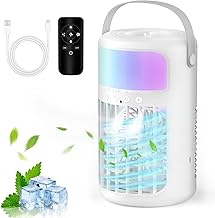
This white evaporative cooler is the most straightforward pick for a room with no window or exhaust route. Its water-and-ice operation, 70-degree oscillation, multiple modes, and seven-hour timer make it useful beside a desk or bed, although cooling depends heavily on low humidity and proximity to the airflow.
25.3-Inch Windowless Evaporative Air Cooler
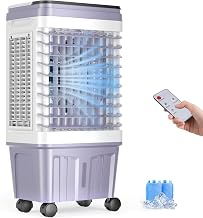
With a taller cabinet, remote control, 90-degree oscillation, three speeds, four modes, and included ice packs, this cooler is designed to move air across a broader area. It is a practical no-window solution for dry climates, but treat it as a spot cooler rather than a replacement for a sealed-room air conditioner.
Shinco 12,000 BTU Portable AC
The Shinco portable AC offers cooling, dehumidifying, and fan modes, along with a 24-hour timer and installation kit. Its larger capacity suits rooms up to the manufacturer’s stated range when properly vented; for a windowless installation, a careful DIY exhaust solution is essential to prevent the discharged heat from returning indoors.
Frequently Asked Questions
Can a portable air conditioner work without a window?
A compressor-based portable AC must exhaust heat outdoors or into a suitably ventilated space. You can build an adapter for a door, wall, sliding panel, or ceiling vent, but running the hose entirely inside the room defeats the cooling cycle and raises the temperature.
Are evaporative coolers really air conditioners?
They cool air by evaporating water, rather than using a compressor and refrigerant. That makes them genuinely ventless, quieter, and often simpler to operate, but their performance drops in humid weather and they do not lower room temperature as consistently as refrigerated AC.
What is the best no-window option for a humid climate?
A properly vented compressor portable AC is generally the better choice because an evaporative cooler adds moisture. If no safe exhaust path exists, use a fan for air movement and consider a professionally installed cooling solution instead of expecting a ventless water cooler to handle the whole room.
How can I make a DIY exhaust panel?
Use rigid foam board, plywood, or acrylic sized to fit the opening, then cut a hole matching the hose adapter and seal the edges with weatherstripping. Keep the hose short and straight, support its weight, and never block required intake vents or route hot exhaust into an enclosed cavity.
Final Thoughts
For genuinely windowless cooling, the Windowless 3-In-1 Evaporative Air Cooler and the taller 25.3-Inch Windowless Evaporative Air Cooler are the most honest matches, especially in dry climates. Where you can create a safe exhaust route, the 12000 BTU Portable Air Conditioner or Shinco 12,000 BTU Portable AC will deliver more dependable room cooling.