Key takeaways
- Steel gauge and door rigidity: Press the center of a closed door. If it flexes noticeably, the panel is thin and will dent from a dropped wrench. Look for reinforced door frames and welded corners rather than folded tabs.
- Shelf adjustability and load rating: Fixed shelves waste vertical space. Adjustable shelves on punched channels let you stack a chop saw on one level and small parts bins above. Check per-shelf capacity, not just total capacity.
- Footprint versus height: A 71″ or 75″ cabinet holds a lot but eats wall space and needs anchoring. In a tight one-car garage, a wall-mounted unit above the bench often beats a floor cabinet.
- Mobility: Casters are great if your layout changes or you sweep often. Insist on locking casters, and remember rolling units should carry weight low to stay stable.
- Locking hardware: A keyed three-point or cam lock keeps power tools and chemicals secure. Test that the handle latches without lifting the door, a common sign of a racked frame.
What's inside
There’s a moment every maker recognizes: you’re mid-project, epoxy setting fast, and you’re rifling through a milk crate for the right clamp. Tools that live in piles don’t just slow you down, they cost money. Sockets vanish, drill bits rust from garage humidity, and that second orbital sander you bought is somewhere under a tarp. The fix isn’t more shelving. It’s enclosed, lockable steel storage that gives every tool a fixed address and keeps dust, kids, and sticky-fingered neighbors out of it.
I’ve spent years reorganizing my own shop and helping friends set up theirs, and the cabinets that survive are the ones with honest gauge steel, shelves that actually adjust, and doors that close square after a few hundred cycles. This guide breaks down the tool cabinets worth your bench space in 2026, covering tall locker-style units, rolling workshop systems, and wall-mounted cabinets that reclaim floor area. Below you’ll find what to look for before buying, hands-on notes on the top picks, and answers to the questions that come up most.
As an Amazon Associate we earn from qualifying purchases.


How to Choose a/an Tool Cabinet (2026)
- Steel gauge and door rigidity: Press the center of a closed door. If it flexes noticeably, the panel is thin and will dent from a dropped wrench. Look for reinforced door frames and welded corners rather than folded tabs.
- Shelf adjustability and load rating: Fixed shelves waste vertical space. Adjustable shelves on punched channels let you stack a chop saw on one level and small parts bins above. Check per-shelf capacity, not just total capacity.
- Footprint versus height: A 71″ or 75″ cabinet holds a lot but eats wall space and needs anchoring. In a tight one-car garage, a wall-mounted unit above the bench often beats a floor cabinet.
- Mobility: Casters are great if your layout changes or you sweep often. Insist on locking casters, and remember rolling units should carry weight low to stay stable.
- Locking hardware: A keyed three-point or cam lock keeps power tools and chemicals secure. Test that the handle latches without lifting the door, a common sign of a racked frame.
The Best Tool Cabinet (2026)s Reviewed
71″ Metal Garage Storage Cabinet, 2 Doors, 5 Adjustable Shelves
This is the sensible default for most home shops: full-height steel, five shelves you can reposition on the fly, and a keyed lock that actually engages. The black finish hides shop grime better than light colors, and at 71″ it clears standard garage door tracks in most builds.
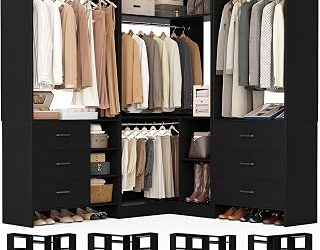
6-Piece Garage Storage Cabinet System
If you’re outfitting a workshop from scratch, this modular set gets you wall cabinets, rolling units, and a work surface in one purchase, which saves the headache of matching finishes later. Plan your layout on paper first, because the value here comes from committing to a full wall rather than piecing it together.
75″ Rolling Steel Tool Cabinet with Locking Doors
The extra four inches of height and the casters make this the pick for anyone who reconfigures their space seasonally or parks a vehicle inside. Load your heaviest gear on the bottom two shelves so it rolls without wobble.
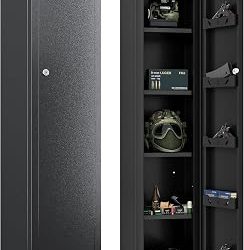
Tall Locker Organizer with 5 Adjustable Layers
Built more like a gym locker than a garage cabinet, this one shines for narrow gaps beside a bench or in a basement utility corner. Five adjustable layers handle everything from paint cans to cordless tool cases without wasted headroom.
21.6″ Wall-Mounted Metal Garage Cabinet
Mounting storage off the floor is the single best move in a cramped garage, and this shallow cabinet puts frequently used hand tools at eye level above a workbench. Hit real studs with proper lag screws, and don’t treat it as a home for your heaviest gear.
Frequently Asked Questions
Do I need to anchor a tall tool cabinet to the wall?
Yes, especially anything over 60 inches. Loaded shelves raise the center of gravity, and an open door plus a bumped ladder is all it takes to tip one. Most units include a bracket; use it with the right anchor for your wall type.
Will a steel cabinet rust in an unheated garage?
Powder-coated steel handles humidity fine, but condensation on tools inside is the real concern. Toss a few desiccant packs or a rechargeable dehumidifier puck on the shelves and leave a small air gap behind the cabinet.
How much can these shelves actually hold?
Adjustable shelves in this category typically handle 50 to 100 pounds each when evenly loaded. Concentrated weight is the enemy, so spread heavy items out rather than parking a single 80-pound toolbox in one corner.
Rolling or stationary?
Choose rolling if you share the space with a car or work outdoors in good weather. Choose stationary if the cabinet has a permanent home, since fixed feet on a concrete floor are more stable under heavy loads.
Final Thoughts
For most home shops, the 71″ Metal Garage Storage Cabinet hits the right balance of capacity, adjustability, and price, while the 75″ Rolling Steel Tool Cabinet earns its keep in garages that double as parking. If your floor space is already claimed, mount the 21.6″ Wall Cabinet above your bench and get your daily-use tools within arm’s reach.