Key takeaways
- Dry mode vs. true dehumidification: Nearly every portable AC has a “dry” setting, but it’s usually just cooling with the fan slowed down. If pulling moisture is your main goal, look for a stated pint-per-day figure and a humidistat you can set to a target percentage.
- Drainage plan: Bucket-only units mean a trip downstairs every eight hours in humid weather. A gravity drain hose port is the single upgrade that makes a machine set-and-forget, and if your floor drain sits higher than the unit, you’ll want a built-in condensate pump instead.
- Single vs. dual hose: Single-hose portables pull conditioned air from the room and blow it outside, creating negative pressure that sucks humid air back in through gaps. Dual-hose designs draw outdoor air for the condenser instead, which measurably improves cooling in rooms above roughly 400 square feet.
- Honest square footage: Manufacturer coverage numbers assume an open box with average insulation. Knock 25 to 30 percent off if you’re cooling a west-facing room, a finished attic, or a space with a kitchen attached.
- Window kit realism: Check your window type before buying. Standard kits assume double-hung; casement and sliding windows need a taller panel, and any kit benefits from a bead of weatherstrip foam and a few self-tapping screws rather than the included foam tape alone.
What's inside
Anyone who has run a dehumidifier in July knows the frustration: the room dries out, but the compressor dumps so much waste heat that you end up hotter than when you started. Run an AC instead and you cool the space, yet on a muggy 70-degree morning the thermostat is satisfied long before the moisture is gone, leaving you with clammy walls and that basement smell that never quite quits. Most of us end up owning two machines, two power cords, and two things to store in the fall.
This guide sorts through the units that genuinely handle both jobs, plus a couple of heavy-hitting standalone dehumidifiers worth pairing with a window AC if that suits your layout better. I’ve focused on what matters once the box is open and you’re kneeling on the floor with a screwdriver: how the drainage actually works, whether the window kit seals without a trip to the hardware store, and what square-footage claims mean in a real house with real doorways.
As an Amazon Associate we earn from qualifying purchases.



How to Choose a/an Air Conditioner Dehumidifier Combo (2026)
- Dry mode vs. true dehumidification: Nearly every portable AC has a “dry” setting, but it’s usually just cooling with the fan slowed down. If pulling moisture is your main goal, look for a stated pint-per-day figure and a humidistat you can set to a target percentage.
- Drainage plan: Bucket-only units mean a trip downstairs every eight hours in humid weather. A gravity drain hose port is the single upgrade that makes a machine set-and-forget, and if your floor drain sits higher than the unit, you’ll want a built-in condensate pump instead.
- Single vs. dual hose: Single-hose portables pull conditioned air from the room and blow it outside, creating negative pressure that sucks humid air back in through gaps. Dual-hose designs draw outdoor air for the condenser instead, which measurably improves cooling in rooms above roughly 400 square feet.
- Honest square footage: Manufacturer coverage numbers assume an open box with average insulation. Knock 25 to 30 percent off if you’re cooling a west-facing room, a finished attic, or a space with a kitchen attached.
- Window kit realism: Check your window type before buying. Standard kits assume double-hung; casement and sliding windows need a taller panel, and any kit benefits from a bead of weatherstrip foam and a few self-tapping screws rather than the included foam tape alone.
The Best Air Conditioner Dehumidifier Combo (2026)s Reviewed
Garvee 14,000 BTU 3-in-1 Portable Air Conditioner
At 14,000 BTU with a 750 sq ft rating, this is the do-everything pick for a great room or open basement, and the cooling, dehumidify, and fan modes cover the full seasonal swing. Sleep mode and the 24-hour timer are genuinely useful for shoulder-season nights when you want moisture control without waking up shivering.
Whynter ARC-14S Dual Hose 14,000 BTU
The dual-hose design is why this one has stayed a favorite among people who actually measure their results: it avoids the negative-pressure problem that hobbles cheaper portables, and the auto-drain handles condensate in dehumidify mode without a bucket. Rated for 500 sq ft, it hits harder in that footprint than most 14,000 BTU single-hose competitors.
SereneLife 8,000 BTU 3-in-1 Portable AC
A sensible choice for bedrooms and offices up to 350 sq ft, with a dual-motor layout, three fan speeds, and a 64–90°F range that lets you push it colder than many budget units allow. It’s the lightest lift here in terms of setup and storage, which matters if you’re moving it between rooms.
hOmeLabs 50 Pint WiFi Dehumidifier
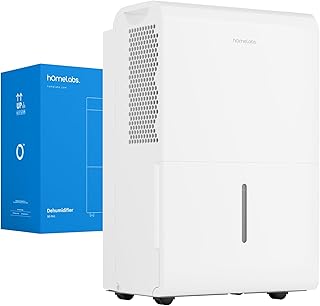
If your real problem is moisture rather than heat, this is the smarter buy: WiFi humidity control means you can watch a basement’s RH from your phone and adjust without going downstairs. Auto shut-off and a quiet compressor make it livable in a finished space, and it pairs well with a window AC for cooling duty.
80 Pint Energy Star Dehumidifier with Drain Hose
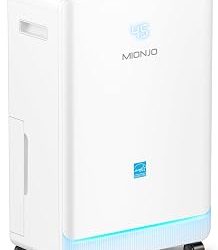
Rated for 5,500 sq ft with an intelligent humidistat and an included drain hose, this is the workhorse for crawlspaces, workshops, and chronically damp basements. Energy Star Most Efficient certification means you can run it continuously through a wet summer without a punishing utility bill.
Frequently Asked Questions
Can a portable AC replace a dedicated dehumidifier?
For a single bedroom in summer, usually yes. For a basement below about 68°F, no. Portable AC dry modes struggle in cool air, and running one in a cold basement risks coil icing while pulling far fewer pints than a purpose-built unit.
Do I have to empty the tank constantly?
Only if you skip the hose. Almost every unit here has a gravity drain port. Run a garden hose or the included tube to a floor drain, sink, or condensate pump, keep it sloped downhill the whole way, and the tank never fills.
What humidity level should I target?
Aim for 45 to 50 percent. Below 40 you’re spending electricity for no benefit and can dry out wood trim and flooring; above 60 you’re in mold and dust mite territory. A $12 hygrometer placed away from the machine tells you the truth better than the unit’s own display.
Why is my portable AC barely cooling?
Nine times out of ten it’s the exhaust hose. Keep it short and as straight as possible, insulate it with pipe wrap so it isn’t radiating heat back into the room, and seal every gap around the window panel. A clogged filter is the other usual suspect, so rinse it monthly.
Final Thoughts
For most homes, the Garvee 14,000 BTU 3-in-1 is the practical single-machine answer, covering large open spaces with real dehumidify and fan modes. If you want the best cooling per BTU and hate emptying buckets, the Whynter ARC-14S earns its dual-hose reputation. And when dampness is the actual enemy, the hOmeLabs 50 Pint WiFi dehumidifier gives you remote control over a basement’s climate for less than the cost of one mold remediation call.