Key takeaways
- Compressor vs. freezer bowl: A built-in compressor means zero prep and back-to-back batches, but adds bulk and cost. Freezer bowls are cheap, quiet, and compact — as long as you remember to pre-chill 16 to 24 hours ahead.
- Batch size honesty: A 2.1-quart capacity rarely fills to 2.1 quarts, since mix expands during churning. Figure on 70 to 80 percent usable volume and size up if you’re feeding a household of four or more.
- Where it lives: Upright compressor machines need clearance on the sides and back for heat exchange. Measure your cabinet gap, not just the footprint, or you’ll be dragging it out every time.
- Cleanup reality: Removable bowls rinse in seconds. Fixed-canister designs mean wiping out a sticky well by hand, which gets old fast if you churn weekly.
- Beyond ice cream: If sorbet, gelato, frozen yogurt, or soft serve are on your list, check that the machine has dedicated cycles rather than a single fixed churn time — texture varies a lot between styles.
What's inside
Every home ice cream project hits the same wall: the freezer bowl. You mix a beautiful custard, chill it overnight, then discover the bowl went back in the freezer warm and won’t be ready until tomorrow. Or the machine churns for twenty minutes and hands you a soupy mess that has to firm up in the freezer anyway, losing the texture you were chasing. The gap between “I want ice cream tonight” and actually eating it is where most machines fail, and it has almost nothing to do with the motor.
This guide sorts home ice cream makers by the thing that actually determines your workflow: whether the machine makes its own cold. Compressor units freeze on demand and let you run batch after batch. Freezer-bowl models cost far less but demand planning. A third category skips churning entirely and shaves a frozen block into something spoonable. We tested each approach against the same question a maker asks about any tool — does it fit the way I actually work, and does it earn its counter space?
As an Amazon Associate we earn from qualifying purchases.



How to Choose a/an Ice Cream Maker For Home Use (2026)
- Compressor vs. freezer bowl: A built-in compressor means zero prep and back-to-back batches, but adds bulk and cost. Freezer bowls are cheap, quiet, and compact — as long as you remember to pre-chill 16 to 24 hours ahead.
- Batch size honesty: A 2.1-quart capacity rarely fills to 2.1 quarts, since mix expands during churning. Figure on 70 to 80 percent usable volume and size up if you’re feeding a household of four or more.
- Where it lives: Upright compressor machines need clearance on the sides and back for heat exchange. Measure your cabinet gap, not just the footprint, or you’ll be dragging it out every time.
- Cleanup reality: Removable bowls rinse in seconds. Fixed-canister designs mean wiping out a sticky well by hand, which gets old fast if you churn weekly.
- Beyond ice cream: If sorbet, gelato, frozen yogurt, or soft serve are on your list, check that the machine has dedicated cycles rather than a single fixed churn time — texture varies a lot between styles.
The Best Ice Cream Maker For Home Use (2026)s Reviewed
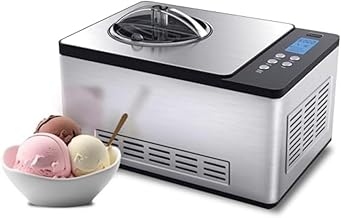
Whynter ICM-201SB Automatic 2.1 Qt.
The stainless upright is the workhorse pick: built-in compressor, no pre-freezing, and an LCD timer that lets you dial churn time to the mix instead of guessing. The removable canister is the detail that matters day to day — you lift the whole bowl out to the freezer or the sink rather than scraping a fixed well.
Whynter ICM-200LS 2.1 Qt Automatic
Functionally the same engine as the 201SB in a slightly different shell, and often the better value when it dips below its sibling. Same compressor, same LCD and timer, same no-pre-freeze convenience — buy whichever is cheaper the week you order.
4-in-1 Compressor Ice Cream Maker (1.0 Qt)
A genuinely compact vertical compressor machine for kitchens where the Whynter simply won’t fit. The one-quart capacity suits one or two people, and the yogurt and soft-serve modes make it more versatile than the footprint suggests.
Cuisinart ICE-21P1ES, Ready in 20
The freezer-bowl classic, and still the smartest entry point if you’re testing whether homemade ice cream sticks as a habit. Twenty minutes of churn, an easy-lock lid, and a double-insulated bowl — just accept that you’re planning a day ahead, and consider a second bowl if you get serious.
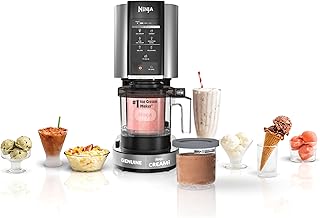
Ninja CREAMi NC301, 7-in-1
Not a churner at all: you freeze a base solid in the pint container, then a spinning blade shaves it into ice cream, sorbet, or a milkshake. The texture is distinctly its own — dense and scoopable — and the pint format makes portion control and flavor experiments effortless.
Frequently Asked Questions
Do compressor machines really need no prep at all?
Correct — you pour chilled mix in and press start. That said, starting with mix that’s already cold from the fridge cuts churn time noticeably and gives you finer ice crystals.
How long does a freezer bowl take to chill?
Plan on 16 to 24 hours in a freezer at 0°F or colder, positioned at the back where temperature is most stable. If liquid sloshes when you shake it, it isn’t ready.
Why is my ice cream icy instead of creamy?
Usually too little fat or sugar, or a mix that went in warm. Sugar and fat both suppress ice crystal growth, so trimming them for health reasons costs you texture unless you compensate with something like skim milk powder.
Can I make dairy-free ice cream in these?
Yes, and all five handle it. Coconut milk performs best because of its fat content; oat and almond bases benefit from a stabilizer or a spoonful of neutral oil to avoid turning grainy.
Final Thoughts
For most homes, the Whynter ICM-201SB is the machine to build a habit around — no planning, no waiting, batch after batch. If counter space or budget is tight, the Cuisinart ICE-21P1ES delivers real results for a fraction of the price, and the Ninja CREAMi is the pick for anyone who wants single-pint flexibility and doesn’t mind an overnight freeze.