Key takeaways
- Fit and adjustability: Look for adjustable seat height or kneepad positioning so your thighs angle downward without forcing your knees too far forward. A chair should feel supportive, not like you are being folded in half.
- Cushion construction: Thick moulded foam or dense padding can make a major difference during longer sessions. Check that both the seat and shin rests are generously cushioned, since the lower supports carry meaningful pressure.
- Movement: Casters are convenient for reaching a nearby shelf, while brake casters help keep the chair planted during focused work. Rocking models add subtle movement but may feel less stable if you prefer a completely fixed base.
- Back support: A backrest or lumbar support can be useful when you want to lean back between tasks. It also makes a kneeling chair more familiar for people transitioning from a conventional office chair.
- Desk compatibility: Measure the underside of your desk and compare it with the chair’s usable height range. Your elbows should remain near desk level, and your monitor should sit high enough to avoid spending the day looking down.
What's inside
A standard office chair can feel fine for the first hour, then quietly turn into a collection of pressure points: tight hips, a rounded back, sore sit bones, and shoulders creeping toward your ears. A kneeling chair changes the contact points by shifting some support to the shins and encouraging a more open hip angle. That can make desk work feel less compressed, though it is not a universal cure for back pain or a replacement for movement.
This guide focuses on the practical details that matter in a real home office: adjustability, cushion shape, wheel behavior, back support, rocking action, weight capacity, and how easy each design is to live with. The best choice depends as much on your desk height and preferred posture as it does on the chair’s headline features.
As an Amazon Associate we earn from qualifying purchases.


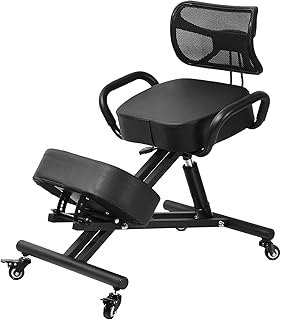
How to Choose an Office Kneeling Chair (2026)
- Fit and adjustability: Look for adjustable seat height or kneepad positioning so your thighs angle downward without forcing your knees too far forward. A chair should feel supportive, not like you are being folded in half.
- Cushion construction: Thick moulded foam or dense padding can make a major difference during longer sessions. Check that both the seat and shin rests are generously cushioned, since the lower supports carry meaningful pressure.
- Movement: Casters are convenient for reaching a nearby shelf, while brake casters help keep the chair planted during focused work. Rocking models add subtle movement but may feel less stable if you prefer a completely fixed base.
- Back support: A backrest or lumbar support can be useful when you want to lean back between tasks. It also makes a kneeling chair more familiar for people transitioning from a conventional office chair.
- Desk compatibility: Measure the underside of your desk and compare it with the chair’s usable height range. Your elbows should remain near desk level, and your monitor should sit high enough to avoid spending the day looking down.
The Best Office Kneeling Chairs (2026) Reviewed
Best All-Rounder: Ergonomic Kneeling Chair with Adjustable Stool
This straightforward kneeling chair is built around the essentials: an angled seat, thick moulded foam cushions, adjustable positioning, and brake casters. It is a sensible starting point for a home office because the locked wheels can provide a steadier working platform while still allowing you to reposition the chair when needed.
Best with a Backrest: Adjustable Linen Kneeling Chair
The linen-covered Kneeling Chair with Backrest adds a conventional support point to the kneeling format, which may appeal to users who want somewhere to rest between typing sessions. Its adjustable design, thick cushion, and brake rolling wheels make it a versatile option for a desk, although the added backrest means you should check that it fits comfortably beneath your workspace.
Best for a Higher Weight Rating: Adjustable Seat Kneeling Rocking Stool
This model stands out with a stated 250-pound support capacity and a five-year warranty, two useful details for buyers who want clearer long-term reassurance. Its adjustable seats and rocking-stool design favor active sitting, so it is particularly worth considering if you dislike being locked into one position throughout the workday.
Best Wood Rocker: Easyego Gray Kneeling Chair
The Easyego Kneeling Chair combines a wood adjustable frame with soft padding and a rocking base. The gray finish gives it a less clinical look than many office-focused alternatives, while the gentle movement can encourage small posture changes; keep your rocking range controlled if stability is your priority.
Best for Lumbar Support: Kneeling Chair with Back Support and 4-Inch Cushion
With a four-inch cushion, adjustable height, and lumbar back support, this design is aimed at buyers who want a more substantial, structured seat. It makes particular sense for a meeting room, reception area, or home office where users may appreciate the familiarity of back support alongside the kneeling posture.
Frequently Asked Questions
Are kneeling chairs good for office work?
They can be, especially for people who find traditional chairs encourage slouching or compress the hips. Start with shorter sessions and alternate with standing or a conventional chair so your knees, shins, and ankles are not loaded continuously.
Do kneeling chairs help with back pain?
Some users find the open hip angle and more upright posture comfortable, but results vary. Existing pain, injury, or numbness deserves professional advice, and a kneeling chair should never be treated as a guaranteed medical solution.
How long can you sit in a kneeling chair?
There is no universal time limit. A practical approach is to begin with 15 to 30 minutes, assess pressure on your shins and knees, and gradually extend use only if you remain comfortable.
Should I choose a rocking model or one with wheels?
Choose rocking action if you want gentle movement and an active sitting feel. Choose wheels, preferably with brakes, if you regularly need to move between a desk, printer, or nearby storage while keeping the chair stable for typing.
Final Thoughts
For a balanced first purchase, the Ergonomic Kneeling Chair with Adjustable Stool is the most practical place to start. Choose the Adjustable Linen Kneeling Chair if a backrest matters, or the Adjustable Seat Kneeling Rocking Stool if its 250-pound capacity and five-year warranty better match your priorities. Whichever model you choose, pair it with sensible desk height, regular movement, and a gradual break-in period.