Key takeaways
- Wheel size and terrain: Small casters stall on gravel, thresholds, and lawn. Look for wheels at least 6 inches across with a wide tread if you’re moving tools outdoors; smooth shop floors are the only place tiny casters make sense.
- Latch and stack integrity: The connection between modules is what fails first. Positive-locking latches that click and resist a firm tug beat friction-fit lips, which shed the top box on the first curb.
- Ecosystem commitment: Modular platforms only pay off if you can add to them later. Choose a system with multiple case sizes available so you’re not stuck buying a second, incompatible setup in two years.
- Weight rating vs. real load: Hand tools are heavier than they look — a full socket set and a few clamps run 40 lb fast. Confirm both the total capacity and the rating of the bottom unit, since it carries everything above it.
- Visibility of small parts: Screws, anchors, and bits disappear in deep bins. Clear-lid organizers or transparent drawers let you inventory hardware without dumping trays onto the bench.
What's inside
Anyone who has hauled an armload of drivers, bits, and clamps across a garage knows the failure point isn’t the tools — it’s the trip. Loose cases slide off each other, a socket set migrates to the bottom of a bucket, and the drill you need is somewhere behind the paint cans. The real cost isn’t clutter, it’s the twenty minutes per project you spend re-finding things you owned all along. A mobile storage system solves that by giving every tool a fixed address and putting the whole address book on wheels.
This guide looks at the two approaches that actually work in a home shop: stacking systems that lock together and roll as one unit, and wall-mounted racks that keep batteries charged and drills at eye level. We break down what to check before buying — latch quality, wheel diameter, weather resistance, weight ratings — then review the strongest options for 2026, from Keter’s weatherproof three-piece to DEWALT’s TSTAK platform and POKIPO’s 600 lb charging shelf.
As an Amazon Associate we earn from qualifying purchases.


How to Choose a Mobile Tool Storage System (2026)
- Wheel size and terrain: Small casters stall on gravel, thresholds, and lawn. Look for wheels at least 6 inches across with a wide tread if you’re moving tools outdoors; smooth shop floors are the only place tiny casters make sense.
- Latch and stack integrity: The connection between modules is what fails first. Positive-locking latches that click and resist a firm tug beat friction-fit lips, which shed the top box on the first curb.
- Ecosystem commitment: Modular platforms only pay off if you can add to them later. Choose a system with multiple case sizes available so you’re not stuck buying a second, incompatible setup in two years.
- Weight rating vs. real load: Hand tools are heavier than they look — a full socket set and a few clamps run 40 lb fast. Confirm both the total capacity and the rating of the bottom unit, since it carries everything above it.
- Visibility of small parts: Screws, anchors, and bits disappear in deep bins. Clear-lid organizers or transparent drawers let you inventory hardware without dumping trays onto the bench.
The Best Mobile Tool Storage Systems Reviewed
Keter Stack N Roll 3-Piece Modular System
The all-terrain wheels and weatherproof resin build make this the pick if your work happens in the yard, on a deck, or across a job site rather than on flat concrete. The telescoping handle gives you real leverage over rough ground, and the three-piece configuration covers a mixed kit of power tools, hand tools, and hardware from day one.
DEWALT TSTAK Rolling Tool Box (DWST17820)
TSTAK’s locking mechanism is the most confident of the group — modules seat with an audible click and stay put through stairs and tailgate loading. The deep base box swallows a circular saw or two drills with room for chargers, and the wider TSTAK range means you can grow the stack without guessing at compatibility.
POKIPO Power Tool Organizer with Charging Station
This is the wall-mounted half of a good workflow: four heavy-duty metal shelves rated to 600 lb, eight drill holders, and an integrated 4-outlet strip so batteries top off where they live. Pair it with a rolling case and you get a home base for charging plus a mobile unit for the actual work.
5-Tier Stackable Rolling Tool Box
Five stacked tiers with drawers and a transparent parts box give this one the best organization-per-dollar in the roundup, especially if your kit skews toward fasteners and small consumables. Best suited to garage and shop floors — the wheels handle smooth surfaces well but aren’t built for gravel.
E ELIAUK Tool Storage Cabinet Carry Case
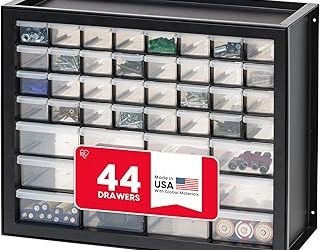
A compact drawer cabinet that works as the fine-detail layer of a larger system, holding bits, blades, and precision tools that get lost in bigger bins. The carry-case format means you can pull just the drawers you need to a workbench instead of relocating the whole stack.
Frequently Asked Questions
Can I mix brands in one stack?
Generally no. Latch geometry is proprietary, so a Keter module won’t lock to a TSTAK base. You can stack them loosely for storage, but don’t count on the connection while rolling.
How much weight can a rolling stack actually handle?
Most consumer systems are comfortable in the 100–200 lb range fully loaded, but the practical ceiling is what you can tilt and steer. Keep dense items — sockets, clamps, batteries — in the bottom module to lower the center of gravity.
Are resin boxes durable enough for real use?
Modern structural resin resists impact and moisture better than thin sheet metal, which dents and rusts. Steel still wins for wall shelving under heavy static loads, which is why metal racks and resin rolling cases complement each other.
Do I need both a rolling case and a wall rack?
If you own cordless tools, yes. A wall unit with charging keeps batteries organized and ready, while the rolling case carries only what a given job requires — that split is what keeps a small garage functional.
Final Thoughts
For most home shops, the DEWALT TSTAK rolling box is the strongest foundation thanks to its locking reliability and expandable module range, while the Keter Stack N Roll is the better call if your projects move outdoors onto uneven ground. Add the POKIPO wall organizer with its charging station and you cover both halves of the problem — a permanent, powered home for your batteries and a mobile kit that goes wherever the work is.