Key takeaways
- Match BTU to the room, not the box: Look for SACC (Seasonally Adjusted Cooling Capacity) rather than headline BTU, since that figure accounts for heat leaking back through the hose. A 16,000 BTU unit rated at 12,000 SACC is honest about its real output. For a typical UK double bedroom of 12–15m², 8,000–9,000 BTU is plenty; open-plan lounges need 12,000 upward.
- Single hose versus dual hose: Single-hose units pull air from the room to cool the condenser and blow it outside, creating negative pressure that sucks warm air in through door gaps and floorboards. Dual-hose designs draw outside air for cooling and stay pressure-neutral, so they run noticeably more efficiently in a leaky terrace.
- Window kit compatibility: Most kits are designed around American sliding sashes. UK casement windows that hinge outward need a bespoke panel, so check whether the kit includes an adjustable slider or plan on cutting a sheet of 10mm Correx or foam board to fit the opening.
- Drainage handling: Auto-evaporation and drainage-free systems recycle condensate through the exhaust stream, meaning no bucket duty. In humid coastal spots you’ll still want a continuous drain port so you can run a hose to a sink or outside.
- Real-world noise figures: Anything above 50dB will keep light sleepers awake. Inverter compressors modulate their speed instead of hard cycling on and off, which is why the quietest units in this list sit around 38–42dB on low.
What's inside
British houses were built to trap heat, not shed it. Solid brick walls, small windows that only open a few inches, and loft insulation packed in tight all conspire against you the moment the mercury climbs past 26°C. Fitting a fixed split system means drilling through masonry, hiring an F-Gas registered engineer, and in many rentals, getting permission you’ll never be granted. That leaves a portable unit as the realistic option, and the market is crowded with boxes that promise arctic air but deliver a warm hum and a puddle on the carpet.
I’ve spent a fair few summers wrestling these things into sash windows, cutting foam board inserts, and taping up hose gaps with reflective foil. What follows is a practical breakdown of the units worth your money in 2026, judged on real cooling capacity, how easy the exhaust setup actually is in a UK-spec window, noise levels you can sleep through, and whether you’ll be emptying a tank at 3am. No lab jargon, just what matters when you’re the one doing the install.
As an Amazon Associate we earn from qualifying purchases.


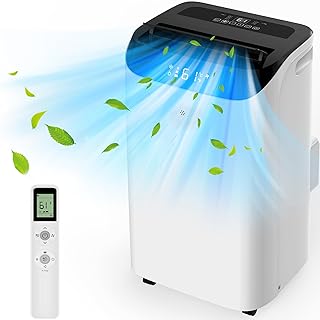
How to Choose a Portable Air Conditioner In Uk (2026)
- Match BTU to the room, not the box: Look for SACC (Seasonally Adjusted Cooling Capacity) rather than headline BTU, since that figure accounts for heat leaking back through the hose. A 16,000 BTU unit rated at 12,000 SACC is honest about its real output. For a typical UK double bedroom of 12–15m², 8,000–9,000 BTU is plenty; open-plan lounges need 12,000 upward.
- Single hose versus dual hose: Single-hose units pull air from the room to cool the condenser and blow it outside, creating negative pressure that sucks warm air in through door gaps and floorboards. Dual-hose designs draw outside air for cooling and stay pressure-neutral, so they run noticeably more efficiently in a leaky terrace.
- Window kit compatibility: Most kits are designed around American sliding sashes. UK casement windows that hinge outward need a bespoke panel, so check whether the kit includes an adjustable slider or plan on cutting a sheet of 10mm Correx or foam board to fit the opening.
- Drainage handling: Auto-evaporation and drainage-free systems recycle condensate through the exhaust stream, meaning no bucket duty. In humid coastal spots you’ll still want a continuous drain port so you can run a hose to a sink or outside.
- Real-world noise figures: Anything above 50dB will keep light sleepers awake. Inverter compressors modulate their speed instead of hard cycling on and off, which is why the quietest units in this list sit around 38–42dB on low.
The Best Portable Air Conditioner In Uk (2026)s Reviewed
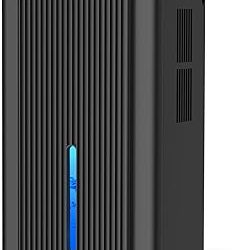
ZAFRO Smart Inverter 16,000 BTU Dual Hose (38dB Upgraded)
The upgraded 38dB inverter is the standout here, pairing genuine dual-hose efficiency with a compressor quiet enough to sit in a bedroom corner without dominating the room. The app control is genuinely useful too, letting you kick it on twenty minutes before bedtime so the room is already down to temperature.
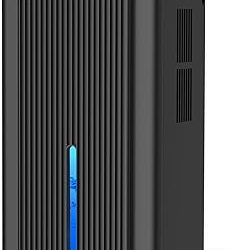
ZAFRO Smart Inverter 16,000 BTU Dual Hose (42dB)
Mechanically near-identical to its quieter sibling, this version trades four decibels for a keener price, which is a sensible swap if it’s living in a lounge or home office rather than beside your pillow. Drainage-free operation and the inverter’s steady modulation make it a fit-and-forget unit through a heatwave.
Garvee 14,000 BTU 3-in-1
Rated for spaces up to 750 sq ft, this is the one to reach for if you’re cooling a knocked-through kitchen-diner or a converted garage workshop. The supplied window kit is more accommodating than most, and the dehumidifier mode earns its keep in a damp autumn utility room.
14,000 BTU Smart WiFi with Voice Control
Auto-evaporation plus Alexa and Google integration makes this the smartest pick for anyone already running a connected home. It handles 700 sq ft comfortably and the scheduling is granular enough to work around off-peak electricity tariffs.
8,000 BTU 4-in-1 with Sleep Mode
Compact, light enough to wheel between rooms single-handed, and sized right for the 350 sq ft bedrooms most UK homes actually have. The sleep mode ramps down gradually through the night, which stops the usual 4am chill that has you reaching for the duvet.
Frequently Asked Questions
Do I need to vent a portable air conditioner out of a window?
Yes, without exception. The unit works by moving heat from inside to outside, so if the hot exhaust stays in the room you’ll end up warmer than when you started. Any unit sold as ventless is a swamp cooler, which just adds humidity.
How much will one cost to run?
Reckon on 0.9–1.4kW draw for a 12,000 BTU class unit. At current UK unit rates that’s roughly 30–45p an hour, though inverter models cut that meaningfully once the room hits temperature because the compressor throttles back rather than cycling.
Can I make my own window seal?
Absolutely, and it’s usually better than the supplied kit. Cut a panel of 10mm foam board or Correx to your window opening, cut a hole for the hose collar, and seal the edges with self-adhesive draught excluder. Insulating the hose itself with pipe lagging makes a measurable difference.
Will it work as a dehumidifier in winter?
The dehumidify mode is effective for damp bathrooms and drying laundry, though a dedicated dehumidifier is more efficient at that single job. Remember to attach a drain hose for extended dehumidifying sessions.
Final Thoughts
For most UK homes the ZAFRO Smart Inverter in its 38dB guise is the one I’d fit, because the dual-hose design genuinely outperforms single-hose rivals in draughty period properties and the noise floor is low enough for a bedroom. If you’re cooling something larger like an open-plan space or a workshop, the Garvee 14,000 BTU has the capacity and a more forgiving window kit, while the compact 8,000 BTU 4-in-1 is the sensible, affordable choice for a single bedroom that just needs to be survivable in August.