Key takeaways
- Ceiling height drives mount type: Under 8 feet, go flush mount so blades clear heads by the code-recommended 7 feet. At 8 feet or above, a standard downrod mount moves noticeably more air because the blades sit away from the ceiling and aren’t fighting their own backpressure.
- Match blade span to the room: Roughly 42 inches for bedrooms and small kitchens up to about 144 square feet, 52 inches for living rooms and primary suites. Oversizing a small room doesn’t help; it just makes low speed feel like a wind tunnel.
- Decide on light before you buy, not after: Integrated LED fans and light-free fans use different housings, and retrofitting a light kit onto a no-light model isn’t always possible. If the room has can lights or lamps, skip the fixture and get a cleaner profile.
- Check the switch loop in your box: A single-switch box means one pull chain controls fan speed and the other controls the light, which is normal and fine. If you want wall control of both, you’ll need a second conductor or a fan-rated wall control, so pull the plate and look before ordering.
- Confirm the box is fan-rated: A standard plastic lighting box will not hold a spinning 20-pound load. Look for an embossed rating or install a brace bar. It’s a 20-minute job that prevents the worst possible outcome.
What's inside
Anyone who has stood on a ladder with a fistful of wire nuts knows the remote is the weak link. It’s the part that gets lost in couch cushions, the part whose battery dies in August, the part that starts responding to the neighbor’s fan through the drywall. Worse, a receiver module crammed into the canopy adds one more failure point in a fixture you’d rather install once and forget for fifteen years. Pull chains don’t pair, don’t drift out of sync, and don’t need a firmware story.
This guide covers hardwired, pull-chain ceiling fans worth mounting in 2026, judged the way a maker judges them: how the downrod and canopy go together, whether the blade irons line up without coaxing, how much slack you get in the wire leads, and whether the motor still runs quiet on low after a couple of seasons. Below you’ll find picks for standard 8-foot ceilings, low-profile flush mounts for tight rooms, and lit versus unlit options for spaces that already have overhead light.
As an Amazon Associate we earn from qualifying purchases.


How to Choose a Ceiling Fan Without Remote (2026)
- Ceiling height drives mount type: Under 8 feet, go flush mount so blades clear heads by the code-recommended 7 feet. At 8 feet or above, a standard downrod mount moves noticeably more air because the blades sit away from the ceiling and aren’t fighting their own backpressure.
- Match blade span to the room: Roughly 42 inches for bedrooms and small kitchens up to about 144 square feet, 52 inches for living rooms and primary suites. Oversizing a small room doesn’t help; it just makes low speed feel like a wind tunnel.
- Decide on light before you buy, not after: Integrated LED fans and light-free fans use different housings, and retrofitting a light kit onto a no-light model isn’t always possible. If the room has can lights or lamps, skip the fixture and get a cleaner profile.
- Check the switch loop in your box: A single-switch box means one pull chain controls fan speed and the other controls the light, which is normal and fine. If you want wall control of both, you’ll need a second conductor or a fan-rated wall control, so pull the plate and look before ordering.
- Confirm the box is fan-rated: A standard plastic lighting box will not hold a spinning 20-pound load. Look for an embossed rating or install a brace bar. It’s a 20-minute job that prevents the worst possible outcome.
The Best Ceiling Fans Without Remote (2026) Reviewed
Hunter Builder Elite 52″ (53241)
The unlit workhorse of the group, and the one I’d hang in a room that already has adequate lighting. The WhisperWind motor is genuinely quiet at low speed, and the brushed nickel finish hides fingerprints better than the gloss finishes on cheaper fans.
Hunter Builder 42″ Low Profile (51091)
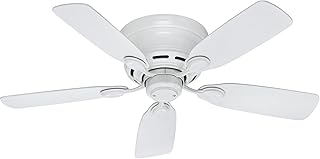
Built for ceilings that don’t have room to spare, with an integrated LED and a flush canopy that keeps everything tight to the drywall. Good pick for a bedroom or a bonus room over a garage where the joists sit low.
Hunter Anisten 44″ (52488)
A clean fresh-white fan with a bowl light and bulbs in the box, which saves a second trip to the store. The 44-inch span is the sweet spot for a mid-size bedroom that feels underserved by a 42 and crowded by a 52.
Honeywell Glen Alden 52″
Reversible blades give you two looks from one purchase, and the oil rubbed bronze reads warmer in person than most photos suggest. Assembly is straightforward, though I’d snug the blade screws in a star pattern rather than one blade at a time to keep things balanced.
Hunter Builder Deluxe 52″ (53091)
Essentially the Builder Elite with light added, in a new bronze finish that plays well with warm wood trim. If you’re replacing a single dated flush fixture and want fan plus light in one hardwired unit, this is the safe bet.
Frequently Asked Questions
Can I add a remote to these fans later?
Often yes, using a universal receiver kit that fits in the canopy, but check the canopy volume first. Low-profile models like the Low Profile IV have very little room up there.
Do pull-chain fans work with smart home systems?
Not on their own. You’d pair one with a fan-rated smart wall switch, which controls power to the fixture while the chains stay set at your preferred speed.
Why is my new fan wobbling?
Almost always blade alignment or a loose mounting bracket, not a bad motor. Measure blade tip to ceiling on each blade and check the ball joint is fully seated in the hanger bracket.
Which direction should the blades spin?
Counterclockwise in summer to push air down, clockwise on low in winter to pull warm air off the ceiling. The reverse switch lives on the motor housing.
Final Thoughts
For most rooms, the Hunter Builder Elite 52″ is the pick if you don’t need light, and the Builder Deluxe 52″ if you do. For low ceilings, the 42-inch Builder Low Profile handles the job without the headroom compromise.