Key takeaways
- Grip and weight: A palm router in the 3 to 5 pound range lets you feel the cut and steer with one hand while the other stabilizes the stock. Weight only helps in a router table; freehand, it fights you.
- Variable speed: Non-negotiable if you plan to use bits over 1 inch diameter or cut hardwood. Running a big bit at 32,000 RPM scorches maple and dulls carbide fast. Six-step dials are plenty; you don’t need infinite adjustment.
- Depth adjustment mechanism: Look for a rack-and-pinion or threaded micro-adjust rather than a friction clamp. Slop here means your dado depth drifts halfway through the pass, and you won’t notice until the joint doesn’t close.
- Collet quality: A proper split collet grips the shank along its full length. Cheap set-screw arrangements let bits creep downward mid-cut, which ruins the workpiece at best. Check that the collet nut takes a real wrench, not pliers.
- Guides and dust control: An edge guide and roller guide cover most beginner cuts without jig-building. A dust hood matters more than people expect, since router chips fly directly into your sightline.
What's inside
The first router you buy is almost always the wrong one, and it’s rarely because the tool is bad. Most beginners walk into the router aisle looking at 3+ HP plunge monsters with two-handed grips, buy one on the logic that more power is safer, then discover that a 12-pound machine is miserable to control on a workpiece edge and terrifying the first time it bites. Meanwhile the trim router sitting two shelves over would have handled roundovers, dadoes, hinge mortises, edge banding, and template work for the first two years of a hobby.
This guide focuses on compact palm routers, the category that actually makes sense as a starter tool. I’ve looked at how these machines behave in the hand: base plate flatness, whether the depth adjustment holds under load, collet quality, and whether the included accessories are usable or landfill. Below you’ll find the picks worth your money, the specs that genuinely matter versus the marketing numbers, and answers to the questions that trip up first-time buyers.
As an Amazon Associate we earn from qualifying purchases.



🛒 Best Price Today on Amazon
Prime members get fast, free shipping on everything above, plus member-only deals. New members get a 30-day free trial — cancel anytime.
How to Choose a Wood Router For Beginner (2026)
- Grip and weight: A palm router in the 3 to 5 pound range lets you feel the cut and steer with one hand while the other stabilizes the stock. Weight only helps in a router table; freehand, it fights you.
- Variable speed: Non-negotiable if you plan to use bits over 1 inch diameter or cut hardwood. Running a big bit at 32,000 RPM scorches maple and dulls carbide fast. Six-step dials are plenty; you don’t need infinite adjustment.
- Depth adjustment mechanism: Look for a rack-and-pinion or threaded micro-adjust rather than a friction clamp. Slop here means your dado depth drifts halfway through the pass, and you won’t notice until the joint doesn’t close.
- Collet quality: A proper split collet grips the shank along its full length. Cheap set-screw arrangements let bits creep downward mid-cut, which ruins the workpiece at best. Check that the collet nut takes a real wrench, not pliers.
- Guides and dust control: An edge guide and roller guide cover most beginner cuts without jig-building. A dust hood matters more than people expect, since router chips fly directly into your sightline.
The Best Wood Router For Beginner (2026)s Reviewed
AVID POWER 6.5 Amp 1.25 HP Compact Router
This is the pick I’d hand a friend starting out: six speed settings, a soft-start motor that doesn’t jump when you trigger it, and a genuinely rigid fixed base with clean depth adjustment. The included edge guide, roller guide, and dust hood mean you can cut a straight groove on day one instead of building fixtures first.
TwoWin 800W Compact Wood Router with 15-Piece Bit Set
Strong value if you’re starting from zero, since the tungsten carbide bit set covers roundovers, chamfers, straight cuts, and a few profiles you’ll actually reach for. The motor has real authority in pine and poplar; take shallower passes in oak and it stays composed.
800W Palm Router, 32,000 RPM with Edge and Roller Guide
A no-frills workhorse for trimming laminate, flush-cutting edge banding, and rounding over shelf edges. The top-end speed is high, which suits small-diameter bits, so keep your bit selection under 3/4 inch and this will serve you well.
800W Electric Compact Router with 15PC 1/4″ Bit Set
The bundled bit assortment makes this an inexpensive way to learn what profiles you actually use before investing in premium carbide. Slotting and carving work go smoothly; the base plate benefits from a strip of tape to prevent marking softwoods.
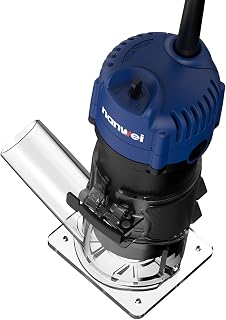
NANWEI 450W Compact Edge Trimmer
The lightest option here, and the one I’d choose specifically for delicate trimming, veneer work, and inlay routing where control beats brute force. It ships without bits, so budget for a decent 1/4-inch set alongside it.
Frequently Asked Questions
Is a palm router powerful enough for real furniture work?
For everything except large raised-panel bits and heavy mortising, yes. Furniture makers use trim routers constantly for roundovers, hinge mortises, inlay, and template flush-trimming. You take multiple shallow passes instead of one deep one, which produces cleaner results anyway.
Should I get 1/4-inch or 1/2-inch shank bits?
Compact routers accept 1/4-inch shanks, and that’s fine for beginners. The 1/2-inch shanks resist deflection better on large bits, but those bits belong in a full-size router mounted in a table.
Which direction do I move the router?
On outside edges, move counterclockwise around the workpiece; on inside cutouts, move clockwise. This keeps the bit’s rotation pulling the base against the wood rather than pushing the tool away from you.
Do I need a router table right away?
No. Learn freehand edge work and template routing first. A shop-made table with a mounting plate is a good second-year project, and by then you’ll know whether you want a dedicated larger motor for it.
Final Thoughts
For most beginners, the AVID POWER 1.25 HP compact router is the strongest overall choice thanks to variable speed, soft start, and a full accessory kit that removes early guesswork. If you need bits and a router in one purchase, the TwoWin 800W kit with its 15-piece carbide set stretches a tight budget further, while the NANWEI 450W trimmer is the one to reach for when your work leans toward fine detail and lightweight control.