Key takeaways
- Measure indoor humidity with a separate hygrometer instead of trusting the dial alone.
- Start with a modest humidity setting and increase it gradually while watching windows for condensation.
- Label the humidifier’s water shutoff and drain so seasonal maintenance is quicker.
- Seal duct cuts and bypass connections with approved foil tape or mastic, not ordinary cloth duct tape.
What's inside
Dry indoor air is more than a winter nuisance. Low humidity can leave skin irritated, make wood furniture and flooring shrink, and encourage cracks in panel joints, veneer, and musical instruments. A whole-house humidifier adds moisture through your HVAC system—or, in some cases, through a large room unit—so comfort is more consistent than it is with a small bedside appliance.
This guide takes a practical DIY-maker approach to choosing the best whole-house humidifier in 2026. You’ll learn which system types suit different homes, how to match capacity to your heating equipment and floor area, what installation and maintenance really involve, and when a portable humidifier may be the smarter buy.
As an Amazon Associate we earn from qualifying purchases.


Our Recommended Picks
For true central, whole-house coverage, the AprilAire 800 Whole-House Steam Humidifier is the most capable option listed here, serving homes up to 10,300 square feet when correctly sized and installed. Steam models are effective even when the furnace is not running, but they need electrical capacity, plumbing, drainage, and careful installation.
If you already own an AprilAire evaporative unit, the AprilAire 4792 Humidifier Maintenance Kit is a useful maintenance purchase rather than a complete humidifier. It includes a Model No. 10 water panel for compatible 500-series models. Replacing the panel on schedule helps water flow evenly and prevents mineral buildup from reducing output.
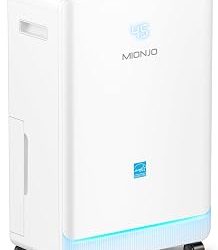
The AreShark 4.2 Gal/16L Humidifier, the 15L/3.96 Gal 800 sq. ft. Humidifier, and the Lacidoll 16L/4.2Gal Large-Room Humidifier are portable alternatives. They can be useful in open living areas, workshops, or homes without accessible ductwork, but their advertised coverage depends heavily on room layout, ceiling height, insulation, and door position. The hOmeLabs 4,500-square-foot unit is a dehumidifier, not a humidifier; it belongs in this conversation only for homes that need seasonal moisture removal.
Choose the Right Humidifier Type
There are three common approaches. Bypass evaporative humidifiers use warm air from the furnace to pass over a water panel. They are relatively simple and economical, but usually operate only when the HVAC blower runs. Fan-powered evaporative models contain their own fan and can deliver more moisture without relying entirely on duct pressure.
Steam humidifiers boil water electrically and inject vapor into the duct. They offer precise control and work independently of furnace heat, making them a strong choice for large or tightly sealed homes. The trade-off is higher installation cost, electricity use, and a greater need to follow wiring, plumbing, and drain requirements exactly.
Size It for the House, Not the Package
Square-foot ratings are useful starting points, not guarantees. A drafty older house loses moisture faster than a well-sealed modern home. Climate, ceiling height, ventilation rate, window area, and whether the home has one or several HVAC zones all affect the result.
Look for the humidifier’s moisture output, commonly expressed in gallons per day, as well as its stated coverage. A unit that is too small will run constantly without reaching the target humidity. An oversized unit can raise humidity too quickly, increasing the risk of condensation on cold windows and exterior walls. A hygrometer on each major floor is an inexpensive way to check actual conditions before buying.
Check Compatibility Before You Install
A duct-mounted unit needs a suitable supply or return-air location, nearby water, and—depending on the design—a drain. Confirm that your furnace or air handler has enough clearance and that the duct material can be cut and sealed cleanly. Steam models may require a dedicated electrical circuit, while evaporative models often need low-voltage control wiring and a bypass duct.
If you are comfortable installing duct fittings, shutoff valves, and low-voltage controls, an evaporative replacement can be a manageable project. Steam installation is less forgiving: incorrect wiring, poor drainage, or improperly routed steam can damage equipment or create a safety hazard. When in doubt, have an HVAC professional inspect the plan before you buy.
Protect Furniture and Finishes
For furniture, the goal is stable humidity rather than maximum humidity. Many homes are comfortable around 35% to 45% relative humidity during heating season, although the correct setting depends on outdoor temperature and window performance. Use a controller with an outdoor sensor if available; it can lower the indoor target during very cold weather to reduce window condensation.
Keep room humidifiers away from wood furniture, electronics, books, and finished floors. Ultrasonic units can leave white mineral dust when filled with hard tap water, so follow the manufacturer’s water guidance. Never allow mist to settle on a tabletop or cabinet. A whole-house unit avoids much of this localized exposure because moisture is distributed through the duct system.
Maintenance Makes the Difference
Evaporative systems generally need an annual water-panel replacement and inspection of the feed tube, drain, solenoid valve, and housing. An AprilAire 4792 kit is designed for compatible 500-series units and is a convenient seasonal service part. Steam units require periodic cylinder or canister service, depending on the model and water quality.
At the start and end of the heating season, clean mineral deposits, test the humidistat, inspect drain lines for kinks, and verify that the water shutoff works. Replace or clean HVAC filters as recommended; restricted airflow can reduce humidifier performance and increase furnace strain.
Tips
- Measure indoor humidity with a separate hygrometer instead of trusting the dial alone.
- Start with a modest humidity setting and increase it gradually while watching windows for condensation.
- Label the humidifier’s water shutoff and drain so seasonal maintenance is quicker.
- Seal duct cuts and bypass connections with approved foil tape or mastic, not ordinary cloth duct tape.
Frequently Asked Questions
What is the best whole-house humidifier?
For large homes or precise, year-round control, a properly installed steam model such as the AprilAire 800 is the strongest choice. For simpler furnace-based operation and lower running costs, a well-sized evaporative unit is often sufficient.
Can a portable humidifier humidify an entire house?
Usually not evenly. Large portable units can improve one open area, but walls, closed doors, and separate HVAC zones limit distribution. They are best for a room, studio, workshop, or home where duct installation is impractical.
Does a whole-house humidifier damage wood furniture?
It can if humidity is allowed to remain too high. Keep levels moderate, use an outdoor-reset control when possible, and monitor rooms containing solid wood, veneer, flooring, or antiques for condensation and seasonal movement.
How often should a whole-house humidifier be serviced?
Inspect it at least once each heating season. Replace evaporative water panels annually in many homes, while steam canisters follow the manufacturer’s usage and water-quality schedule.
Conclusion
The best whole-house humidifier is the one that matches your HVAC system, climate, house size, and willingness to maintain it. Choose an evaporative model for practical furnace-based control, a steam unit for high output and precision, or a portable model for targeted coverage. Whatever you install, pair it with a reliable hygrometer, conservative settings, and regular cleaning—your comfort and furniture will benefit more from steady humidity than from chasing the highest reading.