Key takeaways
- Clean ceiling fans before vacuuming and mopping so fallen dust is removed at the end.
- Use a flashlight held at an angle to reveal dust along the blade tops and motor vents.
- For high ceilings, use a long-handled duster from the floor only if you can maintain control; never stretch or walk backward while looking up.
- Clean both sides of a duster head between fans to avoid transferring greasy kitchen dust into bedrooms.
What's inside
A dusty ceiling fan does more than look neglected: every spin can send settled lint, pollen, and fine household dust back into the room. The good news is that cleaning one properly is a small DIY job, provided you control the mess and avoid putting weight or moisture on the blades.
This guide explains the safest, least-fussy way to dust a ceiling fan, including which tools are worth buying, when a ladder is necessary, and how to clean blades without bending them or showering the furniture below. It also covers a few reusable fan dusters that can handle more than one cleaning job around the house.
As an Amazon Associate we earn from qualifying purchases.



Choose the Right Fan Duster
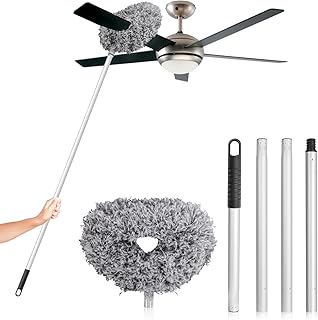
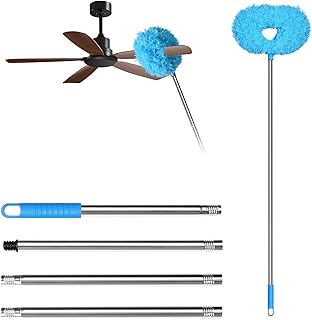
For routine dry dusting, a washable microfiber head with an adjustable pole is usually the most useful option. Microfiber grabs fine particles instead of simply pushing them around, while an extension handle lets you reach the blades from the floor or from a short, stable step stool. Look for a head that is flexible enough to sit over the blade but not so floppy that it loses contact.
The DRQ Ceiling Fan Cleaner Duster adjusts from 13 to 48 inches and has a removable microfiber duster, making it a practical general-purpose choice for fans, bookshelves, walls, and door tops. The similarly designed FONUNO Ceiling Fan Cleaner Duster reaches up to 50 inches and is useful if you want one tool for several high surfaces.
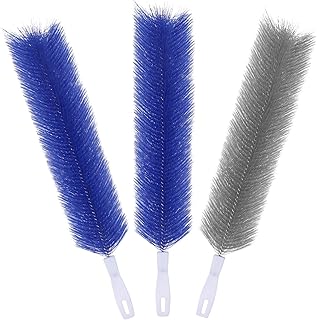
If you prefer a brush-style head for cobwebs and edges, the Storystore Ceiling Fan Cleaner Duster combines an adjustable pole with a microfiber cleaning brush. For a longer reach, the Eyliden 68″ Adjustable Ceiling Fan Duster is designed for ladderless cleaning and uses a dual-sided microfiber head. A compact multi-tool option is the 3 Pcs Fan Cleaning Brush Bendable Cobweb Duster, which can be shaped around blades, vents, curtains, and other awkward surfaces.
Prepare the Room Before You Start
Turn the fan off at the wall switch and wait until the blades have stopped completely. For extra safety, turn off the fan’s circuit at the breaker if you will be loosening parts, wiping near the motor housing, or using any liquid. Never clean a moving fan, even at its lowest speed.
Move chairs, toys, and small furniture out of the drop zone. Cover nearby upholstery with an old sheet, especially if the fan has not been cleaned for several months. Open a window if practical, but avoid creating a strong cross-draft that blows dust onto freshly cleaned surfaces. If you have allergies, wear a face covering and clean the room’s other surfaces after the fan.
How to Dust the Blades Without Making a Mess
Extend the duster only as far as necessary; a shorter pole is easier to control. Position the microfiber sleeve over the top and bottom of one blade, then draw it slowly from the motor outward toward the tip. Keep gentle, even pressure. Do not twist the blade, lean your body weight on the pole, or pull sideways against the blade brackets.
After each blade, pause over the covered area and shake or vacuum loose dust from the duster if needed. Work around the fan in the same direction, checking the underside as well as the leading edge. If the microfiber head cannot fully surround the blade, use a dry microfiber cloth by hand from a stable step stool rather than forcing the extension tool.
For a very dirty fan, place a clean pillowcase over an individual blade, close to the motor, and slide it outward. The case captures much of the debris; empty it outdoors and launder it afterward. This method is especially useful when thick dust has collected along the blade’s upper surface.
Clean the Motor Housing and Hardware
Dust the motor cover, light kit, pull chains, and upper canopy with a clean, dry microfiber cloth or a soft brush. Keep the tool away from vents and openings where fibers or debris could enter. Do not spray cleaner directly onto the fan. If the manufacturer permits damp cleaning, put a small amount of mild soap solution on the cloth, wring it nearly dry, and wipe only the accessible exterior.
Inspect the blades while you work. A loose screw, sagging blade, or cracked bracket is not a dusting problem; stop and consult the fan’s manual or an electrician. Tightening hardware incorrectly can affect balance and create wobbling, noise, or damage.
Wash, Dry, and Store Your Tools
Remove the microfiber head according to its instructions and shake it outdoors before washing. Launder microfiber separately from lint-producing towels, using a mild detergent and no fabric softener. Softener can coat the fibers and reduce their ability to capture dust. Air-dry the head completely before storing it, and keep the pole collapsed so it does not become bent.
A washable head is more economical than disposable dusters for a fan cleaned every few weeks. Keep one head designated for dusty jobs and another for more delicate surfaces if you use the same pole throughout the home.
Tips
- Clean ceiling fans before vacuuming and mopping so fallen dust is removed at the end.
- Use a flashlight held at an angle to reveal dust along the blade tops and motor vents.
- For high ceilings, use a long-handled duster from the floor only if you can maintain control; never stretch or walk backward while looking up.
- Clean both sides of a duster head between fans to avoid transferring greasy kitchen dust into bedrooms.
Frequently Asked Questions
How often should a ceiling fan be dusted?
Most household fans need a light dusting every two to four weeks during regular use. Rooms with pets, open windows, smokers, or renovation dust may need weekly attention. A quick visual check is more useful than following a rigid calendar.
Should I use a wet cloth on ceiling fan blades?
Start dry. A wet cloth can turn loose dust into a smear and may allow moisture to run toward electrical components. If residue remains, use a barely damp cloth with mild detergent, then wipe dry. Always follow the fan manufacturer’s cleaning instructions.
Can I clean a ceiling fan without a ladder?
Often, yes, with a controlled extension duster such as the Eyliden 68″ model or another adjustable microfiber tool. Ladderless cleaning is appropriate only when the head reaches comfortably and you can see or feel the blade without overextending. Use a properly positioned step ladder for precise hand cleaning when necessary.
Why does my fan wobble after cleaning?
Dusting alone should not cause wobbling, but pressure on a blade, a shifted blade screw, or an existing imbalance can reveal the issue. Turn the fan off, check that visible fasteners are secure according to the manual, and stop using it if the wobble is severe, worsening, or accompanied by clicking.
Conclusion
The best way to dust a ceiling fan is slow, dry, and controlled: shut it off, protect the room, use a washable microfiber head, and clean each blade from the motor toward the tip. A well-chosen extension duster makes routine maintenance quicker, while careful handling protects the blade brackets and keeps the dust where it belongs—off your furniture and out of the air.