Key takeaways
- 2 inches tweaks the feel slightly. Fine for lightweight sleepers under about 130 pounds.
- 3 inches is the sweet spot for most side sleepers. Enough travel for shoulder and hip relief without losing contact with the mattress underneath.
- 4 inches or more tends to bury heavier sleepers and can make edge-of-bed movement awkward.
What's inside
Side sleeping is the most common position, and it’s also the one that punishes a mattress the hardest. Your shoulder and hip carry most of your body weight through a narrow contact patch, so a surface that feels fine on your back turns into a pressure point at 3 a.m. If you wake up with a numb arm, an aching hip, or a lower back that needs a minute to unkink, the mattress isn’t necessarily worn out. It’s likely just too firm at the shoulder and hip to let your spine stay level.
A topper is the cheapest fix in the bedroom, and it’s the one you can install yourself in about ten minutes with no tools. This guide walks through how to read your own sleep symptoms, what thickness and density actually do, how to tell a foam topper from a pillow-top pad and pick the right one, and how to install and maintain it so it doesn’t slide or sag. Below are the picks we’d hand a friend who asked.
As an Amazon Associate we earn from qualifying purchases.



Start By Diagnosing The Symptom, Not The Mattress
Before you shop, spend three nights paying attention to where you hurt. Shoulder pain and arm tingling mean the surface isn’t yielding enough at your widest point. Hip soreness points the same direction. Lower back ache, on the other hand, often means the opposite problem: you’re sinking too far in the middle and your spine is bowing. Overheating is a separate issue entirely and has more to do with cover material and airflow than firmness. The distinction matters because a plush pillow-top pad solves a different problem than a 3-inch memory foam slab, and buying the wrong one usually makes things worse.
Pillow-Top Pad Or Memory Foam: Two Different Jobs
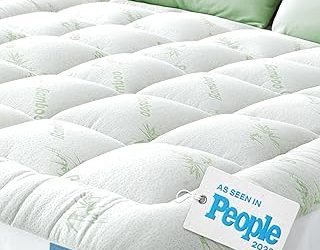
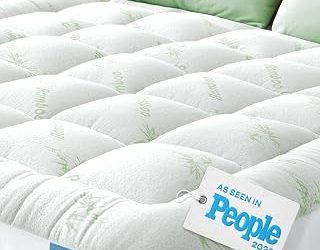
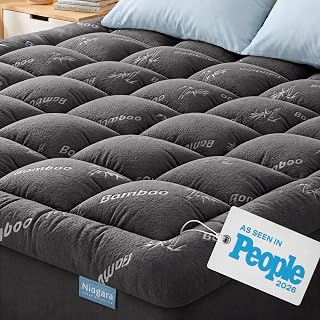
Pillow-top pads use fiberfill inside quilted channels and fit over the mattress like a deep fitted sheet. They add cushion and a cloud-like surface feel, they breathe well, and most are machine washable. The BEDLORE viscose bamboo topper and the Niagara Sleep Solution pad are built this way, with deep pockets that stretch over thick mattresses. They’re the right call if your mattress supports you fine but the top layer feels hard.
Memory foam toppers sit on top like a thin second mattress and physically reshape your sleep surface. A 3-inch gel memory foam layer, like the PERLECARE or the ViscoSoft ventilated topper, will let your shoulder sink in an inch or more, which is what side sleepers need for spinal alignment. If your mattress is genuinely too firm, foam is the answer.
Thickness And Density, Decoded
- 2 inches tweaks the feel slightly. Fine for lightweight sleepers under about 130 pounds.
- 3 inches is the sweet spot for most side sleepers. Enough travel for shoulder and hip relief without losing contact with the mattress underneath.
- 4 inches or more tends to bury heavier sleepers and can make edge-of-bed movement awkward.
Density matters more than thickness, though it’s harder to find on a spec sheet. Low-density foam feels great in week one and develops a permanent body impression by month six. High-density foam, like what ViscoSoft and VALUXE use, costs a bit more and lasts years longer. If a listing doesn’t mention density at all, treat that as information.
Cooling: Look At The Cover And The Structure
Memory foam traps heat because it’s a closed cell structure that hugs you. Manufacturers fight this three ways: gel infusion to absorb heat, ventilation channels punched through the foam to move air, and a breathable cover. The best toppers use all three. Rayon derived from bamboo, used in the VALUXE and Niagara covers, wicks moisture and feels cool to the touch, which makes a noticeable difference in the first twenty minutes after you get into bed. If you run hot and want foam anyway, prioritize a ventilated core with a bamboo-derived removable cover, and check that the cover is actually washable rather than spot-clean only.
Fit, Anchoring, And Sizing
Measure your mattress depth before ordering a pillow-top pad. Most deep-pocket designs handle 6 to 18 inches, and some, like the Niagara pad, go to 20 inches, but a pad that’s too shallow will pop off the corners nightly. Foam toppers don’t have skirts, so they rely on a non-slip base and a fitted sheet stretched over both layers. Match the size to your bed exactly. A full-size topper like the Ultra Soft & Cooling pad on a queen leaves a two-inch shelf on each side that you will find with your knee.
Tips
- Unbox foam toppers and let them expand flat for 24 to 48 hours before sleeping on them. Off-gassing smell fades in the same window with a window cracked.
- Use a deep-pocket fitted sheet, one size deeper than your mattress alone requires, to lock a foam topper in place.
- Rotate a foam topper 180 degrees every three months to spread out compression.
- If your topper feels too firm in the first week, give it time. Memory foam softens as it comes up to body temperature and breaks in.
Frequently Asked Questions
Can a topper fix a genuinely sagging mattress?
No. A topper adds comfort, not support. If you can see a visible dip or feel springs, the topper will follow that contour and you’ll still sink. Replace the mattress instead.
Should side sleepers pick soft or medium-firm?
Medium-soft to medium is the usual target. You want the shoulder and hip to sink while the waist stays supported. Too soft and your spine curves; too firm and pressure concentrates.
How long does a memory foam topper last?
Three to five years for a high-density core with regular rotation. Low-density foam often flattens within a year or two.
Do these work on adjustable bases?
Foam toppers flex fine with an adjustable base. Pillow-top pads work too, though the skirt takes more strain at the corners when the head is raised.
Conclusion
Match the topper to your actual symptom: 3 inches of high-density gel memory foam if your mattress is too firm at the shoulder and hip, a breathable pillow-top pad if you mainly want a softer, cooler surface over solid support. Get the size and depth right, give foam a couple of days to expand, and you’ve solved a pressure problem for a fraction of what a new mattress costs.