Key takeaways
- Confirm the real footprint: A true Alaskan King is 108″ x 108″. Standard king is 76″ x 80″, so two kings side by side give you 152″ x 80″ — trim your frame, or plan a split-king pairing at 76″ x 80″ each for a closer match. Measure your doorway, stair turn, and ceiling clearance before ordering anything.
- Match feel across both halves: If you’re seaming two mattresses, buy identical models from the same batch. Mixing a medium foam with an extra-firm hybrid creates a height step you’ll feel through any topper.
- Build for the load, not the label: Foam needs continuous support. Use 3/4″ plywood or slats spaced no more than 2.5″ apart, with a center beam and at least five legs per king section. Sagging plywood reads as a sagging mattress every time.
- Prioritize airflow if you deck solid: A sealed plywood platform traps moisture under foam. Drill a grid of 1.5″ vent holes, or choose a gel-infused or open-cell construction and add a breathable protector.
- Plan the seam bridge on day one: A firm foam wedge in the gap plus a 2–3″ topper across the full span turns two mattresses into one surface. Budget for it — skipping this step is the single most common regret.
What's inside
Anyone who has actually measured out an Alaskan King knows the sticker shock is only half the problem. At 108 by 108 inches, this bed is wider than a standard bedroom doorway, heavier than two people can reasonably wrestle up a staircase, and almost always a made-to-order item with a four-to-six week lead time. So a lot of us who build our own bed frames end up solving the sleep surface a different way: two king or split-king slabs decked over one continuous plywood platform, seamed together, and topped to hide the gap. It costs a fraction of a custom slab, ships in boxes a single person can carry, and it fits through the door.
This guide is written from that workshop perspective. Below you’ll find the mattresses I’d genuinely reach for when pairing two units on an oversized DIY platform, plus one air bed for the guest-room build where you need 108 inches on demand and nothing the other 360 days a year. I’ve flagged how each one behaves at the seam, how it holds up over unsupported plywood spans, and where the trade-offs land, so you can spec your frame around the mattress instead of the other way round.
As an Amazon Associate we earn from qualifying purchases.



How to Choose a/an Alaskan King Mattress (2026)
- Confirm the real footprint: A true Alaskan King is 108″ x 108″. Standard king is 76″ x 80″, so two kings side by side give you 152″ x 80″ — trim your frame, or plan a split-king pairing at 76″ x 80″ each for a closer match. Measure your doorway, stair turn, and ceiling clearance before ordering anything.
- Match feel across both halves: If you’re seaming two mattresses, buy identical models from the same batch. Mixing a medium foam with an extra-firm hybrid creates a height step you’ll feel through any topper.
- Build for the load, not the label: Foam needs continuous support. Use 3/4″ plywood or slats spaced no more than 2.5″ apart, with a center beam and at least five legs per king section. Sagging plywood reads as a sagging mattress every time.
- Prioritize airflow if you deck solid: A sealed plywood platform traps moisture under foam. Drill a grid of 1.5″ vent holes, or choose a gel-infused or open-cell construction and add a breathable protector.
- Plan the seam bridge on day one: A firm foam wedge in the gap plus a 2–3″ topper across the full span turns two mattresses into one surface. Budget for it — skipping this step is the single most common regret.
The Best Alaskan King Mattress (2026)s Reviewed
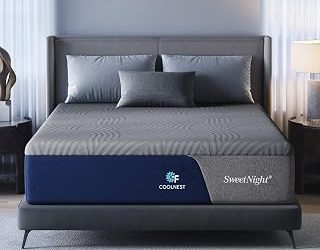
Sweetnight CoolNest 14″ King
The five-zone layout is the reason this one works well in a paired build: the firmer lumbar zone lines up predictably across both halves, so you don’t get a soft dip mid-span. Medium feel with genuinely decent heat transfer, and at 14 inches it stacks tall enough to look intentional on a chunky timber frame.
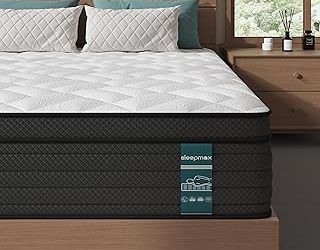
SLEEP100 14″ Extra Firm King
Extra-firm foam is the pragmatist’s pick for oversized platforms because it telegraphs frame flex far less than plush foam does. Expect a genuinely stiff surface out of the box — pair it with a topper if you’re a side sleeper, and give it a few days to finish expanding before you judge the loft.
OlarHike 18″ King Air Mattress
An 850-pound rating and coil-beam internal structure make this the best temporary answer for a guest-room Alaskan King setup, and the built-in pump means no scavenging for an adapter at midnight. Deflate and store it in a bin under the platform when the room goes back to normal duty.
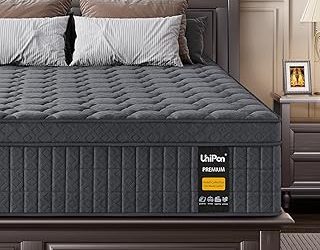
14″ Gel Hybrid King (Pocket Spring)
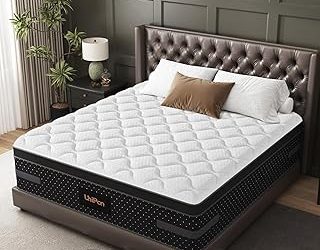
Individually wrapped coils give you edge structure that all-foam builds simply can’t match, which matters enormously at the seam of a two-mattress setup — the perimeters hold their shape instead of rolling inward. Medium-firm, well isolated for motion, and the best choice if one sleeper gets up early.
EGOHOME 12″ Green Tea Memory Foam King
At 12 inches this is the low-profile option, useful if your frame already sits high or you plan to add a thick topper without ending up on a bed you need a step stool for. The green tea gel layer keeps off-gassing mild, and it’s fiberglass free, which is worth confirming on anything you’ll be cutting or covering.
Frequently Asked Questions
Can I really combine two kings instead of buying an Alaskan King?
Yes, and most DIY builders do. Two kings give you 152″ x 80″, so either build wide or trim your platform to 108″ and let the mattresses overhang slightly onto a supported edge rail. A split-king pairing lands closer to the true dimensions with less waste.
What sheets fit a DIY Alaskan King?
Standard bedding won’t work. Look for Alaskan King or Family Bed sizing from specialty makers, or sew two king flat sheets together with a French seam running lengthwise — a solid weekend project if you own a machine.
How much weight does the frame need to carry?
Two 14-inch king mattresses run roughly 200 pounds combined, plus occupants and bedding. Design for 1,200 pounds distributed as a safe minimum, with a doubled center beam and legs on 24-inch centers.
Will I feel the gap between the two mattresses?
Not if you bridge it properly. A tapered foam filler strapped between the mattresses, plus a full-width topper, makes the seam effectively invisible. Hybrids with reinforced edges need less filler than soft all-foam models.
Final Thoughts
For a permanent build, the 14″ Gel Hybrid with pocket springs is my first recommendation — the edge support is exactly what a seamed two-mattress platform needs — with the Sweetnight CoolNest 14″ as the better call if you sleep hot and want consistent zoning across both halves. For guest rooms or a temporary setup, the OlarHike 18″ air mattress gets you an Alaskan-King-sized surface in ten minutes and back into a storage bin just as fast.