Key takeaways
- Panel material and thickness: Look for 15mm or thicker engineered board on the side panels and a solid back rather than a thin hardboard sheet. Anything under 12mm will bow under a full hanging rod within a year, and metal-bodied units sidestep the issue entirely.
- Hardware quality: Soft-close hinges and steel cam locks separate a wardrobe you’ll keep from one you’ll curbside. Barn-door tracks need a top rail that mounts into the carcass frame, not just the back panel, or the roller will start dragging.
- Hanging height versus drawer count: Measure your longest garment before you buy. Coats and dresses need 60 inches of clear drop; every drawer bank you add eats into that. Split-configuration units with a rod on one side and shelves on the other are the honest compromise.
- Anti-tip anchoring: Any unit over 65 inches tall needs to be strapped to a stud, full stop. Check the included kit — most ship with a nylon strap and drywall screws. Swap in a #10 wood screw into framing and you’re done in five minutes.
- Assembly reality: Expect two to four hours and a second set of hands for the tall models. Assemble on carpet or a moving blanket, square the box with a framing square before you nail the back on, and dry-fit the doors before final tightening.
What's inside
Older houses lie to you about storage. A 1920s bungalow might have a single 24-inch reach-in per bedroom, and a newer rental will hand you a wire shelf screwed into drywall with plastic anchors. Building a proper closet means opening walls, rerouting a circuit, and eating a weekend of drywall dust for a result you can’t take with you. A freestanding armoire skips all of that. You bring the closet to the room instead of carving one out of it.
I’ve assembled enough flat-pack wardrobes to know where they succeed and where they turn into a pile of splintered cam locks. This guide looks at the six armoires worth your Allen wrench in 2026 — what the panels are actually made of, how the hardware holds up after a few seasons of daily door swings, and which ones reward a bit of extra effort with shims, felt pads, or a proper wall anchor. Below are the picks, followed by the spec details that matter before you commit floor space.
As an Amazon Associate we earn from qualifying purchases.




🛒 Best Price Today on Amazon
Prime members get fast, free shipping on everything above, plus member-only deals. New members get a 30-day free trial — cancel anytime.
How to Choose a/an Armoire Closet (2026)
- Panel material and thickness: Look for 15mm or thicker engineered board on the side panels and a solid back rather than a thin hardboard sheet. Anything under 12mm will bow under a full hanging rod within a year, and metal-bodied units sidestep the issue entirely.
- Hardware quality: Soft-close hinges and steel cam locks separate a wardrobe you’ll keep from one you’ll curbside. Barn-door tracks need a top rail that mounts into the carcass frame, not just the back panel, or the roller will start dragging.
- Hanging height versus drawer count: Measure your longest garment before you buy. Coats and dresses need 60 inches of clear drop; every drawer bank you add eats into that. Split-configuration units with a rod on one side and shelves on the other are the honest compromise.
- Anti-tip anchoring: Any unit over 65 inches tall needs to be strapped to a stud, full stop. Check the included kit — most ship with a nylon strap and drywall screws. Swap in a #10 wood screw into framing and you’re done in five minutes.
- Assembly reality: Expect two to four hours and a second set of hands for the tall models. Assemble on carpet or a moving blanket, square the box with a framing square before you nail the back on, and dry-fit the doors before final tightening.
The Best Armoire Closet (2026)s Reviewed
Farmhouse 4-Door LED Armoire, Rustic Brown
The folding sliding barn door mechanism is the star here — it saves the 20 inches of clearance a swing door demands, which matters in a tight bedroom. Integrated LED strips are genuinely useful in a dim corner, though I’d route the cord through the back panel with a spade bit for a cleaner install.
VOWNER 71″ 6-Door Armoire with Mirror
Six doors and a full-length mirror make this the most complete single-unit solution on the list, effectively replacing a dresser and a wardrobe at once. Assembly is the longest of the group, so budget an afternoon and keep the hardware sorted in labeled cups.
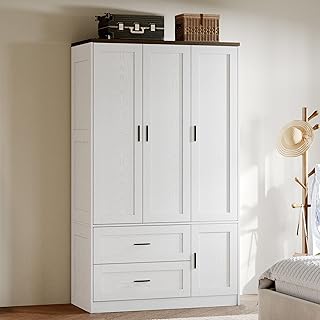
ANCTOR 3-Door Armoire, White
Cleanest build quality of the bunch, with soft-close hinges that feel a tier above the price and adjustable shelves on a proper pin system rather than fixed dados. The white finish shows scuffs, so touch-up paint is worth keeping on hand.
75″ Farmhouse 4-Door LED Armoire with 3 Drawers
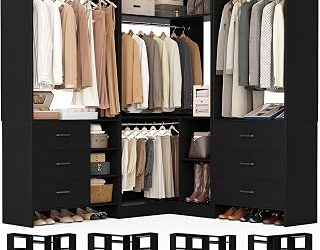
The tallest option here, and that extra height translates directly into usable hanging depth for long coats. Three drawers plus adjustable shelving make it flexible, but the 75-inch profile absolutely requires the anti-tip strap into a stud.
GAIOUS Metal Wardrobe Cabinet, Black
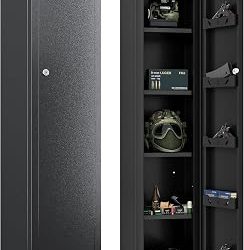
Steel construction means no sagging shelves and no swollen particleboard in a humid basement or garage. It assembles faster than any wood unit here — mostly bolt-together panels — and the industrial look suits a gym or mudroom better than a formal bedroom.
Frequently Asked Questions
Do I really need to anchor an armoire to the wall?
Yes, on anything tall or top-heavy. A loaded wardrobe can exceed 200 pounds, and an open drawer shifts the center of gravity forward fast. One strap into framing takes minutes and eliminates the risk entirely.
Can I assemble one of these alone?
The shorter three-door models, yes. For 71-inch and taller units, you need a helper for the moment the side panels and top join — holding two loose panels square while driving cams is a two-person job.
Metal or wood?
Metal for durability, humidity resistance, and quick assembly. Wood-look engineered board for appearance and warmth in a bedroom. Neither is objectively better; it comes down to where the unit lives.
How do I fix doors that don’t line up?
Almost always a squaring issue, not a hinge defect. Loosen the back panel screws, push the carcass into square, re-tighten, then adjust the hinge cams for the final millimeter of gap.
Final Thoughts
For most bedrooms, the ANCTOR 3-Door Armoire delivers the best hardware-to-price ratio, and its soft-close hinges hold up under daily use. If you need maximum capacity in one footprint, the VOWNER 71″ 6-Door with mirror does the work of two pieces of furniture. And for garages, basements, or anywhere moisture is a factor, the GAIOUS Metal Wardrobe is the practical choice — it goes together in under an hour and won’t ever sag.