Key takeaways
- Slat gap under 3 inches: Tempur-Pedic’s warranty language calls for continuous or closely spaced support. Measure the gap yourself — some listings quote slat width, not the space between them. If a frame ships with 4-inch gaps, cutting a sheet of 3/4-inch plywood to fit is a 20-minute fix that solves it permanently.
- Center rail with legs, not just a rail: Queen and larger frames need a longitudinal center support with at least one leg touching the floor, ideally two or three. Flip the frame diagram in the listing photos and count the legs before buying.
- Deck height versus mattress thickness: Tempur-Pedic profiles run 10 to 13 inches. Pair a 12-inch mattress with a 14-inch frame and your sleep surface lands around 26 inches — comfortable for most people getting in and out. Go taller on both and you’ll be climbing.
- Steel gauge and joint type: Look for welded corners over bolt-only construction on metal frames. Bolted joints work fine but need a re-torque after the first month; keep the hex key in your nightstand drawer and give every fastener a quarter turn once things settle.
- Non-slip slat retention: Memory foam has almost no surface grip. Frames with rubber slat caps, fabric slat sleeves, or slats screwed into place will stop the squeak-and-shift problem that plagues loose wooden slats sitting in metal channels.
What's inside
Memory foam behaves nothing like an innerspring, and that catches people off guard the first time they unbox a Tempur-Pedic. There’s no internal coil unit distributing load, so the mattress simply sinks into whatever gaps exist beneath it. Slats spaced too far apart create soft spots that show up as body impressions within months, and a traditional box spring flexes under the weight in ways that void most memory foam warranties. I’ve pulled apart enough frames on garage floors to know the failure point is almost always the middle: a single center rail with one spindly leg, holding up 90-plus pounds of foam plus two adults.
This guide covers what actually matters when you’re picking a base for a Tempur-Pedic — slat gap measurements, center support geometry, deck height for the mattress profile you own, and whether an adjustable base makes sense for your specific model. I’ve included platform frames in metal and solid wood, plus one adjustable option, with notes on assembly quirks and where you’ll want a socket wrench instead of the included Allen key.
As an Amazon Associate we earn from qualifying purchases.


🛒 Best Price Today on Amazon
Prime members get fast, free shipping on everything above, plus member-only deals. New members get a 30-day free trial — cancel anytime.
How to Choose a Bed Frame For A Tempurpedic Mattress (2026)
- Slat gap under 3 inches: Tempur-Pedic’s warranty language calls for continuous or closely spaced support. Measure the gap yourself — some listings quote slat width, not the space between them. If a frame ships with 4-inch gaps, cutting a sheet of 3/4-inch plywood to fit is a 20-minute fix that solves it permanently.
- Center rail with legs, not just a rail: Queen and larger frames need a longitudinal center support with at least one leg touching the floor, ideally two or three. Flip the frame diagram in the listing photos and count the legs before buying.
- Deck height versus mattress thickness: Tempur-Pedic profiles run 10 to 13 inches. Pair a 12-inch mattress with a 14-inch frame and your sleep surface lands around 26 inches — comfortable for most people getting in and out. Go taller on both and you’ll be climbing.
- Steel gauge and joint type: Look for welded corners over bolt-only construction on metal frames. Bolted joints work fine but need a re-torque after the first month; keep the hex key in your nightstand drawer and give every fastener a quarter turn once things settle.
- Non-slip slat retention: Memory foam has almost no surface grip. Frames with rubber slat caps, fabric slat sleeves, or slats screwed into place will stop the squeak-and-shift problem that plagues loose wooden slats sitting in metal channels.
The Best Bed Frame For A Tempurpedic Mattress (2026)s Reviewed
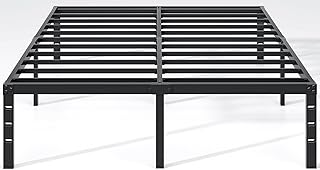
NEW JETO Metal Bed Frame, Queen, 14 Inch
A straightforward steel platform with dense slat spacing and enough clearance underneath for storage bins, which makes it a practical pick in a smaller bedroom. Assembly is bolt-together with no welding to inspect, so I’d recommend snugging every fastener with a socket driver rather than the supplied wrench for a joint that stays tight.
ZINUS Vivek Deluxe Wood Platform Bed
The wood slat deck here gives memory foam a bit of natural flex without the sag you get from wide gaps, and the slatted headboard means no separate mounting project. Worth checking the center leg count against your mattress weight — Tempur-Pedic hybrids run heavier than the all-foam models.
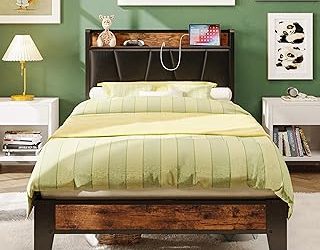
SHA CERLIN 14 Inch Metal Platform with Wood Headboard
This one solves the two most common complaints in one design: non-slip slat retention that keeps foam from creeping, and a noise-damped frame that doesn’t announce every rollover. The mixed metal-and-wood build also looks less utilitarian than a bare steel frame, which matters if the bed is visible from the doorway.
NELYE California-King Wood Platform, 14 Inch
Rubberwood rails and legs with pine slats give you genuine solid-wood construction at a Cal-King footprint, where cheap frames tend to flex badly across the middle. Pre-drill nothing and follow the sequence in the manual — the leg brackets thread into hardwood and stripping one is an annoying repair.
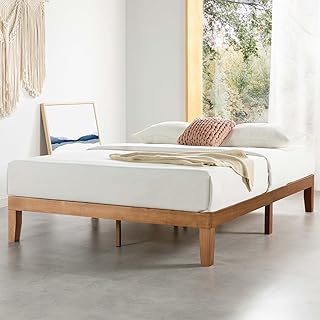
Mellow Naturalista Classic 12 Inch Pine Platform
A minimal solid pine base with wooden slats and no headboard, which is the right call if you’re planning a DIY upholstered or shiplap headboard mounted to the wall instead. The 12-inch height keeps a thick Tempur-Pedic from sitting too high.
Frequently Asked Questions
Do I need a box spring with a Tempur-Pedic mattress?
No, and using one is generally a bad idea. Box springs are engineered to flex with coils; memory foam needs a rigid, evenly supported deck. A platform frame or solid foundation is the correct pairing.
What slat spacing does Tempur-Pedic actually require?
Aim for 3 inches or less between slats, with a supported center rail on queen and larger sizes. If your frame is wider than that, a plywood sheet or a bunkie board laid across the slats is an easy retrofit.
Will an adjustable base work with a Tempur-Pedic?
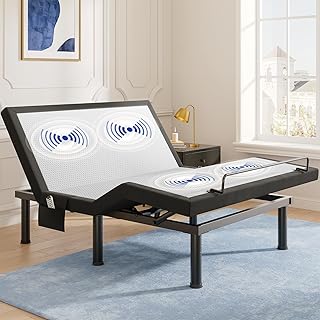
Yes — memory foam bends readily, which is why it pairs better with adjustable bases than innerspring does. The Tami T600 with its zero-gravity preset and quiet motor is a reasonable entry point if you want head and foot articulation without a premium price.
Can I add plywood on top of existing slats?
You can, and it’s a common fix, but drill a few 2-inch ventilation holes across the sheet. Memory foam traps moisture, and a fully sealed deck can encourage mildew on the mattress underside.
Final Thoughts
For most buyers, the SHA CERLIN 14 Inch platform hits the best balance of non-slip slat support, quiet operation, and usable under-bed storage, while the NEW JETO metal frame is the value play if looks matter less than load capacity. If you want articulation, the Tami T600 pairs naturally with memory foam and takes about as long to set up as unboxing the mattress itself.