Key takeaways
- Mounting depth and box compatibility: Measure from your ceiling to the nearest obstruction, then check the fixture’s stated height. Most flush-mount fandeliers sit 5 to 8 inches deep, but you also need a fan-rated electrical box — a standard lighting box is not designed to carry a motorized load, even a light one.
- Diameter versus room size: A 17.7-inch shroud moves air in a 10×10 bedroom or study. A 24- to 27.6-inch housing is what you want for a living room or open loft. Undersizing is the most common regret, since these fans push air downward in a narrower column than bladed models.
- DC motor, not AC: DC motors draw less power, run noticeably quieter at low speeds, and give you finer speed steps. If a listing doesn’t specify, assume AC and expect a hum at higher settings.
- Color temperature range and dimming behavior: Look for stepless dimming rather than fixed steps, and a CCT range that reaches at least 3000K on the warm end for bedrooms. Some units flicker at very low dim levels — check reviews for that specifically if you use night lighting.
- Control redundancy: App control is convenient until the manufacturer’s server changes. Prioritize models that keep a working RF remote and, ideally, respond to the wall switch for basic on/off so the fixture never becomes unusable.
What's inside
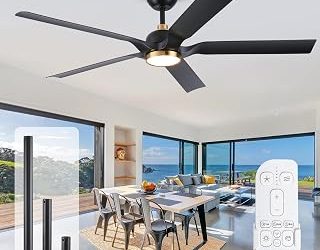
Anyone who has stood on a ladder wrestling a five-blade fan into a downrod bracket in an eight-foot bedroom knows the problem. Traditional ceiling fans need clearance you may not have, they throw strobing shadows across the ceiling, and the blade wobble that shows up after two years is nearly impossible to correct without rebalancing the whole assembly. Bladeless designs — really enclosed impeller fans with a shroud — sidestep all of that by hiding the moving parts inside a housing that mounts flush to the box.
I’ve installed a handful of these in low-ceiling rooms and converted attics, and the differences between models come down to airflow honesty, mounting depth, and whether the controls actually work six months in. This guide covers what to look for on the spec sheet, which units earn their keep in bedrooms and kids’ rooms, and the trade-offs nobody mentions until you’re already holding the canopy.
As an Amazon Associate we earn from qualifying purchases.


How to Choose a Bladeless Ceiling Fan (2026)
- Mounting depth and box compatibility: Measure from your ceiling to the nearest obstruction, then check the fixture’s stated height. Most flush-mount fandeliers sit 5 to 8 inches deep, but you also need a fan-rated electrical box — a standard lighting box is not designed to carry a motorized load, even a light one.
- Diameter versus room size: A 17.7-inch shroud moves air in a 10×10 bedroom or study. A 24- to 27.6-inch housing is what you want for a living room or open loft. Undersizing is the most common regret, since these fans push air downward in a narrower column than bladed models.
- DC motor, not AC: DC motors draw less power, run noticeably quieter at low speeds, and give you finer speed steps. If a listing doesn’t specify, assume AC and expect a hum at higher settings.
- Color temperature range and dimming behavior: Look for stepless dimming rather than fixed steps, and a CCT range that reaches at least 3000K on the warm end for bedrooms. Some units flicker at very low dim levels — check reviews for that specifically if you use night lighting.
- Control redundancy: App control is convenient until the manufacturer’s server changes. Prioritize models that keep a working RF remote and, ideally, respond to the wall switch for basic on/off so the fixture never becomes unusable.
The Best Bladeless Ceiling Fans (2026) Reviewed
VOLISUN 27.6″ Low Profile Fandelier
The largest shroud in this group, and the one I’d reach for in a living room or master bedroom where a 20-inch unit would feel underpowered. The 3000K–6500K dimmable output covers everything from evening reading light to daylight-balanced task lighting, and the flush canopy keeps total drop tight enough for a standard eight-foot ceiling.
Depuley 19″ Bladeless Flush Mount
A well-executed small-room option with both app and remote control, which is the redundancy I like to see. The enclosed housing keeps it genuinely quiet at low speeds, making it a sensible pick for a nursery or apartment bedroom where a bladed fan’s tick would be audible.
LEDIARY 20″ Black Fandelier
The black finish is the practical draw here — it reads as an intentional design choice on a white ceiling instead of an appliance you’re trying to hide. Six speeds off a reversible DC motor means you get real winter circulation, not just a token reverse setting, and the app pairing was straightforward in my experience with similar LEDIARY units.
Bladeless Flush Mount with Stepless Dimming (White)
Stepless dimming across a 3000K–6000K range is the standout feature, letting you land on a specific brightness rather than cycling through preset steps. A solid mid-size choice for bedrooms where lighting quality matters more than maximum airflow.
24″ Bladeless Fan with RGB Light
The RGB accent layer makes this the obvious kids’ room or media room candidate, with voice control support for hands-free operation. The 2700K–6500K white light range underneath is fully functional on its own, so the color feature reads as a bonus rather than a compromise.
Frequently Asked Questions
Do bladeless ceiling fans actually move as much air as regular fans?
Not at the same diameter. An enclosed impeller trades some raw CFM for a more focused, less turbulent airflow column. In practice this means you size up: choose a 24-inch bladeless unit where you’d have specified a 42-inch bladed fan for the same room.
Can I install one on a standard light fixture box?
You shouldn’t. Even lightweight enclosed fans generate vibration and rotational load that a non-rated box isn’t built to handle. Swap in a fan-rated brace box — it’s a 30-minute job from below if you can access the joists, and it’s the single most important step in the install.
Are these quieter than bladed fans?
Generally yes at low and medium speeds, particularly with a DC motor, since the shroud dampens air noise. At the highest setting you’ll hear airflow through the housing, which some people find more noticeable than blade whoosh because the pitch is higher.
What happens to the app if the company disappears?
The RF remote continues to work, since it communicates directly with the fixture’s receiver. This is exactly why buying a model with a physical remote — not app-only control — matters for a fixture you expect to keep for a decade.
Final Thoughts
For most rooms, the VOLISUN 27.6-inch is the safest bet on airflow and the one least likely to leave you wishing you’d gone bigger. If your ceiling is in a smaller bedroom or study, the Depuley 19-inch handles it quietly and cleanly, and the LEDIARY 20-inch in black is worth the small premium if you want the fixture to look deliberate rather than disappear. Whichever you choose, budget an hour for a fan-rated box before you open the fixture carton.