Key takeaways
- Measure the depth, not just the size: “Queen” tells you 60″ x 80″, but box springs run anywhere from 5″ low-profile to 9″ standard. Run a tape down the side rail before you order — a wrap sized for 9″ on a 5″ split will pool at the floor.
- Four-sided wrap vs. full encasement: Side-only wraps are for looks and dust; zippered encasements seal all six surfaces and are the only real option if allergens or bed bugs are the concern.
- Fabric recovery matters more than thread count: Jersey knit and woven stretch blends both work, but check that the elastic runs the full perimeter rather than sitting only at the corners. Corner-only elastic is what creates that saggy midpoint on the long side.
- Match the color to your frame, not your duvet: White reads crisp on light floors and painted frames; gray and camel hide scuffs and shoe marks far better in high-traffic or rental rooms. Black disappears entirely under a dark headboard.
- Confirm it survives a hot wash: Look for wrinkle- and fade-resistant construction and reinforced seams. A cover you are afraid to launder is no better than staples.
What's inside
Anyone who has crawled around a bed frame with a staple gun knows the problem: the box spring itself is usually a raw plywood-and-fabric slab wrapped in whatever cheap grey ticking the factory had on hand. Once you switch to a low-profile metal frame or a platform with visible legs, that ticking is on full display, and a traditional bed skirt does you no favors — it slips, bunches at the corners, and needs re-tucking every time you strip the sheets. The staple-gun route works, but it is permanent and unwashable, which is a bad trade for a surface that collects dust.
A stretch box spring cover solves it the way a good jig solves a repetitive cut: one snug piece, no fasteners, off in thirty seconds for the wash. This guide breaks down six covers worth your money in 2026, from soft jersey wraps to fully zippered encasements, plus the sizing and fabric details that decide whether a cover hugs the corners or sags after two washes.
As an Amazon Associate we earn from qualifying purchases.


How to Choose a Box Spring Cover (2026)
- Measure the depth, not just the size: “Queen” tells you 60″ x 80″, but box springs run anywhere from 5″ low-profile to 9″ standard. Run a tape down the side rail before you order — a wrap sized for 9″ on a 5″ split will pool at the floor.
- Four-sided wrap vs. full encasement: Side-only wraps are for looks and dust; zippered encasements seal all six surfaces and are the only real option if allergens or bed bugs are the concern.
- Fabric recovery matters more than thread count: Jersey knit and woven stretch blends both work, but check that the elastic runs the full perimeter rather than sitting only at the corners. Corner-only elastic is what creates that saggy midpoint on the long side.
- Match the color to your frame, not your duvet: White reads crisp on light floors and painted frames; gray and camel hide scuffs and shoe marks far better in high-traffic or rental rooms. Black disappears entirely under a dark headboard.
- Confirm it survives a hot wash: Look for wrinkle- and fade-resistant construction and reinforced seams. A cover you are afraid to launder is no better than staples.
The Best Box Spring Cover (2026)s Reviewed
Smooth Woven Elastic Box Spring Cover, Queen (White)
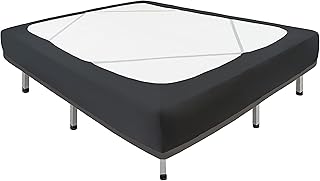
The woven face here has a tighter, more tailored look than jersey — closer to a fitted slipcover than a T-shirt — and it resists the pilling that shows up on knits after a dozen washes. Covers sides only, so pair it with a fitted sheet on top and expect a genuinely clean white line around the base.
Light Camel Stretch Wrap, Queen
Camel is the sleeper pick for rentals and guest rooms because it reads warm and intentional while hiding vacuum scuffs that would show on white. The four-sided stretch pulls taut over metal platform frames, which is exactly where bed skirts fail worst.
Black Jersey Knit Stretchy Wrap, Queen
Soft, forgiving, and the easiest install of the group — the jersey stretches enough to forgive a half-inch of measuring error. Best under dark or upholstered headboards, where it makes the base visually vanish rather than framing it.
PureFit Stretchy Box Spring Cover, Queen
PureFit’s elastic runs the full perimeter, and that continuous tension is what keeps the long sides from bowing outward mid-rail. A safe default if you want white with minimal fuss and a snug fit you do not have to fight.
Jersey Knit Wrap, King / Cal King / Olympic Queen (Gray)
One of the few wraps that genuinely spans standard King, Cal King, and Olympic Queen dimensions without leaving slack, which makes it useful if you own more than one bed size. Gray is the most maintenance-free color in the lineup.
Frequently Asked Questions
Do I still need a bed skirt with one of these?
No — that is the point. A four-sided wrap replaces the skirt entirely and stays put, since there is no fabric tucked between mattress and box spring to migrate.
Will a stretch cover fit a split queen box spring?
Only if you buy two, one per half, and even then you will see a seam down the center. Split foundations are the one case where a zippered encasement per half tends to look cleaner.
Can I put these in the dryer?
Tumble low is fine for the jersey and woven wraps. High heat degrades the perimeter elastic faster than anything else you can do to it, so pull them slightly damp and let the stretch do the smoothing.
Is an encasement worth it if I don’t have bed bugs?
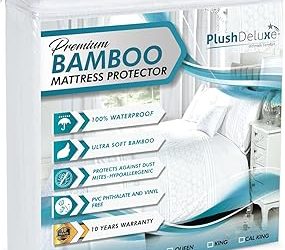
If anyone in the house has dust mite allergies, yes. The HOSPITOLOGY zippered encasement seals the foundation completely, which a side-only wrap cannot do — it is prevention hardware, not decoration.
Final Thoughts
For most rooms, the PureFit Stretchy Box Spring Cover is the straightforward pick: full-perimeter elastic, clean white finish, and no measuring drama. Choose the Light Camel Stretch Wrap if you want the base to look deliberately styled rather than merely hidden, and go with the HOSPITOLOGY Zippered Encasement when allergens or pests are the real reason you are shopping.