Key takeaways
- Coil type and gauge: Individually pocketed springs move independently, which is why they isolate motion so much better than old-style interconnected innerspring units. Lower gauge numbers mean thicker, firmer wire — worth knowing if you’re heavier or sleep with a partner who tosses.
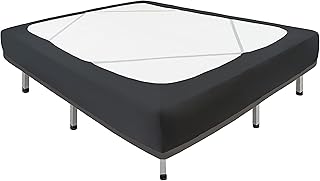
- Base compatibility: A box spring adds height and a bit of give, but most modern hybrids perform fine on a platform provided slat gaps stay under about three inches. Wider gaps let the foam base sag between supports, and no warranty covers that.
- Profile height: Ten inches suits bunk beds, trundles, and rooms where you want low sight lines. Fourteen inches paired with a box spring puts the sleep surface near 30 inches, which is high — measure against your nightstand before committing.
- Edge support: Reinforced perimeter coils keep the mattress from rolling off when you sit on the side to lace boots. This matters more than people expect on beds used for reading or getting dressed.
- Certifications and off-gassing: CertiPUR-US covers foam emissions and content. Plan on 48 hours in a ventilated room before you make the bed, and expect a faint smell that fades.
What's inside
Anyone who has hauled a queen box spring up a narrow stairwell knows the frustration: the frame won’t pivot at the landing, the drywall takes a beating, and you end up wondering why bedding hardware hasn’t caught up with the rest of the house. Meanwhile the mattress question gets murkier. Do you still need a box spring at all? Will a spring mattress sag on a slatted platform? Is a hybrid actually better, or just heavier? Most shoppers end up guessing, then living with that guess for the next eight years.
This guide cuts through it from a builder’s perspective — looking at coil construction, edge reinforcement, and how each mattress behaves on real-world bases, whether that’s a traditional box spring, a bunkie board, or a platform bed you screwed together yourself. Below are six compressed spring and hybrid mattresses that ship in a box, unroll without drama, and hold their shape once the foam finishes expanding. I’ve flagged which ones want a solid foundation and which are happy on slats.
As an Amazon Associate we earn from qualifying purchases.



How to Choose a/an Box Spring Mattress (2026)
- Coil type and gauge: Individually pocketed springs move independently, which is why they isolate motion so much better than old-style interconnected innerspring units. Lower gauge numbers mean thicker, firmer wire — worth knowing if you’re heavier or sleep with a partner who tosses.
- Base compatibility: A box spring adds height and a bit of give, but most modern hybrids perform fine on a platform provided slat gaps stay under about three inches. Wider gaps let the foam base sag between supports, and no warranty covers that.
- Profile height: Ten inches suits bunk beds, trundles, and rooms where you want low sight lines. Fourteen inches paired with a box spring puts the sleep surface near 30 inches, which is high — measure against your nightstand before committing.
- Edge support: Reinforced perimeter coils keep the mattress from rolling off when you sit on the side to lace boots. This matters more than people expect on beds used for reading or getting dressed.
- Certifications and off-gassing: CertiPUR-US covers foam emissions and content. Plan on 48 hours in a ventilated room before you make the bed, and expect a faint smell that fades.
The Best Box Spring Mattress (2026)s Reviewed
TXO 12 Inch Cashmere Hybrid Queen
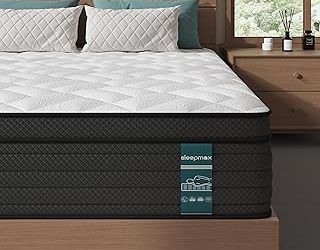
The dual-sided build is the clever part here — flip it for medium-firm or firm without buying a second mattress, which makes it a smart pick for guest rooms where sleeper preferences vary. Cooling gel foam over pocket springs keeps heat from pooling, and the cashmere-blend cover feels notably less plasticky than typical boxed-mattress ticking.
COMFBOX 14 Inch Queen
At 14 inches this is the tallest option in the group, and the extra loft translates into a plush surface layer above the coils without losing the medium-firm support underneath. Pair it with a low-profile foundation rather than a full box spring unless you genuinely want a high bed.
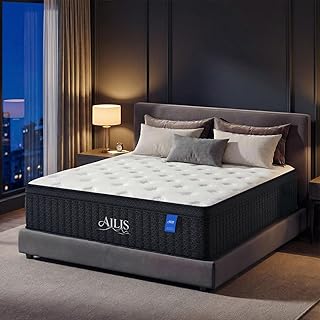
Ailis 12 Inch Queen Hybrid
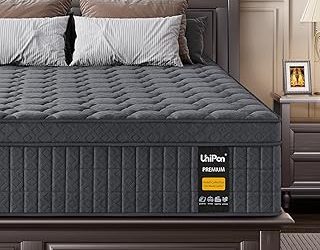
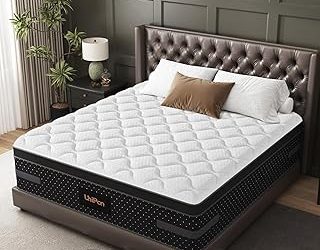
Ailis leans into upgraded pocket coils and a stiffened perimeter, and it shows when you sit on the edge — noticeably less collapse than budget hybrids in the same range. A solid all-rounder for couples who want motion isolation without a mushy foam feel.
14 Inch Queen Hybrid Memory Foam
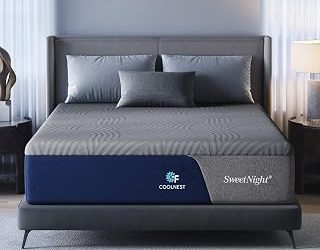
This one balances a generous memory foam comfort layer against pocketed springs and reinforced edges, so it cushions pressure points without the sinking sensation of all-foam beds. CertiPUR-US certification on the foam is reassuring for a bed at this price.
10 Inch Queen Hybrid
The lowest profile of the bunch and the most versatile — it works on box springs, platforms, daybeds, and DIY frames where a thicker mattress would look bulky. Support stays medium-firm despite the slim build, thanks to the pocket innerspring core doing most of the work.
Frequently Asked Questions
Do I still need a box spring with these mattresses?
Not necessarily. Every mattress here works on a slatted platform or solid foundation. Use a box spring if you want the added height or already own one in good condition — check for cracked timbers or broken springs first.
How long until the mattress fully expands?
Most reach usable firmness within 8 to 12 hours and finish expanding by 72 hours. Cool rooms slow the process, so bump the thermostat if the corners look shallow.
Can I build my own frame for one of these?
Yes, and it’s a straightforward weekend project. Keep slat spacing under three inches, add a center support leg for queen and larger, and use 1×4 or wider slats to avoid pressure lines telegraphing through the foam.
Which profile is best for a bunk or trundle bed?
Stick with the 10 inch hybrid or the Coolvie 12 inch Twin XL, and confirm your bunk’s guardrail height clears the finished mattress surface by at least five inches.
Final Thoughts
For most bedrooms, the TXO 12 Inch Cashmere Hybrid is the strongest overall value thanks to its flip-for-firmness design, while the Ailis 12 Inch Queen Hybrid is the one I’d choose for edge support and couples. If you’re outfitting a low frame, a bunk, or a build of your own, the 10 Inch Queen Hybrid handles tight clearances without giving up coil support.