Key takeaways
- Slat spacing: Keep gaps at 3 inches or less. Memory foam has no coil layer to bridge wide openings, so anything broader lets the underside bulge downward and creates soft spots you will feel within months. Measure the gaps yourself when the unit arrives rather than trusting the listing photo.
- Steel gauge and weld quality: Look at where the cross members meet the perimeter rail. Welded or bolted junctions hold up; thin stamped tabs that rely on friction alone start creaking once the frame works loose. A 3,000 lb rating is common now, and it is a reasonable floor for a couple plus a heavy foam mattress.
- Profile height: A 5-inch base paired with a 12-inch mattress lands the sleep surface low, which suits platform-style bed frames and anyone who dislikes climbing into bed. A 9-inch unit puts you at classic mattress height and works better in a tall headboard setup. Add mattress thickness to base height before deciding.
- Assembly hardware: Tool-free designs that fold open and lock with pins are genuinely faster, but confirm the locking mechanism is metal-on-metal. Plastic clips are the first component to fail. If the design uses bolts, check that a hex key is included and that the holes are pre-threaded.
- Anti-slip surface and cover: Foam mattresses migrate on bare steel. A fabric-wrapped top with grip strips keeps the mattress registered to the frame and quiets the low-frequency rubbing noise that bare metal produces every time you roll over.
What's inside
Memory foam behaves nothing like an innerspring mattress, and the foundation underneath it is where most people go wrong. A traditional coil box spring flexes under load, and that flex telegraphs straight through a foam core that has no internal structure to resist it. The result is a mattress that develops a shallow valley down the middle within a year, plus a warranty claim that gets denied because the manufacturer’s fine print called for “rigid, non-flexing support.” Anyone who has pulled a sagging foam mattress off its base and found the slats bowed like a bridge deck knows exactly what this looks like.
What memory foam actually needs is a flat, unyielding platform with slat gaps tight enough to keep the foam from sinking between supports. Modern steel box springs deliver that, and they ship flat-packed, snap together on the bedroom floor in ten minutes, and cost a fraction of what a bulky wood-frame unit runs. This guide walks through what to check before buying, then breaks down five foundations worth putting under a foam mattress in 2026 — including how each one behaves once you have actually assembled it and slept on it.
As an Amazon Associate we earn from qualifying purchases.


How to Choose a Box Springs For Memory Foam Mattress (2026)
- Slat spacing: Keep gaps at 3 inches or less. Memory foam has no coil layer to bridge wide openings, so anything broader lets the underside bulge downward and creates soft spots you will feel within months. Measure the gaps yourself when the unit arrives rather than trusting the listing photo.
- Steel gauge and weld quality: Look at where the cross members meet the perimeter rail. Welded or bolted junctions hold up; thin stamped tabs that rely on friction alone start creaking once the frame works loose. A 3,000 lb rating is common now, and it is a reasonable floor for a couple plus a heavy foam mattress.
- Profile height: A 5-inch base paired with a 12-inch mattress lands the sleep surface low, which suits platform-style bed frames and anyone who dislikes climbing into bed. A 9-inch unit puts you at classic mattress height and works better in a tall headboard setup. Add mattress thickness to base height before deciding.
- Assembly hardware: Tool-free designs that fold open and lock with pins are genuinely faster, but confirm the locking mechanism is metal-on-metal. Plastic clips are the first component to fail. If the design uses bolts, check that a hex key is included and that the holes are pre-threaded.
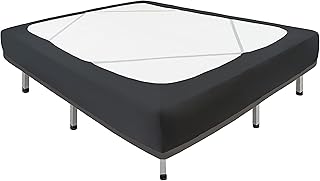
- Anti-slip surface and cover: Foam mattresses migrate on bare steel. A fabric-wrapped top with grip strips keeps the mattress registered to the frame and quiets the low-frequency rubbing noise that bare metal produces every time you roll over.
The Best Box Springs For Memory Foam Mattress (2026)s Reviewed
SHOANED 7 Inch Queen Box Spring
The tight cross-bracing on this frame is the standout detail — it resists racking better than most units in its price bracket, which is what keeps the whole thing silent over time. At 7 inches it hits a practical middle ground for anyone swapping out a failed wood foundation without changing their bed height much.
Amazon Basics Smart Box Spring, 9-Inch
Assembly here is about as painless as flat-pack furniture gets: the frame unfolds and the legs lock without tools, and the white cover looks tidy even without a bed skirt. The 9-inch profile is the right call if your current setup already sits high and you want a direct replacement.
Zinus Walter Standard Profile Metal Smart Box Spring
Zinus pairs a steel perimeter with wood slat support, which gives you the rigidity of metal and slightly more even load distribution across the mattress underside. It is a well-sorted design from a company that has been iterating on this exact product for years.
EMODA King Box Spring, 5 Inch
At 5 inches this is the one to grab for a low-profile look, particularly under a thick foam mattress where a taller base would push the surface uncomfortably high. The fabric cover and non-slip top do real work in keeping a king-size foam slab from drifting toward one side.
ALDRICH 7 Inch Box Spring Queen
The wipe-clean cover is a small feature that matters more than it sounds, especially in a guest room or a home with pets. Underneath, the heavy-gauge steel and non-slip surface deliver the flat, quiet support that foam mattresses are engineered around.
Frequently Asked Questions
Does a memory foam mattress actually need a box spring?
It needs continuous rigid support, which a modern steel box spring provides and a coil box spring does not. If you already have a slatted platform bed with gaps under 3 inches, you can skip the box spring entirely — the platform is doing the same job.
Will a metal box spring void my mattress warranty?
Generally the opposite. Most foam mattress warranties specifically require a non-flexing foundation, and traditional spring units are what trigger denials. Check your paperwork for a stated maximum slat gap and match it.
Why does my new box spring squeak?
Nearly always a fastener that did not seat fully during assembly. Pull the mattress off, retighten every bolt in a crossing pattern, and confirm each leg is bottomed out in its socket. Persistent noise at a welded joint means a defect worth returning.
Can I put a box spring directly on the floor?
Yes, and it is a common setup in bedrooms with low ceilings. Leave a few inches of clearance around the perimeter for airflow, since foam mattresses trap moisture and a sealed-in base can encourage mildew on carpet.
Final Thoughts
For most foam mattress owners the SHOANED 7 Inch is the sensible default — solid bracing, neutral height, and no fuss during setup. Choose the Amazon Basics 9-Inch if you want to preserve a taller bed height with genuinely tool-free assembly, or the EMODA 5 Inch if you are working with a king mattress and want the sleep surface to sit low and clean.