Key takeaways
- Match the foundation first: All-foam mattresses want slats no more than 2.5 to 3 inches apart. If your frame has wider gaps, add a slat or lay 1/4-inch plywood or hardboard across the deck before the mattress goes down. Hybrids with pocket springs are more forgiving but still sag between wide slats.
- Foam versus hybrid: Pure memory foam contours hard and isolates motion almost completely. Pocket-spring hybrids push back more, breathe better, and hold their shape at the perimeter, which matters if you sit on the edge to lace boots every morning.
- Read the cooling claim literally: Gel infusion moves heat a little. Open-cell structure, breathable covers, and coil airflow move considerably more. If you sleep hot, weight the hybrids.
- Verify the certifications: CertiPUR-US covers foam emissions and content. Fiberglass-free matters because a torn cover on a glass-fiber fire barrier turns a bedroom into a cleanup project. Look for both stated plainly on the listing.
- Plan the expansion window: Compressed foam needs 24 to 72 hours to reach full loft, and it off-gasses while it does. Unbox in the room where it will live, crack a window, and don’t schedule guests for that night.
What's inside
Anyone who has built their own bed frame knows the mattress is the one component you can’t fabricate in the garage. You can rip slats to the millimeter, notch the side rails, and sand the headboard until it feels like glass, then spend three weeks squinting at compressed-foam listings that all read exactly the same: 12 inches, gel-infused, medium firm, ships in a box. The spec sheets rarely tell you what actually matters to a maker, which is how the thing will behave once it’s sitting on the platform you built, over the slat spacing you chose, in a room that runs warm in August.
This guide approaches boxed mattresses the way you’d approach any other material spec: what’s inside it, what it needs underneath it, and how it holds up under load over time. Below are six current options worth a look, followed by a buying checklist aimed at people with a tape measure in their pocket, short reviews of the top five, and answers to the questions that come up after the box lands on the porch.
As an Amazon Associate we earn from qualifying purchases.


How to Choose a Boxed Mattress (2026)
- Match the foundation first: All-foam mattresses want slats no more than 2.5 to 3 inches apart. If your frame has wider gaps, add a slat or lay 1/4-inch plywood or hardboard across the deck before the mattress goes down. Hybrids with pocket springs are more forgiving but still sag between wide slats.
- Foam versus hybrid: Pure memory foam contours hard and isolates motion almost completely. Pocket-spring hybrids push back more, breathe better, and hold their shape at the perimeter, which matters if you sit on the edge to lace boots every morning.
- Read the cooling claim literally: Gel infusion moves heat a little. Open-cell structure, breathable covers, and coil airflow move considerably more. If you sleep hot, weight the hybrids.
- Verify the certifications: CertiPUR-US covers foam emissions and content. Fiberglass-free matters because a torn cover on a glass-fiber fire barrier turns a bedroom into a cleanup project. Look for both stated plainly on the listing.
- Plan the expansion window: Compressed foam needs 24 to 72 hours to reach full loft, and it off-gasses while it does. Unbox in the room where it will live, crack a window, and don’t schedule guests for that night.
The Best Boxed Mattresses (2026) Reviewed
EGOHOME 8-Inch Full, Green Tea Memory Foam
The 8-inch profile is the practical choice for bunk builds, guest rooms, and platform frames where a thick mattress would swallow the rails you spent a weekend joining. Green tea gel foam and CertiPUR-US, fiberglass-free construction at a modest thickness make it a sensible spare-room mattress rather than a compromise.
Novilla 12-Inch Queen Gel Memory Foam
A straightforward three-layer foam build that leans into pressure relief and motion isolation, so a partner’s 5 a.m. alarm doesn’t register on your side. It needs a tight slat deck to perform, but give it proper support and it settles into a consistent medium feel.
FATHOM Medium 12-Inch Queen
The removable cover is the standout detail here, since a zip-off, washable shell is genuinely useful in a household with kids, pets, or a workshop next door. Gel foam plus a medium build makes it a reasonable pick for back sleepers who want contour without sinking.
12-Inch Queen Hybrid with Pocket Springs
Individually wrapped coils under CertiPUR-US foam give this one better airflow and noticeably firmer edges than an all-foam mattress at the same height. It’s the safer choice if your frame’s slat spacing is on the wide side.
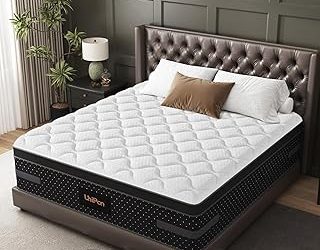
12-Inch Pillow-Top Hybrid Queen, Medium Firm
The pillow-top layer softens the entry while the pocket-spring core carries the load, landing on a medium-firm feel that suits combination sleepers. Edge support and motion isolation are both solid, making it a strong shared-bed option.
Frequently Asked Questions
How long before it’s ready to sleep on?
Most reach usable loft in 24 hours and full loft within 72. Set the box on the frame before cutting the plastic; a fully expanded queen is awkward to carry through a doorway.
What slat spacing do I need on a DIY frame?
Aim for 2.5 to 3 inches of clear gap with slats at least 3/4 inch thick, plus a center support rail for anything queen or larger. Wider gaps void most warranties and cause visible dips within a year.
Can I cut a boxed mattress down to fit an odd size?
Technically yes on all-foam, practically no. Cutting destroys the cover seal, the fire barrier, and any warranty, and you’ll never get a clean edge. Build the frame to the mattress instead.
Does fiberglass-free change how I clean it?
It removes the biggest risk of opening the cover, so a washable zip-off shell becomes genuinely usable. Still spot-clean the foam itself and let it dry fully before making the bed.
Final Thoughts
For a shared bed on a solid platform, the 12-inch pillow-top hybrid delivers the best balance of edge support, airflow, and motion isolation. If you prefer the deep contour of foam with a cover you can actually launder, the FATHOM 12-inch queen is the better call, and the EGOHOME 8-inch full remains the sensible pick for guest rooms and low-profile frames where every inch of your joinery should still be visible.