Key takeaways
- Weight rating per deck, not total: Manufacturers love quoting a combined figure. What you need is the upper bunk’s individual limit — aim for 250 lb minimum, and treat anything under 200 lb as a kids’ bed with adult marketing. Steel frames generally publish honest numbers; softwood frames often don’t publish them at all, which tells you something.
- Slat count and spacing: Slats should sit no more than 3 inches apart, and there should be a center support rail with legs on any full-size deck. Wide-spaced slats are the number one cause of the sagging-hammock feeling, and adding a plywood deck on top is a fine field fix if the frame is otherwise sound.
- Ceiling math before you buy: Measure floor to ceiling, subtract the bed’s overall height, then subtract your mattress thickness. You want at least 30 inches of sit-up clearance on the top bunk. Adults need low-profile mattresses up top — 6 to 8 inches — or the guardrail stops doing its job.
- Ladder versus stairs: Vertical steel rungs are compact but rough on bare feet at 3 a.m. Angled ladders with flat treads are the sweet spot for adult use, and staircase models with built-in drawers are worth the footprint if you have the floor space to give up.
- Convertibility and hardware quality: Frames that split into two separate beds hold their value and adapt to changing rooms. While you’re checking that, look at the fasteners — barrel nuts and machine bolts into steel inserts stay tight; wood screws driven straight into pine end grain will loosen within a season.
What's inside
Most bunk beds are engineered around a 90-pound eight-year-old, and you find that out the hard way — usually at 2 a.m., when the upper deck starts talking back. Slats bow, ladder rungs flex, and the whole frame develops a sway that no amount of tightened hardware fixes. If you’re putting adults in bunks for a guest room, a shared rental, a shop loft, or a cabin that sleeps six, the spec sheet matters more than the styling. Load rating per deck, slat spacing, post gauge, and total height under the ceiling are the four numbers that decide whether this thing feels solid or feels temporary.
I’ve assembled enough of these to know where corners get cut, so this guide is written from the wrench end of the job. Below you’ll find picks that actually hold up under grown bodies, plus the details I check before a single bolt goes in: whether the frame ships with pre-drilled steel or soft pine, whether the guardrail is full-length or a token stub, and whether the bed can be split into two standalone frames when the living situation changes. Everything here is sized and rated with adult sleepers in mind.
As an Amazon Associate we earn from qualifying purchases.



🛒 Best Price Today on Amazon
Prime members get fast, free shipping on everything above, plus member-only deals. New members get a 30-day free trial — cancel anytime.
How to Choose a Bunk Bed For Adults (2026)
- Weight rating per deck, not total: Manufacturers love quoting a combined figure. What you need is the upper bunk’s individual limit — aim for 250 lb minimum, and treat anything under 200 lb as a kids’ bed with adult marketing. Steel frames generally publish honest numbers; softwood frames often don’t publish them at all, which tells you something.
- Slat count and spacing: Slats should sit no more than 3 inches apart, and there should be a center support rail with legs on any full-size deck. Wide-spaced slats are the number one cause of the sagging-hammock feeling, and adding a plywood deck on top is a fine field fix if the frame is otherwise sound.
- Ceiling math before you buy: Measure floor to ceiling, subtract the bed’s overall height, then subtract your mattress thickness. You want at least 30 inches of sit-up clearance on the top bunk. Adults need low-profile mattresses up top — 6 to 8 inches — or the guardrail stops doing its job.
- Ladder versus stairs: Vertical steel rungs are compact but rough on bare feet at 3 a.m. Angled ladders with flat treads are the sweet spot for adult use, and staircase models with built-in drawers are worth the footprint if you have the floor space to give up.
- Convertibility and hardware quality: Frames that split into two separate beds hold their value and adapt to changing rooms. While you’re checking that, look at the fasteners — barrel nuts and machine bolts into steel inserts stay tight; wood screws driven straight into pine end grain will loosen within a season.
The Best Bunk Bed For Adults (2026)s Reviewed
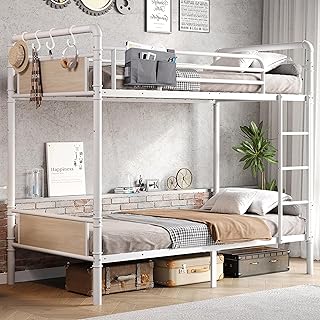
Jocoevol Metal Bunk Bed Twin Over Twin (Vintage Brown)
This is the frame I’d hand to someone who wants zero drama: welded steel tube, full-length guardrails, and a footprint tight enough for a narrow guest room. The industrial finish hides scuffs well, and because the whole thing bolts steel-to-steel, it stays quiet under adult movement in a way pine frames simply don’t.
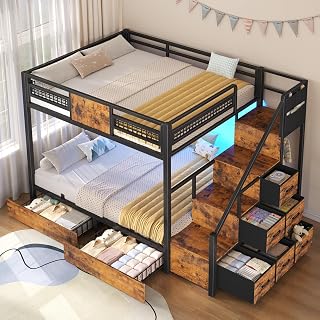
Full Over Full Bunk Bed with Stairs, Storage Drawers and LED Lights
Two full-size decks plus eight drawers makes this the strongest pick for adults sharing a room long-term, and the staircase beats a ladder every time for nightly use. Budget a solid afternoon for assembly and a second set of hands for the upper rails — the drawer boxes alone are a project.
Harper & Bright Designs Convertible Twin Over Full Bunk Bed
The twin-over-full layout gives the adult sleeper the wider bottom deck, and the fact that it separates into two daybeds is genuine long-term value rather than a brochure claim. Solid wood construction with two under-bed drawers; just plan on checking the bolts after the first month of settling.
Merax Wood Bunk Bed with Drawers (Twin Over Twin)
A clean white solid-wood frame that detaches into two standalone twins, which makes it the flexible choice for rentals and shifting households. Slat support is decent out of the box, though I’d add a plywood layer under a heavier adult mattress for extra insurance.
Harper & Bright Designs Twin Over Twin with Trundle (Dark Espresso)
Three sleeping surfaces in one footprint, with the trundle rolling away when it isn’t needed — hard to beat for a guest room that occasionally hosts a crowd. The dark espresso finish is forgiving, and the ladder is angled rather than vertical, which adult knees will appreciate.
Frequently Asked Questions
Are bunk beds safe for adults?
Yes, provided you match the frame to the load. Verify the upper bunk’s individual weight rating, use a mattress no thicker than the guardrail allows, and confirm all fasteners are torqued before first use and again after a few weeks of settling.
What mattress thickness works on the top bunk?
Stay at 6 to 8 inches. The guardrail needs to clear the top of the mattress by at least 5 inches, and a plush 12-inch mattress erases that margin completely.
Metal or wood for adult use?
Steel wins on strength-to-weight and stays tight longer. Wood looks warmer and often converts into separate beds, which is worth real money if your room layout might change.
How long does assembly take?
Plan on two to three hours for a basic steel frame and four or more for a stairs-and-drawers model. Work with a helper, dry-fit the frame loosely, then tighten everything in sequence once it’s square.
Final Thoughts
For most adult buyers, the Jocoevol steel twin-over-twin is the safest bet on rigidity and price, while the Harper & Bright Convertible Twin Over Full earns its spot by giving the bottom sleeper real room and splitting into two beds later. If you have the floor space and want storage plus a proper staircase, the Full Over Full with drawers and LED lighting is the one worth the longer build.