Key takeaways
- Measure vertical clearance twice: Subtract post height from ceiling height, then subtract another 3–4 inches for ceiling fixtures and airflow. A 76-inch post in an 8-foot room leaves roughly 20 inches of breathing room — tight for a fan, fine for a flush mount.
- Slat material and spacing: Steel slats spaced 3 inches or less support foam and hybrid mattresses without sag. Wood slats need a center rail with its own legs, or you’ll feel a dip down the middle within a year.
- Post-to-rail joinery: Look for frames where posts bolt into the side rails at two points rather than slotting in. Single-point connections are the source of most canopy sway, and no amount of retightening fixes the geometry.
- Noise dampening at contact points: Felt pads, rubber sleeves, or EVA foam between metal parts are the difference between silence and a creak every time you roll over. If the kit skips them, buy a sheet of adhesive felt and add your own.
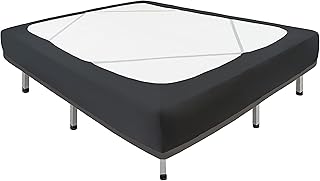
- Box spring requirement: Platform designs with slats add zero height and no cost. Frames that require a box spring push your mattress up 8–9 inches, which shortens your effective canopy opening and changes the whole proportion.
What's inside
Canopy beds look effortless in photos and act like a puzzle box in real life. The frame arrives in three long cartons, the corner posts join at four separate points, and every wobble you feel at 2 a.m. traces back to a single under-torqued bolt or a slat channel that never quite seated. Add the second problem — a queen canopy can eat 84 inches of vertical clearance in a room with 96-inch ceilings — and plenty of buyers end up with a beautiful frame that sways, squeaks, or scrapes the ceiling fan.
This guide approaches canopy beds the way you’d approach any build: joinery first, finish second. I’ve sorted the current crop by post connection style, slat support, ceiling clearance, and whether the thing stays tight after six months of use. Below you’ll find the picks worth your weekend, plus the specs that actually predict a solid assembly.
As an Amazon Associate we earn from qualifying purchases.




How to Choose a Canopy Bed (2026)
- Measure vertical clearance twice: Subtract post height from ceiling height, then subtract another 3–4 inches for ceiling fixtures and airflow. A 76-inch post in an 8-foot room leaves roughly 20 inches of breathing room — tight for a fan, fine for a flush mount.
- Slat material and spacing: Steel slats spaced 3 inches or less support foam and hybrid mattresses without sag. Wood slats need a center rail with its own legs, or you’ll feel a dip down the middle within a year.
- Post-to-rail joinery: Look for frames where posts bolt into the side rails at two points rather than slotting in. Single-point connections are the source of most canopy sway, and no amount of retightening fixes the geometry.
- Noise dampening at contact points: Felt pads, rubber sleeves, or EVA foam between metal parts are the difference between silence and a creak every time you roll over. If the kit skips them, buy a sheet of adhesive felt and add your own.
- Box spring requirement: Platform designs with slats add zero height and no cost. Frames that require a box spring push your mattress up 8–9 inches, which shortens your effective canopy opening and changes the whole proportion.
The Best Canopy Bed (2026)s Reviewed
SHA CERLIN Queen Canopy Bed, Black
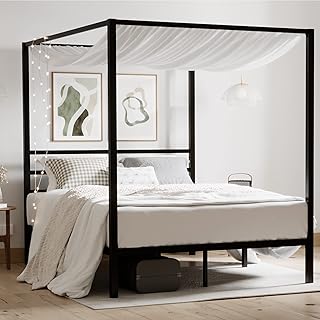
The heavy-duty metal slats are the headline here, and they earn it — no center-sag, no box spring, and enough under-bed clearance for flat storage bins. The minimalist black tube reads well in small rooms, and the two-bolt post connections keep the canopy from shimmying.
Zinus Patricia Gold Metal Canopy Bed
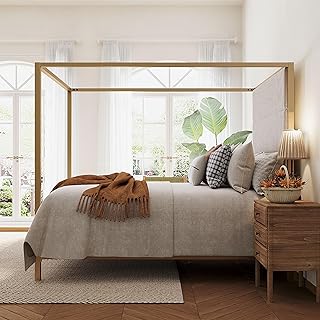
Zinus builds to tolerances that make assembly genuinely quick, and the steel slat support here is consistent with their platform frames. The gold finish is warm rather than brassy, and the slender profile disappears visually in a way heavier posts never do.
ikalido Queen Metal Canopy Bed
The EVA noise sponge at the joints is the detail worth paying for — it’s the fix most makers retrofit themselves, done at the factory. Heavy-duty support, generous under-bed height, and a squared-off four-poster silhouette that suits industrial or Japandi rooms.
Merax Queen Gold Canopy Bed with Upholstered Headboard
An 800-pound capacity and a 76.5-inch post height put this in serious-frame territory, and the linen headboard softens all that metal. Plan for a box spring, which means measuring your ceiling clearance with the mattress stack included before you commit.
Queen LED Canopy Bed with Storage & Charging Station
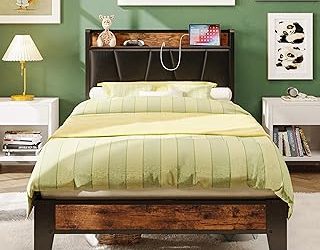
Four removable posts make this two beds in one — full canopy now, low platform later, which is a smart hedge for a kid’s room. Two drawers, a headboard bookshelf, and integrated charging cover the storage and cable clutter most canopy frames ignore.
Frequently Asked Questions
Do canopy beds need a box spring?
Most modern ones don’t. Frames with steel or heavy-duty slats spaced under 3 inches act as the foundation themselves. Check the listing — a few upholstered models still require one, and it changes your height math.
How long does assembly actually take?
Budget 45 to 90 minutes with two people. The posts are long and awkward solo, and you’ll want a second set of hands holding the canopy rails square while you start the bolts. Hand-tighten everything first, then torque down in a cross pattern.
Will a canopy bed fit under an 8-foot ceiling?
Usually, yes. Posts in the 74–77 inch range leave 19–22 inches of clearance in a 96-inch room. The constraint is fixtures, not the ceiling itself — a ceiling fan often rules it out.
How do I stop a canopy bed from wobbling?
Retighten every bolt after the first two weeks; metal frames settle. If sway persists, add adhesive felt at the post-to-rail joints to take up slack, and confirm the bed sits level on all legs.
Final Thoughts
For most rooms, the SHA CERLIN queen is the safest build — solid slats, no box spring, clean lines. Choose the ikalido if noise is your pet peeve, or the Jocisland king if you want velvet, USB-C at the headboard, and a 45-minute assembly that lives up to the claim.