Key takeaways
- Pressure range, not peak pressure: For paint, 1300–2300 PSI is the sweet spot. Machines advertising much higher numbers are fine for cars as long as they include a 40-degree fan tip and an adjustable trigger, but you’ll rarely run them wide open on a body panel.
- GPM does the rinsing: Pressure loosens dirt, flow carries it away. Anything around 1.5 GPM or better rinses soap off a sedan quickly; below 1 GPM you’ll be chasing suds down the hood.
- Foam cannon compatibility: A proper foam cannon with an adjustable orifice makes contactless pre-washing possible. Onboard soap tanks are convenient but produce thinner foam that clings less.
- Cord, battery, or wall-mounted: Corded electrics offer unlimited runtime and the best price-to-performance. Batteries buy you portability at the cost of 15–30 minutes per pack. Wall-mounted units with retractable hoses win on convenience if you always wash in the same spot.
- Hose length and stability: Look for at least 25 feet of hose so you can walk a full circuit around the vehicle without dragging the unit. Anti-tip designs matter more than you’d think — a toppled washer mid-rinse is a genuinely annoying interruption.
Washing a car in the driveway sounds simple until you’re standing there with a garden hose, a bucket of grey water, and a film of road grime that refuses to budge. The problem isn’t effort — it’s pressure and volume. A hose nozzle delivers around 40 to 60 PSI, which is nowhere near enough to lift brake dust out of wheel spokes or flush salt from a rocker panel. Meanwhile, plenty of buyers overcorrect and grab a 4000 PSI gas unit that strips clear coat if you hold the wand too close for a second too long. Somewhere between those two extremes sits the machine that actually washes cars well.
This guide is written from a hands-on perspective: what these washers feel like to set up in a real garage, how they behave on a hot Saturday afternoon, and where the specs on the box quietly stop matching the experience. I’ve broken down the choosing criteria that actually matter for automotive work — pressure ceilings, GPM, nozzle sets, foam delivery, and cord-versus-battery tradeoffs — then reviewed the standout units for 2026. Whether you want a wall-mounted setup that lives permanently in the garage or a cordless unit you can toss in the trunk, there’s a match below.
Our top picks


As an Amazon Associate we earn from qualifying purchases at no extra cost to you. Ratings are shown as listed on Amazon.
🛒 Best Price Today on Amazon
Prime members get fast, free shipping on everything above, plus member-only deals. New members get a 30-day free trial — cancel anytime.
How to Choose a Car Cleaning Pressure Washer (2026)
- Pressure range, not peak pressure: For paint, 1300–2300 PSI is the sweet spot. Machines advertising much higher numbers are fine for cars as long as they include a 40-degree fan tip and an adjustable trigger, but you’ll rarely run them wide open on a body panel.
- GPM does the rinsing: Pressure loosens dirt, flow carries it away. Anything around 1.5 GPM or better rinses soap off a sedan quickly; below 1 GPM you’ll be chasing suds down the hood.
- Foam cannon compatibility: A proper foam cannon with an adjustable orifice makes contactless pre-washing possible. Onboard soap tanks are convenient but produce thinner foam that clings less.
- Cord, battery, or wall-mounted: Corded electrics offer unlimited runtime and the best price-to-performance. Batteries buy you portability at the cost of 15–30 minutes per pack. Wall-mounted units with retractable hoses win on convenience if you always wash in the same spot.
- Hose length and stability: Look for at least 25 feet of hose so you can walk a full circuit around the vehicle without dragging the unit. Anti-tip designs matter more than you’d think — a toppled washer mid-rinse is a genuinely annoying interruption.
The Best Car Cleaning Pressure Washer (2026)s Reviewed
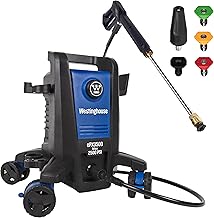
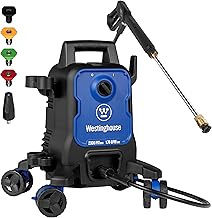
Westinghouse ePX3500 Electric Pressure Washer
At 2500 max PSI and 1.76 GPM, this is the most balanced corded pick here — enough flow to rinse a full-size SUV without pausing, and a pro-style steel wand that doesn’t flex under load. The anti-tipping base and onboard soap tank make it genuinely pleasant to use solo.
Westinghouse ePX3100 Electric Pressure Washer
Essentially the ePX3500’s sibling at 2300 max PSI with the same 1.76 GPM flow rate, which means rinse speed is identical and only detergent penetration on baked-on grime differs slightly. If the price gap is meaningful, this is the smarter buy for car-focused work.
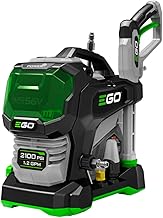
EGO Power+ HPW2100 Electric Pressure Washer
A 2100 PSI cordless unit that runs off EGO’s 56V platform, so if you already own their mower or blower batteries, this is the cheapest entry into serious cordless washing. Note the battery and charger are sold separately — budget accordingly.
Wall Mounted Pressure Washer with Automatic Rewind
The 66-foot auto-rewind hose is the real feature here: mount it once, and washing becomes a two-minute setup instead of a ten-minute one. Treat the headline pressure rating conservatively on paint and stick to the wide-fan nozzles.
6-in-1 Portable Cordless Pressure Washer
At 1300 PSI with two 4.0Ah batteries included, this handheld is built for spot work — wheel wells, muddy bike racks, roadside cleanups far from an outlet. It won’t replace a corded unit for full details, but it draws water from a bucket or lake, which no plug-in machine can do.
Frequently Asked Questions
Can a pressure washer damage car paint?
Yes, if misused. Keep the nozzle at least 12 inches from the surface, use a 25- or 40-degree tip, and never hold a narrow jet on one spot. Chipped paint and lifting trim edges are the usual casualties.
What PSI is ideal for washing a car?
Between 1200 and 1900 PSI covers virtually all automotive cleaning. Higher-rated machines work fine when throttled down through nozzle selection and distance.
Do I need a foam cannon?
Not strictly, but it’s the single best upgrade for reducing swirl marks. Thick foam lifts dirt before your mitt touches the paint, which is where most scratches originate.
Are cordless pressure washers powerful enough?
For maintenance washes and spot cleaning, yes. For heavily soiled vehicles or back-to-back washes, the runtime limits become frustrating fast.
Final Thoughts
For most driveways, the Westinghouse ePX3500 is the one I’d buy — the flow rate and build quality justify the spend, with the ePX3100 as the value alternative if you’re mainly washing sedans. If you already run EGO batteries, the HPW2100 delivers cordless freedom without a second ecosystem, and the 6-in-1 handheld earns its keep as a bucket-fed backup for jobs nowhere near an outlet.