Key takeaways
- 12-inch platter (approx. 12 x 8 inches oval): Best for appetizers, cheese, or a small roast for 2-4 people. Fits easily on a crowded buffet or small apartment table but looks lost as a main centerpiece on a 72-inch table.
- 14 to 16-inch platter (approx. 14-16 x 10-12 inches oval): The most versatile size for dinner parties. Holds a 4 to 5 lb whole roast chicken, a large salmon fillet, or sliced brisket for 6-8 without overhang. Fits on a 60-inch round table with two other serving dishes.
- 18 to 20-inch platter (approx. 18-20 x 12-14 inches oval): Statement size for a 12 to 14 lb turkey, a whole beef tenderloin, or a large charcuterie spread for 10-12. Requires a table at least 72 inches long and 38 inches wide, or a dedicated sideboard.
- Round platters (12 to 14-inch diameter): Ideal for cakes, tarts, or arranged salads where height matters more than length. Less efficient for long cuts of meat.
- Rectangular platters (15 x 10 inches): Best for modern plating, sushi, or Mediterranean mezze lines. They maximize serving surface but need careful centering to avoid tipping over table edges.
The best ceramic serving platters for dinner parties are 14 to 16-inch stoneware platters with a high-gloss glaze for everyday durability, and larger 18 to 20-inch porcelain platters for formal centerpiece service — the right choice depends on your menu, table size, and how much weight and oven-heat you want to handle.
Our top picks
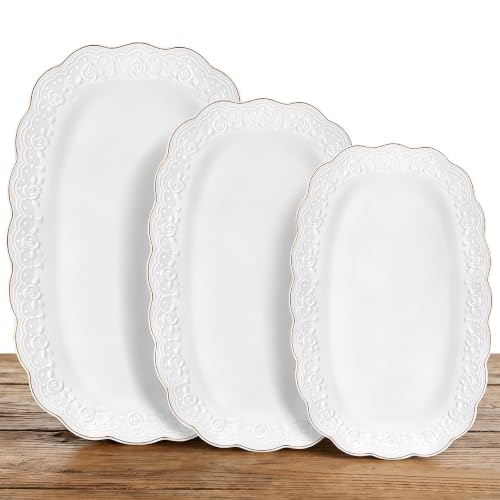
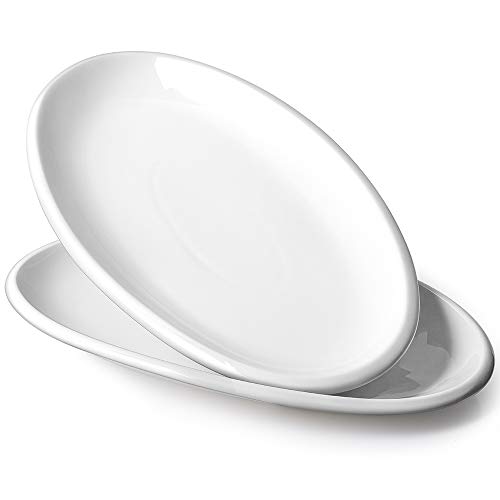

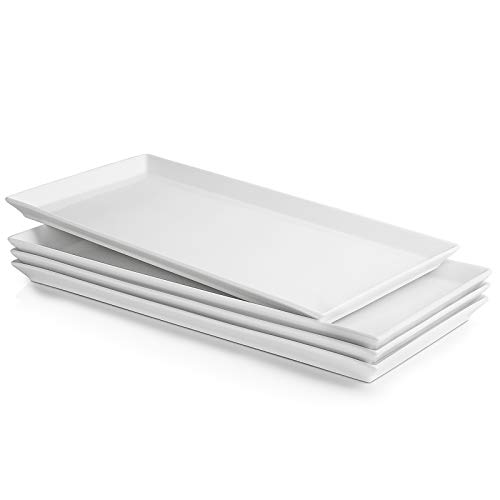
As an Amazon Associate we earn from qualifying purchases at no extra cost to you. Ratings are shown as listed on Amazon.
How to Choose the Right Platter Size and Shape
Size matters more than style when you are actually serving. A platter that is too large will not fit with other dishes, while one that is too small leaves food stacked and messy. Measure your table and serving area before you buy.
Dimensions That Work on a Real Table
Standard dining tables are 36 to 40 inches wide. For a 6-person dinner party with 3 to 4 serving platters plus dinner plates, each platter should leave at least 8 to 10 inches of clearance on each side for passing and for glasses. Use these guidelines:
- 12-inch platter (approx. 12 x 8 inches oval): Best for appetizers, cheese, or a small roast for 2-4 people. Fits easily on a crowded buffet or small apartment table but looks lost as a main centerpiece on a 72-inch table.
- 14 to 16-inch platter (approx. 14-16 x 10-12 inches oval): The most versatile size for dinner parties. Holds a 4 to 5 lb whole roast chicken, a large salmon fillet, or sliced brisket for 6-8 without overhang. Fits on a 60-inch round table with two other serving dishes.
- 18 to 20-inch platter (approx. 18-20 x 12-14 inches oval): Statement size for a 12 to 14 lb turkey, a whole beef tenderloin, or a large charcuterie spread for 10-12. Requires a table at least 72 inches long and 38 inches wide, or a dedicated sideboard.
- Round platters (12 to 14-inch diameter): Ideal for cakes, tarts, or arranged salads where height matters more than length. Less efficient for long cuts of meat.
- Rectangular platters (15 x 10 inches): Best for modern plating, sushi, or Mediterranean mezze lines. They maximize serving surface but need careful centering to avoid tipping over table edges.
Weight is the other hidden factor. A 16-inch stoneware platter typically weighs 4.5 to 6.5 lbs empty. Add 5 lbs of food and you are carrying 10+ lbs with one hand while hot. If you have wrist issues or need to carry from kitchen to dining room, look for lighter porcelain or medium-weight stoneware under 5 lbs.
Comparison: 5 Ceramic Platter Types for Dinner Parties
Not all ceramic is the same. Stoneware, porcelain, and earthenware behave very differently when heated, washed, and used night after night.
| Platter Type and Example | Typical Dimensions | Weight (Empty) | Glaze Durability | Oven Safe Temp | Dishwasher / Microwave |
|---|---|---|---|---|---|
| Classic Stoneware Oval (Le Creuset, Emile Henry) | 15.5 x 11 x 1.5 in | 5.2 – 6.0 lbs | Very high – scratch and chip resistant, non-porous gloss | Up to 500-535°F | Yes / Yes |
| Porcelain Extra-Large (Vietri, Juliska) | 19 x 13 x 1.2 in | 4.8 – 5.5 lbs | High – hard, glass-like surface, resists staining and crazing | Up to 450-480°F | Yes / Yes |
| Handmade Rustic Stoneware (East Fork Pottery, Heath Ceramics) | 14 x 10 x 1.4 in | 4.0 – 5.0 lbs | Moderate to high – matte or semi-matte glaze shows knife marks more quickly | Up to 400-450°F | Yes / Check maker |
| Earthenware / Fiesta-Style (Fiesta, Casafina) | 13.5 x 9.5 x 1.3 in | 3.5 – 4.5 lbs | Moderate – vibrant glaze, can craze over time, more prone to chipping on rims | Up to 350-400°F, thermal shock sensitive | Yes / Often not recommended |
| Coupe Porcelain Rectangular (Crate & Barrel, Mud Australia) | 16 x 11 x 1.0 in | 3.8 – 4.6 lbs | Very high – thin but strong, excellent stain resistance | Up to 475°F | Yes / Yes |
Glaze, Construction and Longevity Trade-Offs
For dinner parties, glaze durability决定 how the platter looks after a year of steak knives and red wine.
| Feature | High-Gloss Glazed Stoneware / Porcelain | Matte / Reactive Glaze Stoneware | Earthenware |
|---|---|---|---|
| Scratch Visibility | Low – hard surface hides utensil marks | High – matte finish shows grey cutlery trails that may need Bar Keeper’s Friend to remove | Medium – soft glaze scratches easily |
| Stain Resistance | Excellent against turmeric, tomato, beet juice | Good, but light matte glazes can stain if not wiped quickly | Fair – porous body can absorb stains through crazing |
| Chip Resistance | Very good on thick rims | Good, but thin handmade rims chip if knocked in sink | Lower – chips more easily on edge impacts |
| Heat Retention | Excellent – keeps food warm 15-25 minutes longer | Good | Poor to moderate – cools quickly |
| Best For | Frequent hosts, families with kids, oven-to-table service | Design-focused tables, lighter menus, hand-washing households | Occasional casual serving, budget options |
Best Picks by Dinner Party Situation
The right platter follows your menu and hosting style, not just your aesthetic.
1. For the Oven-to-Table Roast Host
Choose a 15 to 16-inch stoneware oval from a brand like Emile Henry or Le Creuset. The thick body handles high oven temps (up to 500°F+) and retains heat while you carve. The slightly raised rim keeps juices from spilling — look for a rim depth of at least 1 to 1.25 inches and a shallow well. Usually $50–$110 for this category. Avoid thin coupe platters for this job; they can crack with sudden temperature change if you broil.
2. For Formal Holiday and Large-Crowd Entertaining
Choose a 19 to 20-inch porcelain oval, such as Vietri Lastra or Juliska. Porcelain stays lighter than stoneware at this scale and the high-gloss white reflects food beautifully for turkey, ham, or a whole fish. It is fully dishwasher safe and will not craze after repeated washing. You will need storage space: this size requires a shelf at least 22 inches deep and 14 inches of vertical clearance if stacked. Usually $90–$180.
3. For Small Apartments and Buffet-Style Parties
Choose two 12 to 14-inch rectangular or coupe porcelain platters instead of one huge oval. Two smaller platters let you separate menus (one for meat, one for vegetarian), fit on a 48-inch console or kitchen island, and are far easier to wash in a small sink. They also solve doorway and passing issues — a 20-inch platter needs 24 inches of clear aisle to be passed safely. Usually $35–$75 each.
4. For Design-Led, Modern Tables
Choose handmade matte stoneware from makers like East Fork Pottery or Heath Ceramics. The organic shape and speckled or celadon glaze add texture to minimalist tables. Best for room-temperature menus: cheese boards, roasted vegetables, or desserts where knife pressure is low. Hand wash when possible to preserve the matte surface and expect more visible utensil marks over time. Usually $80–$150.
5. For Families With Kids and Frequent Use
Choose a mid-weight, high-gloss stoneware in a light neutral or classic white. Dark glazes hide stains but show chips; white high-gloss shows everything but is easiest to bleach-clean and matches any dinnerware. Look for dishwasher-safe and microwave-safe labeling and a footed base that lifts the platter slightly — it prevents scratching your table and makes it easier to pick up when full.
Durability and Practical Care Realities
Ceramic platters do not assemble, but they do have handling and storage realities that product photos skip:
- Thermal shock: Never move a platter directly from a 425°F oven to a cold stone countertop or wet towel. Let it rest on a wooden board or trivet for 3-5 minutes. Porcelain and earthenware are more sensitive to this than thick stoneware.
- Dishwasher fit: Measure your dishwasher interior. A 16-inch platter will block the spray arm in many standard 24-inch dishwashers unless loaded on the bottom rack at an angle. Hand-washing may be faster for large ovals.
- Storage: Store platters vertically like vinyl records with felt separators if cabinet height is under 12 inches, or flat with plate dividers. Stacking three heavy stoneware platters can exceed 18 lbs and chip the bottom glaze.
- What wears first: The rim and the foot ring. Look for a platter with a slightly rounded, glazed rim rather than a sharp, unglazed edge — unglazed edges wick moisture and chip.
- Weight limits: Most 16-inch ceramic platters safely hold 8 to 10 lbs of food. Earthenware should be limited to 6 lbs to avoid stress cracks.
Decision Matrix: Match Your Situation to the Right Ceramic
| Your Situation | Prioritize This | Ideal Platter Choice |
|---|---|---|
| Small dining area (10×12 ft room, table under 60 in) | Two 12-14 in platters, low weight, easy storage | Porcelain rectangular coupe, 3.5-4.5 lbs |
| You love oven-finished dishes and gravy | Deep well, 500°F safe, juice rim | Stoneware oval 15.5 in, high-gloss |
| Kids, pets, frequent dishwashing | Chip resistance, dishwasher safe, mid-tone glaze | Gloss stoneware 14-16 in |
| Holiday host for 10-12 guests | 19-20 in length, lightweight for carrying | Porcelain extra-large oval |
| Renter with limited storage | Vertical storage, under 5 lbs, versatile shape | 14 in handmade stoneware oval |
| You serve acidic or heavily sauced foods often | Non-porous, stain-proof glaze | High-gloss porcelain or fully vitrified stoneware |
What to Check Before You Buy
Before adding to cart, confirm four specs that listings sometimes bury: 1) exact interior serving area (subtract 1 inch from rim-to-rim length for usable space), 2) food-safe and lead-free certification, 3) maximum oven temperature and whether broiler is excluded, and 4) whether the bottom is fully glazed or has an unglazed foot — unglazed feet can scratch wood tables and need a liner. In general market ranges, expect to spend usually $35–$75 for earthenware and smaller porcelain, and usually $75–$180 for large porcelain and premium stoneware from established ceramic makers.