Key takeaways
- Measure your mattress depth first: Run a tape from the top seam straight down to the bottom seam, then add an inch for any topper. A protector rated to 18″ on a 21″ build will pop corners nightly no matter how good the elastic is.
- Look at the face fabric, not the “cooling” claim: Bamboo viscose and Tencel lyocell pull moisture off skin faster than polyester jersey. 3D or 4D spacer knits work differently — they create physical air channels — and both approaches beat a plain laminated sheet.
- Check the laminate bond: Hold a corner up to a window. Quality membranes are thin and evenly bonded; cheap ones look patchy and stiff. Patchy bonds are where delamination starts after ten or twelve washes.
- Test the noise with your hand, not your ear: Crumple a section hard. If it sounds like a chip bag on your kitchen counter, it’ll sound worse under a sheet at midnight. Spacer-knit backings are consistently the quietest.
- Confirm the wash instructions before you buy: Most PU membranes fail above 140°F and hate the dryer. If you need sanitizing hot washes for allergies or nighttime accidents, buy two and rotate rather than cooking one to death.
What's inside
Anyone who has spent a summer flipping their pillow at 3 a.m. knows the culprit is rarely the mattress itself. It’s the layer sitting on top of it. Most waterproof protectors are built around a polyurethane film laminated to a knit backing, and if the manufacturer skimps on the knit, that film turns your bed into a sealed plastic bag. Heat pools, sweat has nowhere to go, and the thing crackles every time you roll over. I’ve cut open a dozen of these to see what’s actually inside, and the difference between a good one and a bad one comes down to fabric structure and how the laminate was bonded — not the marketing copy on the box.
This guide covers the protectors worth your money in 2026, judged on airflow, noise, stretch, and how they hold up after repeated hot washes. I’ve focused on models that use spacer knits, bamboo viscose, or Tencel face fabrics, since those are the constructions that genuinely move moisture instead of trapping it. Below you’ll find the picks, followed by the specs that actually matter when you’re standing in front of your bed with a tape measure.
As an Amazon Associate we earn from qualifying purchases.



How to Choose a Cooling Mattress Protector
- Measure your mattress depth first: Run a tape from the top seam straight down to the bottom seam, then add an inch for any topper. A protector rated to 18″ on a 21″ build will pop corners nightly no matter how good the elastic is.
- Look at the face fabric, not the “cooling” claim: Bamboo viscose and Tencel lyocell pull moisture off skin faster than polyester jersey. 3D or 4D spacer knits work differently — they create physical air channels — and both approaches beat a plain laminated sheet.
- Check the laminate bond: Hold a corner up to a window. Quality membranes are thin and evenly bonded; cheap ones look patchy and stiff. Patchy bonds are where delamination starts after ten or twelve washes.
- Test the noise with your hand, not your ear: Crumple a section hard. If it sounds like a chip bag on your kitchen counter, it’ll sound worse under a sheet at midnight. Spacer-knit backings are consistently the quietest.
- Confirm the wash instructions before you buy: Most PU membranes fail above 140°F and hate the dryer. If you need sanitizing hot washes for allergies or nighttime accidents, buy two and rotate rather than cooking one to death.
The Best Cooling Mattress Protectors of 2026, Reviewed
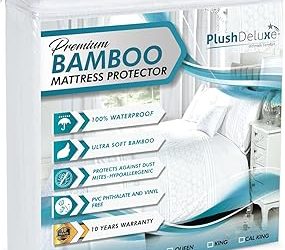
PlushDeluxe Bamboo Waterproof Mattress Protector (King)
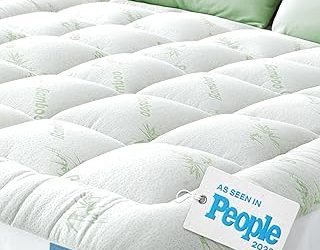
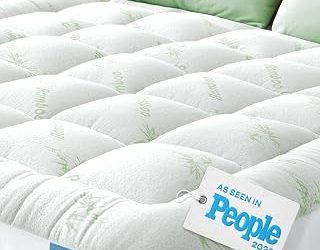
The bamboo viscose face here has a genuinely slick, cool-to-touch hand that holds up after washing, and the 18″ pockets fit most pillow-top kings without fighting you. It’s the pick I’d hand someone who wants the protector to disappear under a sheet — no rustle, no plastic feel, no shifting.
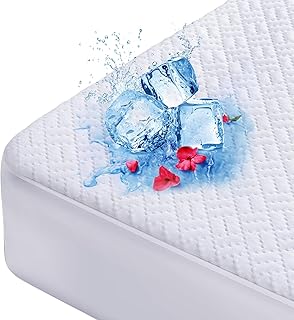
Cooling Waterproof Mattress Protector with 3D Air Fabric (Queen)
The spacer knit is the whole story: instead of pressing a membrane flat against your body, it holds a few millimeters of open air between you and the barrier. The 8″–21″ pocket range is the most forgiving on this list, which makes it a smart choice if you’ve stacked a topper on an already tall mattress.
Utopia Bedding Bamboo Viscose Protector (Queen)
This is the value benchmark. The fitted skirt has real stretch in the corners, it stays quiet, and the bamboo viscose breathes well enough that most sleepers won’t notice a temperature penalty at all. Fits to 17″ deep, so measure before committing.
Luxury Tencel Mattress Protector (Queen)
Tencel lyocell moves moisture faster than almost anything short of a spacer knit, and it feels closer to a good sateen sheet than a protector. Worth the premium if you’re a heavy sweater rather than someone just worried about spills.
Waterproof Noiseless Cooling Protector, 360 Protection (Queen)
The full-encasement approach wraps all six sides, which is the right call for pet owners and anyone dealing with side-seam accidents rather than surface spills. Deep 20″ pockets and a bamboo viscose face keep it comfortable despite the extra coverage.
Frequently Asked Questions
Do waterproof protectors always sleep hot?
No, but the membrane does add a small thermal penalty. A breathable face fabric and an air-permeable backing offset most of it. The versions that sleep genuinely hot are the ones using thick vinyl or a dense polyester backing.
How often should I wash it?
Every two to four weeks in normal use, or immediately after any accident. Wash warm, skip the bleach and fabric softener — softener clogs the membrane’s pores and kills breathability — and tumble low or line dry.
Will it change how my mattress feels?
A well-fitted protector adds almost nothing. If yours makes the bed feel firmer or plasticky, it’s usually because the pockets are too shallow and the fabric is stretched drum-tight across the surface.
Protector or encasement?
Fitted protectors are easier to strip and wash weekly. Encasements cost more effort but seal all six sides, which is what you want for bed bug prevention or pets who sleep on the edge.
Final Thoughts
For most people, the Utopia Bedding bamboo viscose protector delivers the best balance of quiet, breathable protection for the money. Sweat-prone sleepers should spend up on the Tencel model, and if your mattress and topper stack past 18 inches, the 3D Air Fabric protector’s deep pockets and spacer-knit airflow make it the easiest fit on the list.