Key takeaways
- Bottleless vs. top-loading: Bottleless units run off a 1/4″ line you tee into a cold supply, usually with a push-fit adapter and no soldering. Top-loaders need zero plumbing but ask you to invert a 40-pound jug at shoulder height, so consider where the machine lives before you commit.
- Measure the vertical gap, not the footprint: Most countertop coolers stand 15 to 20 inches tall, and top-loaders need another 12 to 15 inches of swing room above that to seat a bottle. Standard upper cabinets sit 18 inches off the counter, so a corner or an end-of-run spot is often the only workable location.
- Certified filtration, not just “multi-stage”: Look for NSF/ANSI or WQA Gold Seal marks tied to specific claims like chlorine taste and odor or lead reduction. UV sterilization is a useful add-on for tank hygiene, but it is not a substitute for carbon or sediment media.
- Temperature range and safety hardware: Hot taps typically deliver 185–200°F, which is fine for pour-over but hot enough to scald, so a child-lock button is non-negotiable in a family kitchen. Instant-heat designs skip the reservoir and cut standby energy, while tank-based units recover faster during back-to-back pours.
- Service access before aesthetics: Front-loading filter bays and twist-out cartridges take two minutes; rear-mounted housings mean pulling the unit off the counter twice a year. Removable drip trays and a self-clean cycle keep the internals from becoming a project you resent.
What's inside
Anyone who has stacked five-gallon jugs beside the pantry knows the drill: the water is fine, the logistics are not. Pitcher filters stall out at half a gallon, under-sink systems demand a saddle valve and a Saturday under the cabinet, and plumbed-in fridge dispensers put chilled water in exactly one spot in the house. A countertop unit sits in the middle of that spectrum, but the category splits hard into two very different machines, and buying the wrong one means either a jug you have to hoist overhead every week or a filter housing you can never reach.
This guide sorts the 2026 lineup from a hands-on angle: what actually gets installed, what gets serviced, and what fits under a 16-inch cabinet without you shaving a shelf. Bottleless models that tap a cold line, top-loaders that take a standard jug, and the hybrids in between are all covered, with notes on filter access, tubing runs, and the specs worth checking with a tape measure before you click buy.
As an Amazon Associate we earn from qualifying purchases.



How to Choose a Countertop Water Dispenser (2026)
- Bottleless vs. top-loading: Bottleless units run off a 1/4″ line you tee into a cold supply, usually with a push-fit adapter and no soldering. Top-loaders need zero plumbing but ask you to invert a 40-pound jug at shoulder height, so consider where the machine lives before you commit.
- Measure the vertical gap, not the footprint: Most countertop coolers stand 15 to 20 inches tall, and top-loaders need another 12 to 15 inches of swing room above that to seat a bottle. Standard upper cabinets sit 18 inches off the counter, so a corner or an end-of-run spot is often the only workable location.
- Certified filtration, not just “multi-stage”: Look for NSF/ANSI or WQA Gold Seal marks tied to specific claims like chlorine taste and odor or lead reduction. UV sterilization is a useful add-on for tank hygiene, but it is not a substitute for carbon or sediment media.
- Temperature range and safety hardware: Hot taps typically deliver 185–200°F, which is fine for pour-over but hot enough to scald, so a child-lock button is non-negotiable in a family kitchen. Instant-heat designs skip the reservoir and cut standby energy, while tank-based units recover faster during back-to-back pours.
- Service access before aesthetics: Front-loading filter bays and twist-out cartridges take two minutes; rear-mounted housings mean pulling the unit off the counter twice a year. Removable drip trays and a self-clean cycle keep the internals from becoming a project you resent.
The Best Countertop Water Dispensers of 2026, Reviewed
Avalon B8WHT Bottleless Water Cooler
The B8 ships with the full install kit, including the tubing, tee, and two-stage cartridges, so the only decision left is which cold line to tap. It is the most forgiving bottleless unit here for a first-time DIY install, and the NSF certification plus UL listing means you are not guessing about the parts inside it.
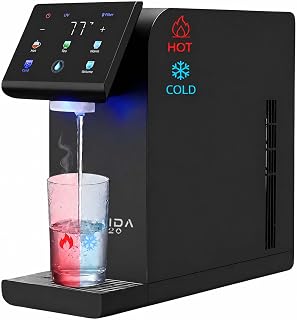
Ultra Instant Hot & Cold Bottleless Dispenser
Instant heating with no holding tank makes this the pick for tight counters and anyone bothered by compressor cycling, and the WQA-certified multi-stage stack paired with UV keeps the water path clean between filter changes. The black finish hides fingerprints better than brushed steel, which matters on a high-traffic dispenser.
Brio Limited Edition Top Loading Cooler
Brio’s three-temperature top-loader is the pragmatic choice when running a water line is off the table, and the Energy Star rating keeps standby draw modest for a tank-based design. The build feels a step above the generic top-loaders, with a solid spigot assembly and a stable base that does not walk on a laminate top.
Avalon A12 Bottleless Dispenser
Stainless housing, three temperatures, and a self-cleaning cycle put the A12 at the top of the maintenance-friendly list, since the ozone rinse handles what you would otherwise be sanitizing by hand. It is the one to buy if the dispenser will sit somewhere visible and needs to look intentional.
Rotating Dual-Spout Top Loader
The swiveling dual spout and no-press dispensing make this the most practical bedside or dorm unit in the group, and it accepts anything from a 1.2-gallon jug up to a full five. The visual door cover is a small touch that saves you from guessing how much water is left.
Frequently Asked Questions
Do bottleless models require a plumber?
Rarely. Most kits include a push-fit or self-piercing tee that connects to an existing cold shutoff under the sink, and the run is flexible 1/4″ tubing. Shut the valve, dry-fit the route, and pressure-test for leaks before pushing the dispenser back into place.
How often do the filters need changing?
Plan on every six months for typical household use, sooner if your supply is heavily sedimented. Mark the install date on the cartridge with a Sharpie; flow rate drops off gradually enough that you will not notice it otherwise.
How much electricity do these use?
Tank-based hot-and-cold units draw roughly 50 to 100 kWh a year, comparable to a small beverage fridge. Instant-heat designs cut that meaningfully since nothing sits hot around the clock.
Can a top-loader go under wall cabinets?
Only with 30-plus inches of total clearance, which most kitchens do not offer. If your cabinets are standard height, either pick a bottleless unit or place the top-loader at the end of the counter where you can lift a jug straight down.
Final Thoughts
For a plumbed install you will not have to revisit, the Avalon B8WHT is the straightforward pick thanks to its complete kit and certified filtration, while the Avalon A12 earns the upgrade for its stainless build and self-cleaning cycle. If tapping a water line is not an option, the Brio Limited Edition top-loader delivers three temperatures with no tools and no tubing at all.