Key takeaways
- Reverse osmosis used to mean a cabinet under the sink, a drain saddle and a plumber. A countertop unit changes that: you fill a tank.
Reverse osmosis used to mean a cabinet under the sink, a drain saddle and a plumber. A countertop unit changes that: you fill a tank, plug it in and draw filtered water from a spout. For under 300 dollars that convenience is realistic, which is why the category now mixes true RO machines, gravity-fed stainless towers, a sink-side faucet filter and even a bottleless cooler under one search term.
This guide is for renters who cannot touch the plumbing, apartment dwellers tired of lugging bottled water, and anyone who wants cleaner water for coffee, tea and cooking without installing anything. The seven picks below cover very different technologies, so the goal is to match the machine to your water problem and your kitchen counter, not to crown one winner for every home in 2026. Before you compare anything, decide whether your issue is taste, hardness, or simple convenience, because that answer eliminates half the list immediately.
Quick Picks
Our top picks



As an Amazon Associate we earn from qualifying purchases at no extra cost to you.
| Product | Best for | Key spec from the title |
|---|---|---|
| DREO RO 112 3L | Smaller households | RO, 99.9% contaminants, install-free |
| DREO RO, 2 pitchers | Families who refill often | 3:1 pure to drain, 2 autofill pitchers |
| Purewell gravity system | No-power filtering | 3-stage, 0.01 micron, NSF/ANSI 42 and 372 |
| Waterdrop CTF-01 | Chlorine and metals at the sink | NSF/ANSI 42, 99% chlorine |
| DREO RO, 1 pitcher | Single-pitcher setups | 3:1 pure to drain, TDS and filter life |
| Avalon B8BLK cooler | Touchless dispenser | 2 stage filters, installation kit, NSF |
| DREO RO 113 5L | Bigger tank, fewer refills | RO, 5L, install-free |
How to Choose
Match the technology to the problem
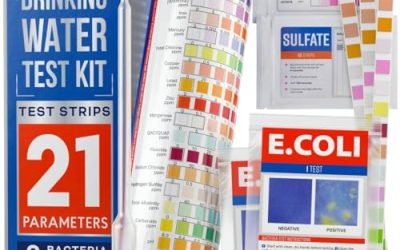
Reverse osmosis removes dissolved solids such as salts and many metals; carbon-based gravity and faucet filters mainly improve taste, chlorine and some heavy metals. If your complaint is hardness or total dissolved solids, RO is the more suitable tool. If it is only chlorine taste, a lighter filter is enough. A water report from your utility, or a cheap TDS meter, tells you which situation you are in before you commit to a larger machine.
Certifications worth checking
Look for NSF/ANSI numbers in the title. Standard 42 relates to chlorine and taste, and 372 relates to lead-free materials. A general claim like 99.9% contaminants without a standard behind it deserves a closer read of the full listing. Certification for the filter cartridge is not the same as certification for the whole appliance, so read which part the claim covers.
Tank size, waste ratio and counter space
Tank size, such as 3L versus 5L, controls how often you refill. A 3:1 pure-to-drain ratio means you get three parts clean water to one part wastewater, which is better than many older systems. Measure the space under your cabinets, because some units are tall, and leave room for a pitcher or glass beneath the spout so you are not tilting it awkwardly at the sink.
What to ignore, and where cheap models cut corners
Ignore big contaminant counts that do not name test standards. Lower-cost units often skimp on filter-life indicators, so favor models that show filter status and TDS readouts when you want to monitor performance without guessing. Also expect plastic reservoirs on lower-priced units, so look for a design that is easy to open, rinse and refill.
The 7 Best Options
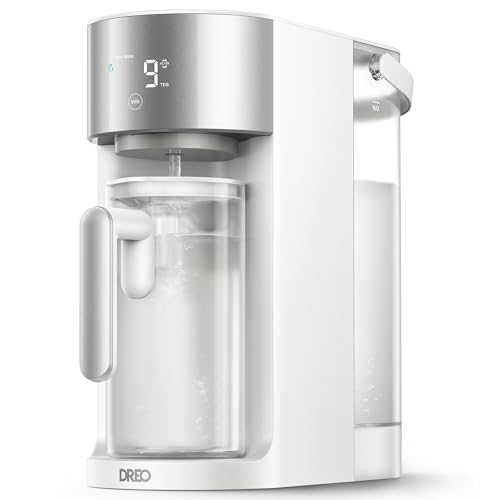
DREO Reverse Osmosis Countertop 112 3L
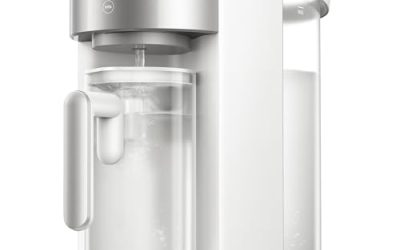
This DREO model lists reverse osmosis, a claim of filtering 99.9% of contaminants and an install-free design. A renter in a small apartment can plug it in, fill the 3L tank and skip plumbing entirely, which is the main appeal over any under-sink system. Because the title makes the install-free point first, this is the model to consider when a landlord forbids any change, or when you may move again within a year or two.
- Strength: RO technology targets dissolved solids that carbon filters leave behind.
- Strength: install-free design suits rentals.
- Trade-off: a 3L tank means frequent refilling for a large household.
Skip it if you cook with large quantities of filtered water every day and hate refilling, since a smaller tank is the clearest limit of this version.
DREO Reverse Osmosis Countertop, Two Autofill Pitchers
This version adds two autofill pitchers, a 3:1 pure-to-drain ratio, TDS and filter life displays and a self-cleaning function. It is the pick for a family that keeps a pitcher in the refrigerator and wants a second one filling while the first is in use. The self-cleaning mention in the title also hints at less manual upkeep, which counts for a busy household that does not want to scrub parts weekly.
- Strength: two pitchers keep a supply ready without waiting.
- Strength: TDS and filter-life displays let you monitor performance.
- Trade-off: more accessories mean more to wash and store.
Skip it if you live alone and rarely need more than a single pitcher of water, because the extra pitcher would simply occupy a cabinet shelf.
Purewell 3-Stage Gravity Water Filter System
Purewell takes the opposite approach: a 304 stainless steel gravity unit with three stages, 0.01 micron ultra-filtration and NSF/ANSI 42 and 372 certification. No electricity is needed, so it suits power outages, camping-style kitchens and anyone who dislikes plugged-in appliances. The 0.01 micron figure points to fine ultra-filtration, and a three-stage layout suggests several steps rather than a single cartridge doing all the work.
- Strength: gravity feed works with no pump and no outlet.
- Strength: the stainless body and stated certifications are reassuring.
- Trade-off: gravity filtration is slower than an electric RO machine.
Skip it if you want a spout that dispenses instantly, or if you cannot spare the counter height that a stacked gravity tower needs.
Waterdrop CTF-01 Faucet Water Filter
Despite the countertop label, this is a stainless steel filter for a sink faucet, with one filter, NSF/ANSI 42 certification and a claim to reduce heavy metals and 99% of chlorine. It fits a kitchen where the main goal is better-tasting tap water without a bulky tank. It is also the easiest way to sample filtered water before deciding whether you need a full countertop machine, and the stainless finish blends into most kitchens.
- Strength: it is the smallest, simplest option in the set.
- Strength: it targets chlorine and heavy metals at the sink.
- Trade-off: it is not RO, so dissolved solids are not the focus.
Skip it if your sink faucet cannot take an attachment, or if you want a standalone tank, since this attaches at the spout instead of holding a reservoir of treated water.
DREO Reverse Osmosis Countertop, Single Autofill Pitcher
Nearly the same spec as the two-pitcher model, with a 3:1 pure-to-drain ratio, TDS and filter life readouts, installation-free setup and self-cleaning, but with a single autofill pitcher. It is the right-sized choice for a couple or a small household. Anyone who wants to read the TDS value and see when a cartridge is due, but does not want extra parts to wash, will find this the tidier arrangement.
- Strength: it keeps the RO features while using fewer parts.
- Strength: the filter-life readout removes guesswork about replacement timing.
- Trade-off: only one pitcher fills at a time.
Skip it if you host often and need a second pitcher ready, or if you fill large pots for pasta and soup several times a week.
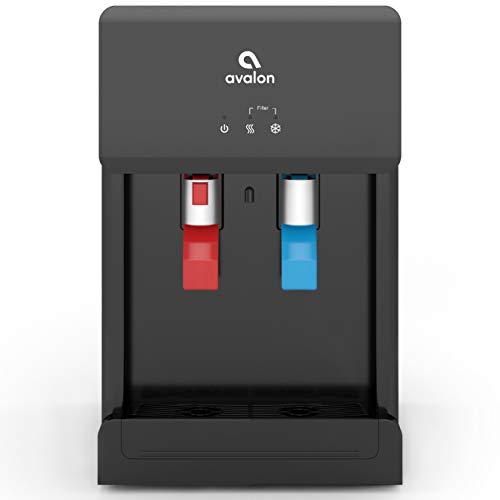
Avalon B8BLK Touchless Bottleless Water Cooler
This is a countertop water dispenser, not a pitcher-style filter: touchless, bottleless, with two stage filters and an installation kit, NSF certified and UL approved. It suits an office kitchenette or a home that wants a dispenser built into the counter. Shared spaces benefit from the touchless design, and the UL approval and NSF certification in the title are useful for a workplace that has to answer questions about its drinking water.
- Strength: touchless operation is hygienic for shared spaces.
- Strength: filters and an installation kit are included.
- Trade-off: the installation kit in the title points to a water-line hookup, so it is not an install-free choice.
Skip it if you rent and cannot connect it to a water line, or if you simply want a pitcher-style filter that you can fill by hand.
DREO Reverse Osmosis Countertop 113 5L
The 113 5L is the larger-tank sibling of the 112 3L, again an install-free RO machine that claims to filter 99.9% of contaminants. The extra capacity helps households that go through several pitchers a day. A family with kids who fill water bottles for school every morning, or a home that brews tea and coffee all day, will notice fewer interruptions.
- Strength: a 5L tank reduces refill trips.
- Strength: it carries the same RO and install-free approach.
- Trade-off: a larger tank takes more counter space.
Skip it if your counter is crowded and you drink little water, since the bigger body is wasted on a one-person kitchen.
Which One Fits Your Situation
You rent and cannot touch the plumbing
Pick a DREO RO model, since the install-free design avoids any change to the pipes. The 112 3L fits one or two people, and the 113 5L suits a bigger group, and the two-pitcher version suits a kitchen where the fridge shelf is already set aside for water.
You only dislike the chlorine smell
The Waterdrop CTF-01 targets exactly that at the faucet and costs you almost no space. It is also the least commitment of the seven, which makes it a reasonable first step for a renter who is not sure filtered water changes much for them.
Your power goes out or you want no outlet
The Purewell gravity system works without electricity and has certifications in the title. It also works for a household that wants a backup source of drinking water, because no pump or outlet is involved in producing it.
You want a dispenser for guests or coworkers
The Avalon B8BLK offers touchless dispensing, provided you can connect it to a water line. A break room or home bar benefits most, because several people can fill a glass without touching a handle.
Common Mistakes
- Buying RO when the only complaint is chlorine taste.
- Trusting a contaminant percentage with no named standard.
- Forgetting to measure counter and cabinet clearance, then discovering the unit will not fit under the upper cabinets.
- Ignoring the waste-water ratio on RO systems.
- Assuming every countertop-labeled item is a tank-style filter, when some are faucet attachments or plumbed dispensers.
Related guides
- Battery Powered Floodlight Camera With Local Storage
- Cordless Drill Brush Attachment For Bathroom Grout
- Rechargeable Emergency Lantern For Power Outages
Frequently Asked Questions
Do countertop RO systems need plumbing?
The install-free models fill from a tank, so no plumbing is needed. Dispensers like the Avalon use a water connection.
What does a 3:1 pure-to-drain ratio mean?
For every three parts of purified water, about one part goes to the drain. Lower waste is generally better, though a higher ratio can also mean slower output or a larger cartridge to replace.
Is a gravity filter as good as RO?
They address different problems. Gravity units handle sediment, chlorine and some metals, while RO also reduces dissolved solids.
How often do filters need replacing?
It depends on model and water quality. Units with filter-life indicators take the guesswork out, and a utility water report helps you judge how hard the filters are working.
More from Amazon
Programs that pair well with the guide above. Offers and eligibility are set by Amazon and may change.
A free business account with business pricing and bulk-buying tools for work, shop or home office.
Create a business accountFree shipping on eligible items, Prime Video and more. Eligible new members can start with a free trial.
Start a Prime free trialAudiobooks and podcasts to listen to on the go. Eligible new members can start with a free trial.
Try Audible freeAd-free music streaming. Eligible new subscribers can start with a free trial.
Try Music Unlimited freeAs an Amazon Associate we earn from qualifying purchases.