Key takeaways
- Measure before you buy: A $10 hygrometer on the closet shelf for 48 hours tells you more than any product page. Under 50% RH and you likely need nothing; 55–65% calls for a passive absorber; sustained 70%+ means a powered unit with real extraction capacity.
- Match tank size to square footage honestly: A 30–35 oz thermoelectric unit is right for a reach-in under 300 sq ft of airspace. A walk-in sharing a wall with a bath or an unconditioned exterior wall wants 60 oz or more, or you’ll be emptying it daily.
- Plan the power run first: Most closets have no outlet. Check whether you can pull power from an adjacent room’s receptacle, add a surface-mount box, or whether a cordless absorber is the smarter answer. Never run a cord under a door where it gets pinched.
- Noise matters more here than anywhere: Closets in bedrooms sit feet from your head. Anything above 30 dB is audible at 2 a.m. Peltier-based units in the 24–28 dB range are effectively silent behind a closed door.
- Leave clearance for exhaust: These units vent warm dry air out the back or top. Shoving one against a wall of hanging wool chokes it. Give it 4–6 inches, or build a small shelf shim to raise it off the floor and improve circulation.
What's inside
Every closet in my house has taught me something about moisture. The one on the north wall taught me that a leather jacket can grow a fine white bloom in three humid weeks. The cedar wardrobe I built taught me that even good joinery can’t outrun a 68% relative humidity reading. And the hall closet backing onto the bathroom taught me that a wall shared with a shower is basically a sponge with drywall on it. Closets are the worst-case scenario for stored fabric: no airflow, no sunlight, packed-tight cotton and wool that hold water like a wick, and usually no outlet within reach.
The fix isn’t a whole-home unit humming away in the basement. It’s a small, quiet, correctly sized dehumidifier sitting where the damp actually lives. Below I’ve sorted through compact thermoelectric units, mid-size models with timers, and passive absorbers that need no power at all, so you can match the tool to the space instead of overbuying. I’ve flagged which ones earn a spot on a shelf, which belong on a rod, and where each one starts to fall short.
As an Amazon Associate we earn from qualifying purchases.


How to Choose a Dehumidifier For Closets (2026)
- Measure before you buy: A $10 hygrometer on the closet shelf for 48 hours tells you more than any product page. Under 50% RH and you likely need nothing; 55–65% calls for a passive absorber; sustained 70%+ means a powered unit with real extraction capacity.
- Match tank size to square footage honestly: A 30–35 oz thermoelectric unit is right for a reach-in under 300 sq ft of airspace. A walk-in sharing a wall with a bath or an unconditioned exterior wall wants 60 oz or more, or you’ll be emptying it daily.
- Plan the power run first: Most closets have no outlet. Check whether you can pull power from an adjacent room’s receptacle, add a surface-mount box, or whether a cordless absorber is the smarter answer. Never run a cord under a door where it gets pinched.
- Noise matters more here than anywhere: Closets in bedrooms sit feet from your head. Anything above 30 dB is audible at 2 a.m. Peltier-based units in the 24–28 dB range are effectively silent behind a closed door.
- Leave clearance for exhaust: These units vent warm dry air out the back or top. Shoving one against a wall of hanging wool chokes it. Give it 4–6 inches, or build a small shelf shim to raise it off the floor and improve circulation.
The Best Dehumidifier For Closets (2026)s Reviewed
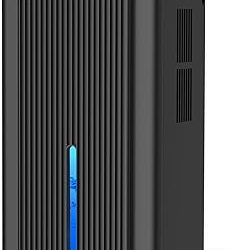
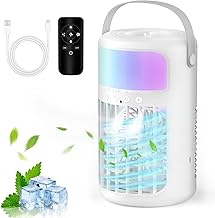
35 OZ Quiet Dehumidifier with Auto Shut Off
This is my default recommendation for a standard reach-in or a small walk-in up to 280 sq ft: quiet enough at 28 dB to sit behind a bedroom door, with an auto shut-off that stops it from running dry when the tank fills. The 7-color light is a gimmick you can switch off, but the footprint is compact enough to tuck beside a shoe rack without eating shelf space.
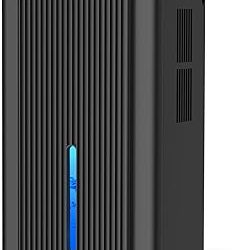
30 oz Ultra-Quiet Compact Mini Dehumidifier
At 24 dB this is the quietest powered option here, which makes it the pick for closets inside nurseries or bedrooms where the faintest fan hum becomes a problem. It’s genuinely portable too, so it does double duty in a camper or a linen cupboard when the seasons shift.
60 OZ Dual-Semiconductor Dehumidifier with Timer
The dual-semiconductor design pulls noticeably more water than single-Peltier units, and the timer is the feature I’d actually pay for: set it to run four hours overnight and you skip the constant tank checks. This is the one for a walk-in, cloakroom, or any closet backing onto a bathroom wall.
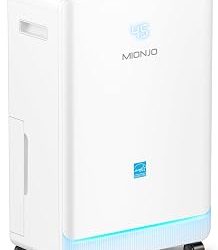
95 OZ Dehumidifier for Spaces up to 1000 sq ft
Overkill for a coat closet, exactly right for a basement storage room or a large walk-in with an exterior wall. The 95 oz tank means you empty it every couple of days rather than nightly, and it still runs quiet enough for a finished basement bedroom.
Moisture Absorber Packets, 10 Pack Hanging Bags
No power, no noise, no tank to empty — these hang from the rod and passively pull moisture out of the air, which makes them the only real option for a closet with no accessible outlet. Unscented is the right call for storing wool and leather, and a 10-pack covers a whole house of closets for a season.
Frequently Asked Questions
Do passive absorbers actually work, or are they just for odor?
They work, within limits. Calcium chloride products like the Vacplus Moisture Absorber buckets and hanging packets genuinely extract water and are ideal for small enclosed volumes. They can’t fight an active moisture source such as a leaking pipe or wet foundation wall — that’s a repair job, not a dehumidifier job.
What humidity level should I target in a closet?
Aim for 45–50% RH. Below 40% and leather can dry and crack; above 60% you’re in mold and dust-mite territory. Keep a hygrometer in there permanently once you’ve solved the problem so you notice if it drifts back.
Should I leave the closet door open or closed?
Closed while the unit runs — you want it dehumidifying the closet, not the whole bedroom. If you’re using passive absorbers instead, cracking the door or installing a louvered panel helps air move, which is often half the battle.
Can I drain these units instead of emptying the tank?
Most compact thermoelectric models are tank-only by design. If you need continuous drainage, you’re looking at a larger compressor unit with a hose port, which typically means finding it a home outside the closet.
Final Thoughts
For most closets, the 35 OZ quiet dehumidifier hits the right balance of capacity, silence, and footprint. Step up to the 60 OZ dual-semiconductor model if you have a walk-in or a shared bathroom wall, and keep a pack of the hanging moisture absorber packets on hand for the closets where running power just isn’t worth the drywall repair.