Key takeaways
- Motor type: DC motors draw a fraction of the wattage of AC units, spin down to genuinely low speeds without cogging, and stay quieter under load. If you plan to run the fan overnight or all season, DC pays for itself in both power bills and sleep.
- Velocity paired with decibels: A 26 ft/s rating means nothing without the noise figure beside it. Look for models that publish both, and treat anything near 20–28 dB on the lowest setting as bedroom-grade. Higher velocity buys you reach across a large room, not necessarily comfort in a small one.
- Speed granularity: Four speeds is fine for a living room. Nine or twelve speeds lets you dial in that exact point where you feel air movement but stop noticing the fan — the difference between sleeping through the night and reaching for the remote.
- Oscillation arc and height: 90° covers a bed or a desk. 120° sweeps a wider seating area. Adjustable-height columns matter if you’re aiming over a mattress, a sofa back, or a workbench rather than at ankle level.
- Serviceability: Dust is what kills airflow. Check whether the rear intake grille pops free without tools, and keep a soft brush and a can of compressed air on hand. A ten-minute clean twice a season restores more performance than any speed setting.
What's inside
Anyone who has ever taken a cheap tower fan apart knows the disappointment: three screws, a hollow plastic shell, an off-balance impeller buzzing against a mounting boss. It runs loud on day one and louder by August. Meanwhile the spec sheets that sell these things throw around velocity figures, decibel claims, and speed counts without telling you which numbers actually change how a bedroom feels at 2 a.m. That gap between marketing copy and real airflow is where most buyers get burned.
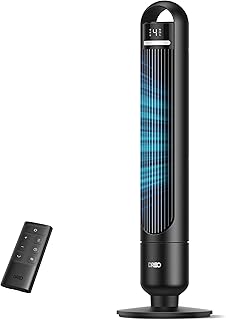
Dreo built its reputation on the unglamorous stuff — better motors, tighter tolerances, grilles you can actually get into with a brush. This guide breaks down what to look for in a Dreo tower fan, then walks through the standout models for 2026, including the compact bedroom units, the smart app-controlled towers, and the fan-heater combo that earns its floor space year-round.
As an Amazon Associate we earn from qualifying purchases.


How to Choose a Dreo Tower Fan (2026)
- Motor type: DC motors draw a fraction of the wattage of AC units, spin down to genuinely low speeds without cogging, and stay quieter under load. If you plan to run the fan overnight or all season, DC pays for itself in both power bills and sleep.
- Velocity paired with decibels: A 26 ft/s rating means nothing without the noise figure beside it. Look for models that publish both, and treat anything near 20–28 dB on the lowest setting as bedroom-grade. Higher velocity buys you reach across a large room, not necessarily comfort in a small one.
- Speed granularity: Four speeds is fine for a living room. Nine or twelve speeds lets you dial in that exact point where you feel air movement but stop noticing the fan — the difference between sleeping through the night and reaching for the remote.
- Oscillation arc and height: 90° covers a bed or a desk. 120° sweeps a wider seating area. Adjustable-height columns matter if you’re aiming over a mattress, a sofa back, or a workbench rather than at ankle level.
- Serviceability: Dust is what kills airflow. Check whether the rear intake grille pops free without tools, and keep a soft brush and a can of compressed air on hand. A ten-minute clean twice a season restores more performance than any speed setting.
The Best Dreo Tower Fans (2026) Reviewed
Dreo Tower Fan for Bedroom, 26 ft/s, 8H Timer
The dependable baseline: four speeds, three modes, 90° oscillation, and a 28 dB floor that genuinely disappears behind white noise. It’s the model I’d put in a guest room or home office where you want reliable air movement without fiddling with an app.
Dreo Upgraded DC Tower Fan, 28 ft/s, 9 Speeds
Swapping to a DC motor is the single biggest upgrade in this lineup — nine speeds give you real control over that low end, and the 12-hour timer covers a full night plus a lie-in. Higher velocity than the base model with lower power draw, which is exactly the trade you want.
Dreo 40″ Tower Fan, 5 Speeds, 4 Modes
The taller column puts the airflow above furniture height, which matters more than most buyers expect in a room with a high bed or a deep sofa. Five speeds and four cooling modes hit a sensible middle ground for open-plan living spaces.
Dreo Smart Tower Fan, 120° Oscillating, 12 Speeds
Twelve speeds, a 120° sweep, and app plus Alexa control make this the pick for anyone who already runs a smart home setup — scheduling it alongside your thermostat is where it earns its keep. The wide arc covers a seating group rather than a single spot.
Dreo Smart Tower Fan, 40″–45″ Adjustable Height, 20 dB
The adjustable column is the standout feature here, letting you aim airflow precisely rather than working around a fixed height. A 20 dB low setting is about as quiet as a moving fan gets, and Alexa or Google control means you never hunt for the remote in the dark.
Frequently Asked Questions
Do tower fans actually lower room temperature?
No — they move air, which accelerates evaporation off your skin and makes a room feel several degrees cooler. Pair one with a cracked window at night and you’ll shift genuine heat out of the space.
How do I clean a Dreo tower fan?
Unplug it, release the rear intake grille, and work a soft brush across the mesh, then follow with compressed air through the housing. Avoid liquids near the motor cavity, and never run it with the grille off.
Is a DC motor worth paying more for?
If the fan runs more than a few hours a day, yes. Lower wattage, smoother low-speed operation, and less bearing noise over the long haul all favor DC.
Can I safely run one overnight?
Yes. Use the built-in timer or sleep mode so it steps down gradually instead of running flat out until morning, and keep the base on a level, hard surface so the column doesn’t rock.
Final Thoughts
For most bedrooms, the Upgraded DC 28 ft/s model with nine speeds is the sweet spot between quiet operation and real airflow. If you want automation and a wider sweep, the Smart Tower Fan with 120° oscillation and twelve speeds is the better buy, while the Tower Fan and Heater Combo makes the most sense for anyone who’d rather own one appliance that works in both January and July.